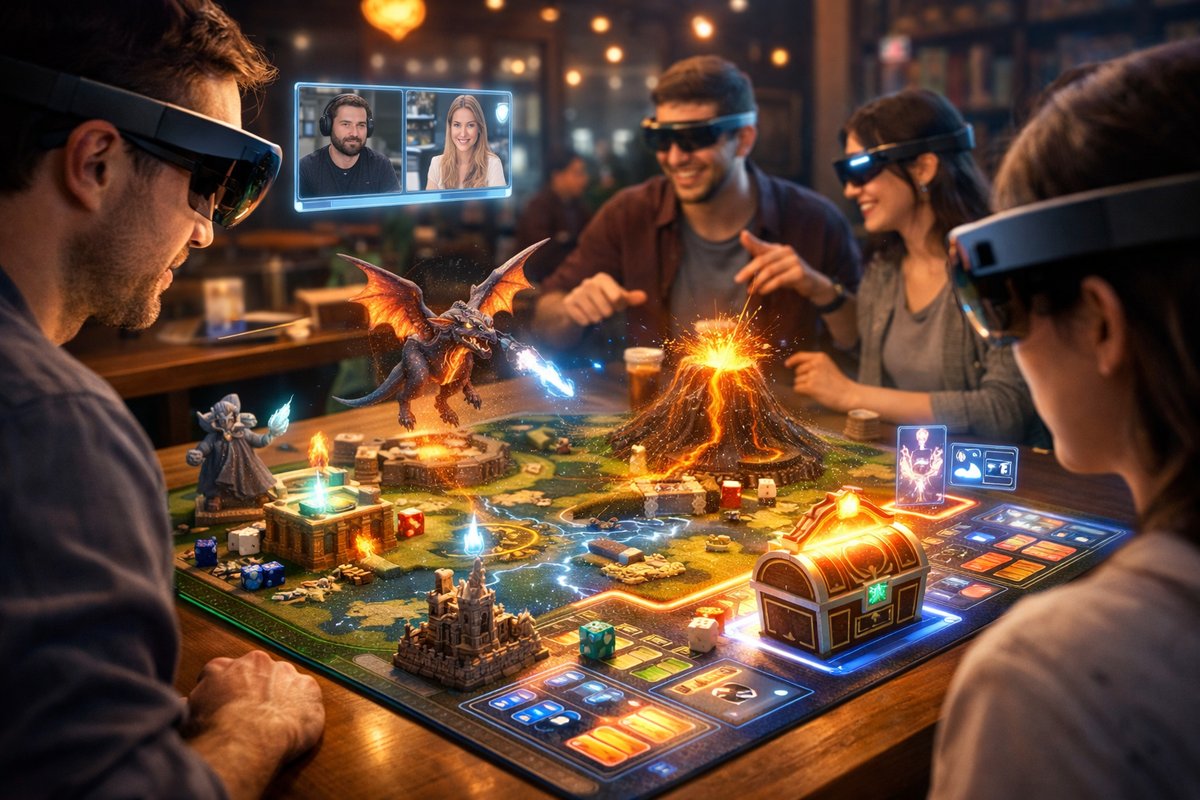

In an era dominated by screen-based entertainment, a quiet renaissance is unfolding among analog enthusiasts. Board game cafés around the world are integrating augmented reality (AR) filters, smart play surfaces, and networked hardware to deliver immersive experiences that feel more like video games than traditional tabletop sessions. This shift isn’t about replacing beloved cardboard and wood; it’s about layering digital enhancements – animated maps, real-time effect visuals, and synchronized remote play – on top of tactile components. By doing so, these hybrid venues have emerged as social hubs for both longtime hobbyists and curious newcomers.
Early adopters of AR-enhanced play spaces are experimenting with transparent lenses that overlay character stats and rules prompts above the board. Players don lightweight AR smart glasses that recognize card illustrations, triggering context-sensitive animations or narrative voiceovers. Behind the scenes, cameras and motion sensors embedded in modular tables track piece movements, ensuring a seamless blend of physical and digital realms. When a player moves a mini figurine into a dungeon corridor, a projected beam may reveal hidden traps or glowing runes, while a companion app feeds story beats directly to each participant’s headset.
Networked play is another breakout feature redefining community gatherings. Local groups at one café table can invite friends in other cities or countries to join via video link, with a digital twin of the game board projected on each side. Instead of passing physical cards, players tap a smart surface to execute actions, and miniature moves transmit in real time to the remote location. This approach addresses one of tabletop gaming’s biggest hurdles – coordinating schedules across time zones – while preserving the tactile satisfaction of rolling dice or slotting resource tokens into wooden crates.
Such cafés also emphasize sustainability by offering refillable snack stations, reclaimed-wood play tables, and energy-efficient wireless chargers. Many owners partner with local artisans to craft custom terrain tiles from reclaimed MDF, ensuring that the heart of tabletop gaming – colorful landscapes and handcrafted tokens – remains intact. Meanwhile, rechargeable haptic gloves eliminate single-use plastic packaging of disposable props, further reinforcing the venues’ commitment to greener play.
In addition to public spaces, a small but growing market for home editions has surfaced. Families and groups seeking private sessions can rent plug-and-play AR table kits comprising a roll-out projection mat, motion-tracking puck sets, and a companion hub that connects to personal tablets. These units ship in reusable cases and require only a power outlet and Wi-Fi. Enthusiasts have repurposed spare dining tables into semi-permanent portals, layering silicone cover sheets with printed grid zones that sync to smartphone apps for instant scenarios.
The rise of AR board gaming parallels broader industry trends toward interactivity and personalization. In video gaming, procedural generation and user-made mods keep experiences fresh; similarly, tabletop AR systems now allow players to design custom overlays. A digital toolkit lets creators import artwork for bespoke quests or homebrew adventures, then share scenario files with the wider community. At monthly “Hack & Play” nights, café regulars trade feedback on new modules and vote on which community-made add-ons should be featured on the venue’s curated shelf.
Accessibility has also improved. Voice-guided tutorials instruct newcomers through rules, while adjustable color palettes help colorblind players distinguish between tokens. Motion-sensitive pieces detect when a player pauses or hesitates, prompting the system to offer gentle hints or highlight valid moves on the tabletop. These assistive features foster a more inclusive environment, lowering the barrier to entry for families, novices, and neurodiverse gamers.
The business model for these next-gen cafés often blends hourly walk-in rates with subscription tiers granting priority booking, member-only expansions, and free “digital tokens” for home use. Some venues partner with local game designers to host exclusive early-play sessions, providing patrons with the chance to test prototypes and offer feedback before public release. This crowdsourced approach to playtesting not only supports indie creators but also cements the café’s role as a creative incubator.
Competitive play has found its place too. Leagues centered on hybrid tabletop games reward strategic prowess both in-person and online. Teams coordinate board maneuvers while live-streaming sessions to a larger audience, complete with overhead cameras and digital overlays marking critical plays. These broadcasted matches have attracted sponsors in the tabletop industry – publishers of expansion packs, accessory makers, and even fabricators of bespoke terrain – all eager to showcase their latest offerings in action.
On the cultural front, these venues are reviving interest in older titles that might have slipped into obscurity. Classics from decades past are reissued with AR assets: animated Victorian-era cityscapes for industrial-revolution strategy games, glowing futuristic interfaces for sci-fi escapades, or syndicates of hidden symbols for detective mysteries. The result is a dual-appeal proposition: long-time fans appreciate the nostalgia, while new audiences are drawn in by dazzling visual effects.
Critics caution against overreliance on digital layers, warning that flipping focus between screens and boards could disrupt the social intimacy that defines tabletop gatherings. But designers of AR platforms are sensitive to these concerns. They’re prioritizing minimal intrusion – no full-screen alerts or pop-ups that block line of sight. Instead, subtle LED cues around the table’s rim signal turn changes, and ambient audio emanates from directional speakers tucked beneath the tabletop. The goal is to amplify immersion without breaking the ritual of shared, screen-free eye contact.
Game reviewers and lifestyle writers are taking note. Feature articles in tech journals praise the seamless integration of hardware and craftsman-made game pieces. Local lifestyle sections spotlight community members who’ve found new friendships through hybrid sessions. Podcast hosts schedule live recordings from within the cafés, interviewing patrons mid-game about their strategies and the community bonds forged around the table.
Looking ahead, experts predict continuing convergence of streaming platforms and tabletop AR. Imagine overlaying digital animations on physical board assets while a remote commentator narrates the unfolding action, or tapping an on-table QR code to instantly call up lore entries and rule clarifications on a mobile device. With major tech manufacturers investing in lighter AR lenses and more powerful mini-projectors, the hardware is poised to become more affordable and portable.
As the line between digital and analog play continues to blur, a new chapter in social gaming is unfolding. Cafés and living rooms alike are transforming into cross-reality stages where strategy meets spectacle, nostalgia meets novelty, and casual curiosity meets lasting community. For players of all stripes, the game board of tomorrow is opening in living color and augmented wonder – one roll of the die at a time.