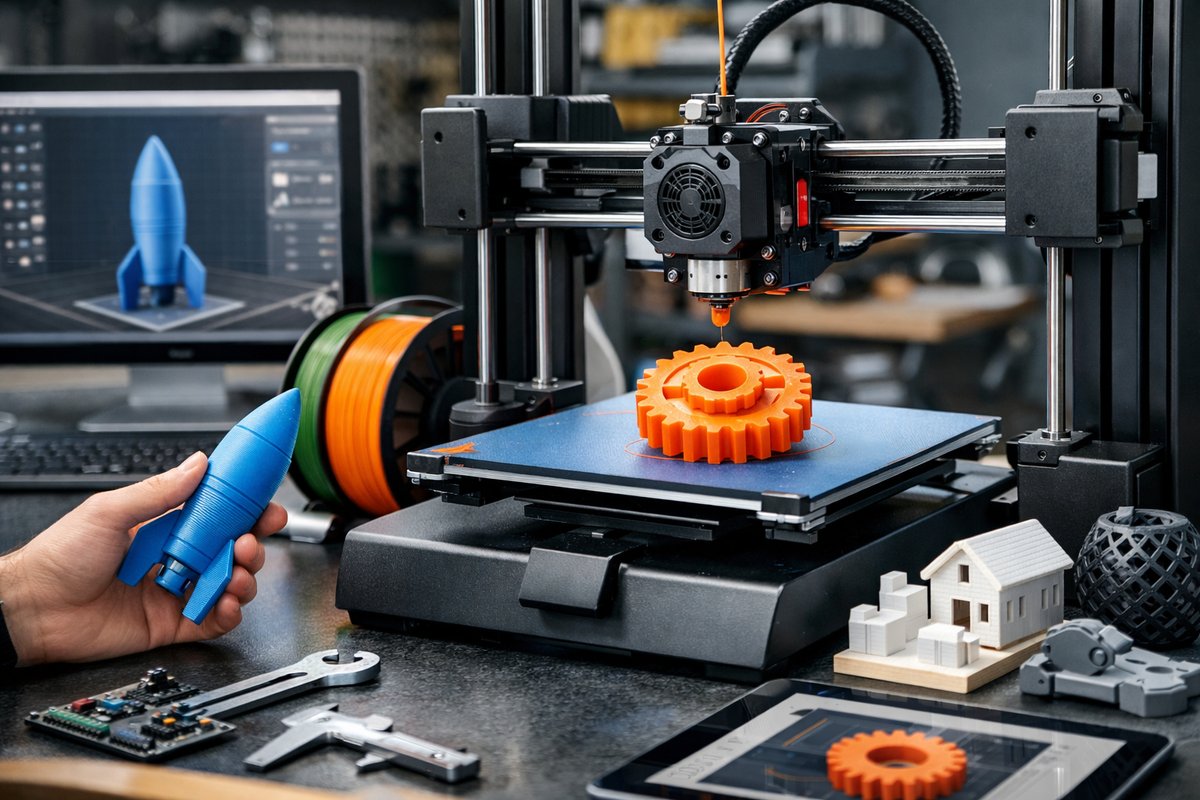

The art of building objects layer by layer has entered a new era, driven by a blend of ingenuity, open-source collaboration, and practical necessity. Once relegated to industrial prototyping labs, 3D printing now thrives on kitchen tables, classroom desks, and maker spaces around the globe. At the heart of this quiet revolution lies a familiar goal: do more with less. By optimizing materials, streamlining hardware, and harnessing smarter software, makers are reducing overhead, boosting reliability, and pushing the boundaries of what’s possible when virtual models become physical reality.
On the hardware front, fused deposition modeling (FDM) printers have become more economical without sacrificing precision. Pellet-fed extruders, once confined to industrial machines, are being adapted for desktop platforms. Instead of premium spools of plastic filament, users can feed standard-grade pellets-often a third of the price per kilogram-into a modified hot end. Continuous-feed hoppers keep production running for hours, ideal for batch printing small parts or producing large quantities of simple jigs and fixtures.
Resin-based printers haven’t lagged behind when it comes to cost efficiency. Curing stations built from off-the-shelf UV LED strips and recycled acrylic sheets can replace pricier, proprietary curing chambers. Open-source communities share formulas for DIY wash stations using biodegradable solvents and ultrasonic cleaners. These hacks cut consumable costs while delivering the fine details that resin printing is known for, from dental models to intricate tabletop miniatures.
Large-format printing has also seen a wave of accessible innovations. Belt-driven bed systems borrowed from laser-engraving technology enable machines with footprints twice the size of standard printers, all without a proportional increase in electronics expense. CoreXY motion kits, printable on smaller machines, allow hobbyists to upgrade existing frames for faster travel speeds and higher precision. Modular build plates that snap into place make it possible to swap between multiple printable zones, improving uptime and reducing calibration downtime.
Materials science continues to play a pivotal role in driving down costs. Recycled PET bottles are being processed into filament spools through community-run shredders and extruders, transforming waste into workable material. Bio-based polymers, such as PLA derived from cornstarch, now come blended with additives that boost toughness and heat resistance while remaining biodegradable. Carbon-fiber and glass-fiber reinforced filaments, once reserved for specialized applications, are available at entry-level price points for makers experimenting with lightweight, high-strength parts.
The software ecosystem surrounding 3D printing has matured alongside hardware and materials. Open-source slicers now incorporate machine-learning algorithms to optimize support structures, reducing material usage by as much as 30 percent compared to legacy methods. Cloud-based slicing services offload complex computation to remote servers, allowing even budget machines to benefit from advanced infill patterns and adaptive layer heights. Collaborative print queues let multiple users submit jobs to a shared printer farm, automatically batching small models for printing efficiency.
Reliability has long been a hurdle for newcomers, but modern printers now include features that demystify maintenance and troubleshooting. Auto bed-leveling sensors adjust the nozzle height in real time to account for subtle platform variations. Filament-run-out detectors pause prints before a spool runs dry, preventing half-finished parts. Closed-loop stepper motors with integrated encoders eliminate layer shifts by correcting positional errors on the fly. And Wi-Fi connectivity paired with intuitive apps makes remote monitoring and job management a seamless part of the workflow.
Beyond individual machines, print farms are emerging as a low-risk entry point for small-scale manufacturing. By grouping low-cost printers under a single networked controller, operators can amortize fixed expenses across dozens of machines. Remote dashboards track the health and status of each unit, queue jobs intelligently, and trigger alerts when human intervention is needed. This approach transforms a cluster of $200 printers into a flexible production line capable of fulfilling custom orders or internal prototyping demands.
For quality control, real-time monitoring systems equipped with cameras and simple machine-vision algorithms can detect common print failures-like nozzle clogs, layer delamination, or adhesion loss-within seconds. When an anomaly is spotted, the printer can pause and notify the operator, or even trigger an automated nozzle-cleaning sequence. This blend of proactive maintenance and minimal human oversight keeps prints on track and reduces wasted material.
Sustainability isn’t just a buzzword; it’s a guiding principle for many in the community. Failed prints and support scaffolds become raw material when fed through desktop shredders, then re-extruded into fresh filament. Solvent baths used for resin post-processing can be distilled and reused multiple times, cutting down on chemical waste. Even packaging for replacement parts is being redesigned to use compostable or recycled materials, closing the loop on a system that once generated considerable plastic scrap.
Consider a high school teacher who collected end-of-life spools from neighbors and repurposed them for a classroom 3D printing lab. By sourcing recycled filament and building DIY curing rigs, the program now designs assistive devices for students with special needs-all on a shoestring budget. In another example, a small design studio outfits its own print farm of twenty filament printers, automating print queues for rapid prototyping of custom consumer products, from phone stands to smart-home mounts. An independent artist blends dual-color printing with custom resin tints to create sculptural pieces that shimmer under gallery lights, all without the overhead of a professional fabrication shop.
These stories underscore a broader truth: when printing becomes more economical and reliable, creativity flourishes. Online repositories are bursting with parametric models that users remix for their own needs. Local maker spaces host print-along events where beginners learn not only to press “start,” but to calibrate extruders, troubleshoot filament issues, and adjust slicer profiles. Even seasoned engineers share their calibration routines and firmware tweaks, accelerating the collective knowledge of the community.
For anyone embarking on or refining their 3D printing journey, a few best practices can make the difference between success and frustration. Begin with a simple geometry-like a calibration cube or benchy boat-to dial in extrusion and temperature settings. Keep your printer clean and lubricated, especially rails and lead screws. Experiment with one material at a time, noting optimal print speeds and cooling settings. Embrace open-source firmware updates that add new features or improve motion planning, and don’t hesitate to upgrade sensors and extruders as the budget allows.
Looking ahead, the next wave of innovations promises even greater accessibility. Multi-material heads capable of seamlessly blending two or more polymers will enable functional parts with embedded hinges or conductive traces. On-the-fly parameter tuning, guided by AI, will adapt print settings layer by layer to optimize strength, flexibility, or surface finish. Bioprinting and printable electronics will usher in healthcare and wearable applications once confined to research labs.
Whether you’re a weekend hobbyist, an educator, or an entrepreneur, the tools and techniques for economical, feasible, and successful 3D printing have never been more robust. The barriers to entry continue to fall, replaced by a culture of sharing and incremental improvement. Each filament spool consumed, each prototype tested, and each failure recycled brings us closer to a future where anyone can turn imagination into reality-one layer at a time.