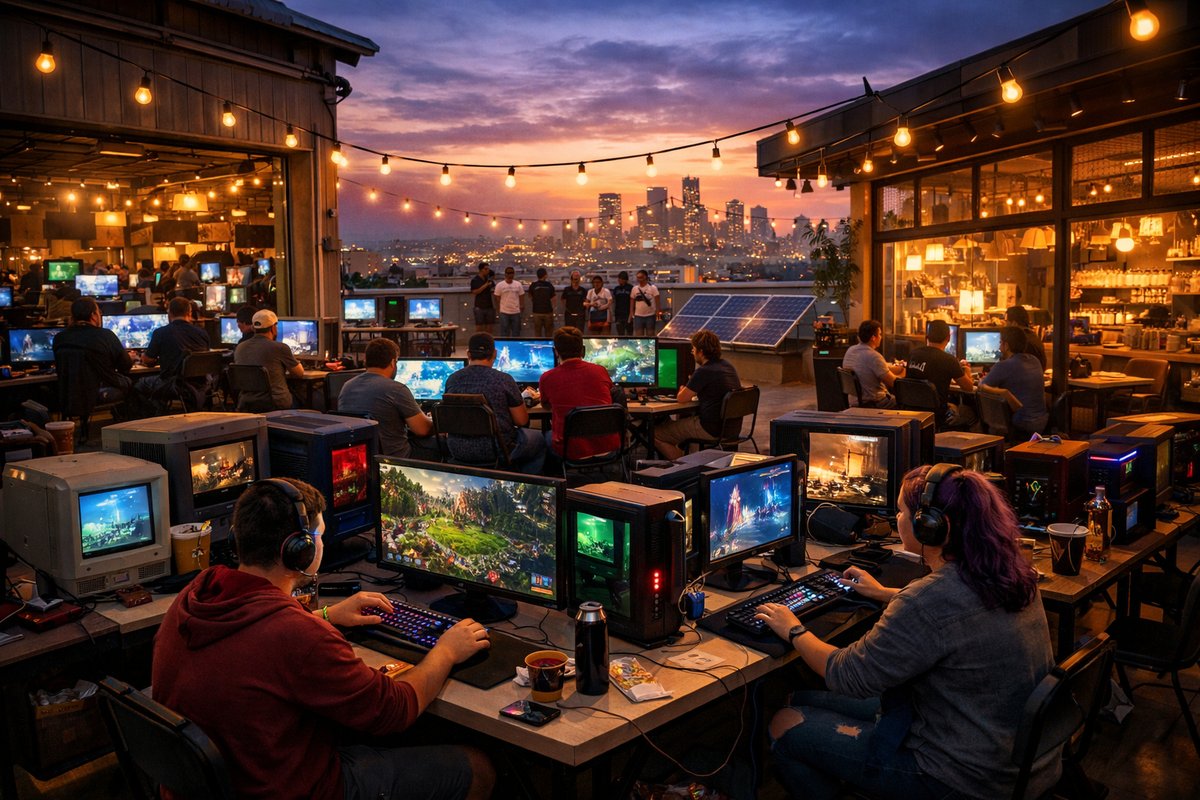

It started with a handful of friends hauling crates of hardware up a fire escape in a downtown loft. A few routers, a stack of monitors, and an assortment of mismatched PCs came together in the early evening haze, humming in unison as cables snaked across hardwood floors. By midnight, the impromptu network had blossomed into an electrified community-players swapped stories between matches, DJs streamed custom beats over local voice channels, and strangers became teammates in high-stakes tournaments.
That scene captures the burgeoning trend sweeping gaming communities worldwide: pop-up LAN parties that reclaim the communal energy of offline play. While online multiplayer continues to expand, a growing contingent of organizers, streamers, and hardware hackers are championing in-person experiences that celebrate the tactile, social, and atmospheric aspects of gaming. These rolling events-staged in breweries, art studios, co-working spaces, and even rooftop gardens-promise low latency, face-to-face banter, and the thrill of a network you can see and touch.
Driven by a hunger for authentic social connections, these grassroots gatherings marry old-school LAN culture with modern values like sustainability and inclusivity. Organizers emphasize privacy by running local servers that never touch the public internet. Solar-powered battery banks, upcycled furniture, and biodegradable cable ties speak to an eco-conscious ethos. And accessibility is prioritized through adjustable desks, noise-dampening headphones, and dedicated quiet zones for neurodivergent guests.
What makes these pop-up LANs different from the classic basement gatherings of the ’90s? For one, scale and professionalism. Many events now coordinate with local businesses, pop-up permit systems, and volunteer tech crews that treat wiring diagrams and airflow management as seriously as tournament brackets. Instead of dragging mismatched rigs into a cramped space, hosts ship in custom carts equipped with gigabit switches, rack-mountable power strips, and modular cable channels. Attendees often RSVP weeks in advance, selecting from tiered ticket options that include premium seats with extra USB ports and ergonomic chairs.
“I wanted something that felt vintage but ran like a data center,” explains one organizer who tours indie venues across the city. “It’s about the nostalgia of patching in a CAT6 cable, but you also want modern stability. I’ve seen zero packet loss in months of events.”
It’s not just PC die-hards joining the fun. Console enthusiasts bring portable TVs and wireless adapters. Retro gamers slot CRT-style screens into custom foam mounts. VR headsets glide on suspension rigs attached to ceiling grids. Some pop-ups support local indie developers, dedicating a corner of the warehouse to early builds, playtest feedback sessions, and open-mic lightning pitches. A handful even feature live remote feeds projected onto giant scrims, showcasing speed runs from distant communities.
Community organizers highlight the psychological benefits of face-to-face play. Studies have shown that in-person collaboration and shared physical environments can boost empathy, reduce social anxiety, and foster stronger friendships than purely online interactions. LAN revivalists leverage these insights, designing seating clusters that encourage healthy social distance without stifling conversation. Breakout areas for strategy huddles double as chill zones for meditation sessions and group stretching-moments to recharge both fingers and focus.
From a technical perspective, pop-up LANs are showcases for hardware innovation. Mesh-network kits let hosts extend coverage across multiple rooms and floors, eliminating Wi-Fi dead zones. PoE (Power over Ethernet) switches power LED strips that outline cable runs for safety and style. Portable local servers preloaded with game lobbies handle everything from tactical shooters to cooperative survival sims. And the rise of compact SSD-based gaming rigs means players no longer dread hauling tower cases up three flights of stairs.
The tournament scene is evolving too. Instead of single-elimination brackets, many events experiment with round-robin pools and Swiss formats to ensure participants get more playtime. Community-driven prize pools often come in the form of handcrafted peripherals, 3D-printed keycap sets, or artisanal snacks donated by local bakeries. Live DJs, roasted coffee bars, and on-site vinyl record shops add a festival vibe. One recent warehouse LAN in Berlin featured silent disco headsets for post-match analysis-spectators tuned into channels hosted by seasoned commentators breaking down tactics in real time.
This resurgence ties into a larger shift toward experiential entertainment. Just as pop-up cinemas and themed dining experiences flourish, gamers crave events that combine interactivity, atmosphere, and social texture. For many attendees, the memories forged at these LANs-high-fives after a clutch play, the hum of synchronized hardware, the camaraderie of shared defeat-outlast any digital leaderboard.
Looking ahead, organizers are experimenting with hybrid formats that link multiple pop-ups in different cities through dedicated fiber lines. Imagine competing in a capture-the-flag match against a rival crew hundreds of miles away, yet still feeling the pulse of your local crowd through ambient audio feeds and synchronized lighting effects. Others explore eco-friendly shipping for modular gear, swapping biomass-based foam packaging and rechargeable battery packs for one-time-use plastics.
The Guild of Pop-Up LAN Engineers, a volunteer collective, recently published open-source blueprints for drop-in network racks and solar-ready power stations. They aim to empower backyard enthusiasts and small nonprofits to host events without breaking the bank or the environment. The group’s next goal is a fleet of repurposed school buses outfitted as mobile gaming labs, touring underserved neighborhoods and offering tuition-free workshops on coding, digital art, and hardware maintenance.
Whether you’re a competitive team captain, a curious spectator, or a nostalgic gamer seeking a fresh twist on old rituals, the new wave of pop-up LAN parties delivers more than just pixels on screen. It’s an immersive, multi-sensory celebration of play-a reminder that gaming’s social core thrives when networks are built not only on cables and routers, but on shared laughter, friendly rivalries, and collective discovery.
As these community-driven events spread from city to city, they challenge the notion that online equals optimal. In an era of virtual everything, the LAN revival reminds us that some of the deepest connections arise when we gather, plug in, and power up together.
For those eager to join the movement, keep an eye on local gaming forums, maker spaces, and social-media channels dedicated to grassroots tech events. Whether you show up with a backpack PC or just an open mind, the pop-up LAN scene welcomes anyone ready to weave cables, swap strats, and share the irreplaceable thrill of gaming in real life.
Next time you hear about a pop-up LAN on a warehouse calendar, think twice before hitting “maybe.” This could be the start of your best game night ever-complete with glowing LEDs, the faint buzz of routers, and an unforgettable cast of co-players ready to take the network to its limits.