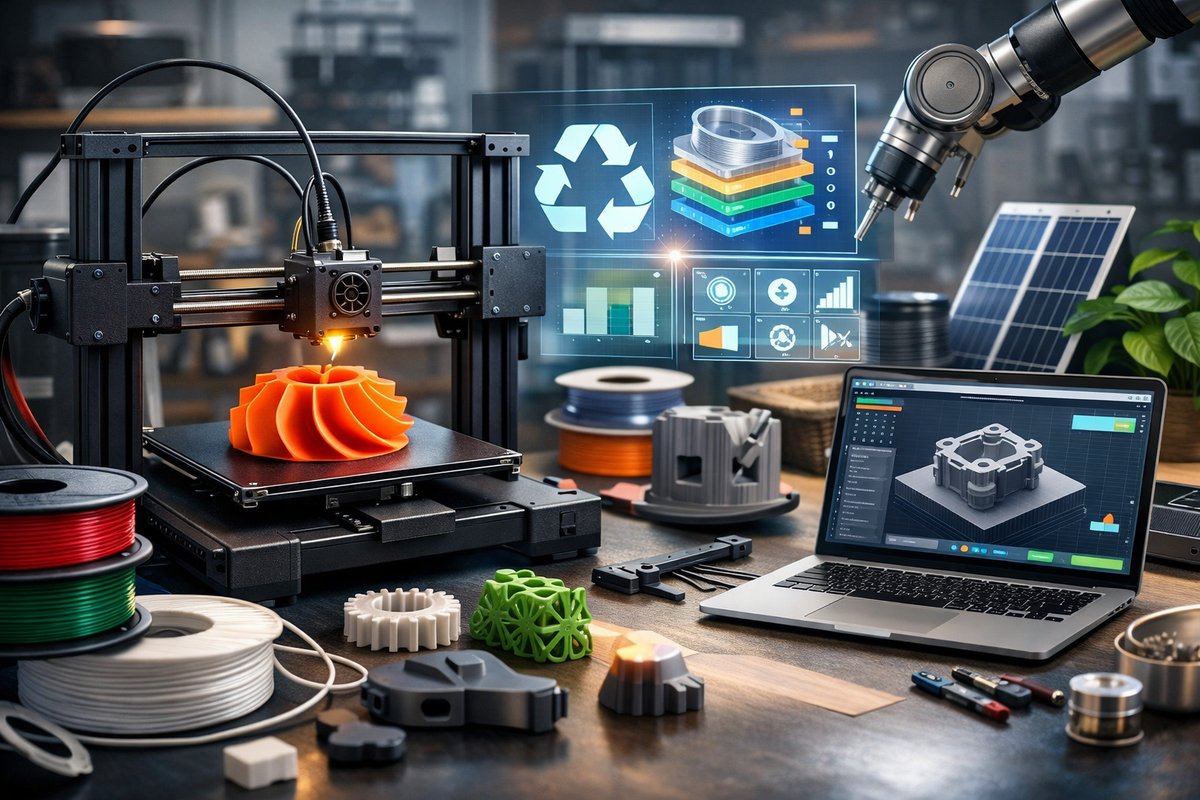

For many makers, engineers, and small businesses, the cost of materials, equipment upgrades, and post-processing can feel like an uphill battle. Yet recent advances across the additive manufacturing spectrum are leveling the playing field. From bio-based filaments and recycled powders to AI-driven slicers and modular curing stations, new techniques are helping enthusiasts and professionals alike print smarter, faster, and more economically than ever before. In this exploration, we’ll unpack the innovations that are pushing 3D printing beyond costly hobbyist setups and into everyday prototyping, tooling, and creative production.
Streamlined Materials: Low-Cost Filaments and Resins
One of the most impactful levers for reducing per-part cost is material selection. Standard PLA and ABS have long been staples, but emerging blends and recycled options are cutting expenses by up to 30%. Recycled PETG and PLA pellets allow dedicated pellet extruders to run at a fraction of the per-kg price of branded filament spools. Bio-based PLA made from agricultural byproducts not only lowers carbon footprint but can be priced similarly to conventional grades. On the resin side, solvent-washable formulations eliminate the need for large volumes of isopropyl alcohol, while fast-cure photoinitiator systems shorten UV exposure times-saving both material waste and utility costs in mid-tier SLA and DLP machines.
Hardware Hacks: Efficient Hotends and Modular Upgrades
Beyond materials, hardware refinements are helping printers run lean. Low-mass all-metal hotends heat up and cool down quicker, trimming idle time between prints. Adaptive thermal blocks balance power consumption, while silicone sock covers retain heat around the nozzle, reducing overall energy draw. Enthusiasts are retrofitting bowden systems with lightweight arms or upgrading to direct-drive extruders featuring gear reduction-improving print reliability on flexible filaments without adding significant weight. Magnetic, flexible build plates and low-power heated beds now reach operating temperatures in minutes, cutting standby energy use and accelerating the first layer adhesion process.
Software Optimization: AI-Assisted Slicing and Support Minimization
Slicing engines continue to evolve with features designed to save both time and material. AI-powered algorithms can detect model overhangs and automatically place minimal supports only where absolutely necessary, cutting resin or filament use by 10-20%. Variable layer height tools adapt resolution based on geometry, applying fine layers to detail zones and thicker layers to simple surfaces-slashing print time without compromising quality. Cloud-based slicing platforms enable collaborative workflows, letting teams queue jobs remotely and adjust parameters on the fly to prioritize quicker, cheaper builds in busy labs or makerspaces.
Post-Processing Efficiencies: Automated Washing and Curing Stations
Once parts leave the print bed, post-processing often represents bottlenecks in time and labor. Compact ultrasonic resin cleaners streamline wash cycles while using less solvent and water. Dedicated LED UV curing chambers, equipped with rotating turntables and programmable timers, ensure even exposure-preventing overcuring that can cause brittleness and undercuring that yields tacky surfaces. Home-brew solutions, like 3D-printed rinse and spin assemblies, are also gaining traction, blending affordable motors and recycled resin containers to automate cleaning for multiple parts at once.
Calibration and Maintenance: Extending Printer Lifespans
Proactive upkeep is a cost-cutting strategy often overlooked. Simple tasks-replacing worn nozzles, lubricating smooth rods, and tightening belts-can prevent print failures that waste hours of machine time and swaths of expensive material. Digital calipers and pull-style tension gauges help maintain repeatable accuracy, while bed leveling sensors and automated mesh-bed leveling routines reduce human error on every build. With proper maintenance schedules, even entry-level machines can deliver dependable performance for thousands of print hours.
Open-Source and Subscription-Free Tools
Licenses for professional slicing software can represent a significant annual expense. Thankfully, open-source communities continue to produce robust alternatives. Iterative firmware updates, community-driven slicing GUIs, and free plugin repositories empower users to leverage the latest features-like adaptive infill patterns and painting-style support structures-without monthly fees. The freedom to customize scripting and macros also fosters a culture of collaborative problem-solving, where small improvements from independent developers add up to substantial cost savings.
Sustainable Practices: Recycling Scrap and Filament Waste
Material recycling isn’t just an environmental talking point-it’s a direct route to lower consumable budgets. At the hobbyist level, compact desktop filament recyclers grind failed prints and convert them into fresh filament at significantly reduced cost per kilogram. In industrial environments, powder bed fusion waste powders can be sieved, blended with virgin material, and reprocessed up to five times with minimal impact on mechanical properties. These closed-loop approaches minimize landfill contributions and stretch each raw feedstock dollar further, especially valuable for metals and engineering-grade polymers.
Case Study: A Home Shop’s 40% Savings
Consider a small prototyping studio that switched from standard PLA spools to a mix of recycled PETG pellets and solvent-washable resin. By retrofitting a pellet extruder and integrating a compact UV curing station, the team reduced material expenses by over 40% in six months. Automated bed leveling and AI support trimming cut average print time by 15%, while a community-sourced slicer plugin saved an additional 10% of filament through optimized infill. These combined improvements translated to faster project turnarounds and healthier profit margins on short-run production orders.
Future Trends: Multi-Material, Large-Scale, and On-Demand Printing
Looking ahead, multi-material systems capable of blending filaments on the fly promise to expand part functionality without multiple setups. Industrial giants are rolling out robotic cells that automate build removal, post-cure, and quality inspection-driving down labor demands on large-scale metal and polymer prints. Distributed on-demand factories, equipped with standardized printer fleets, are emerging in regional hubs, bypassing traditional logistics by producing parts exactly where they’re needed. All of these developments underscore a broader shift: additive manufacturing is becoming less a niche curiosity and more a cornerstone of cost-conscious, responsive production.
While the fundamentals of melting or curing successive layers remain the same, the innovations enveloping that process are rapidly reshaping feasibility and cost-efficiency. Whether you’re a desktop tinkerer printing miniatures or an engineer crafting end-use components, the curtain of high material costs and complex post-processing is lifting. By embracing new materials, leveraging software intelligence, automating key stages, and recycling waste, you can confidently push the boundaries of what’s possible-layer by affordable layer.