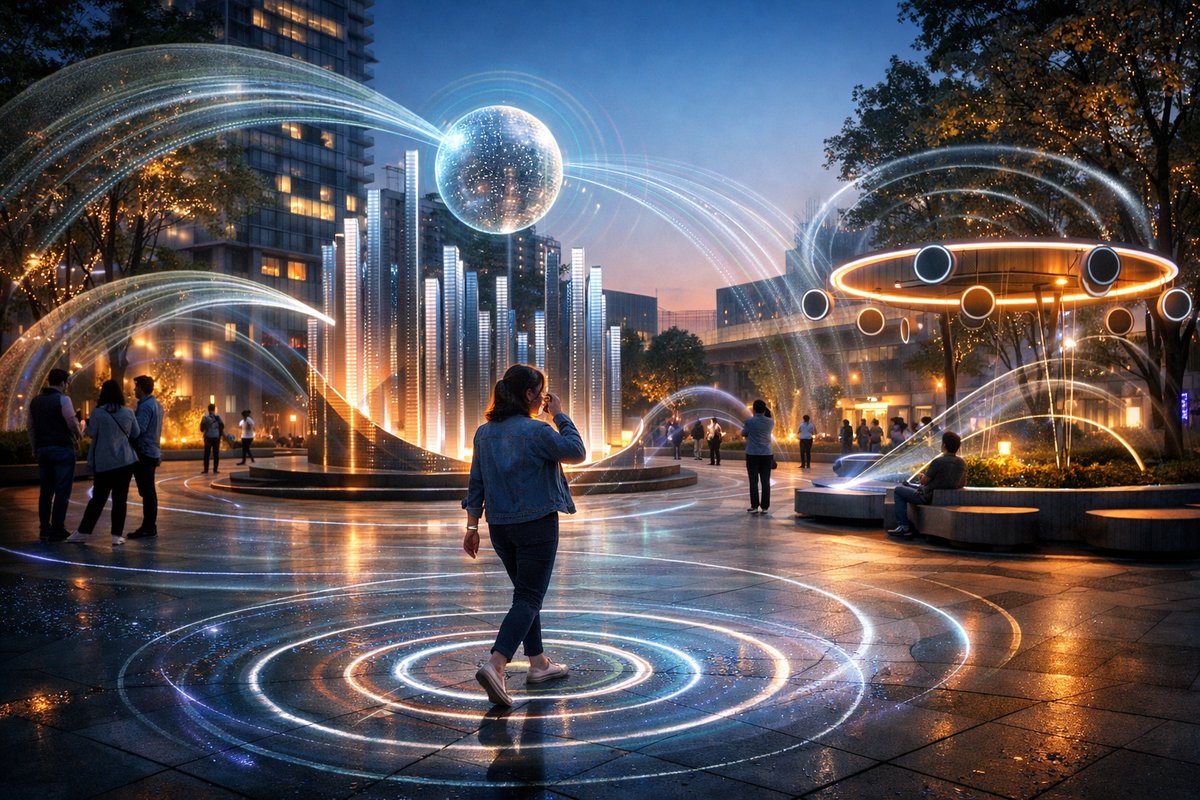

City streets and public squares are poised to become more than visual landscapes-they’re evolving into dynamic orchestras of urban life. Pioneering artists and designers are embedding sensors, microcontrollers, and acoustic modules into sculptural forms, textiles, and architectural facades. The result is a genre of public art that doesn’t just meet the eye but serenades the ear, inviting passersby to become performers in an ever-changing sonic tapestry.
This shift draws on decades of experimentation in sound art, from early acoustic sculptures to site-specific compositions. In the late 1970s, a seminal installation in a major city park allowed visitors to trigger hidden speakers by stepping on pressure plates. Fast forward to recent exhibitions at contemporary art museums, where an emerging collective known as Audiotecture Lab unveiled “Echo Weave”-a sprawling canopy of interactive panels that translate motion into layered drones and rhythmic pulses. As sunlight filters through the panels, embedded ultrasonic sensors detect movement and modulate harmonics, creating fluid soundscapes that respond to weather, time of day, and human flow.
Behind these immersive installations lies a convergence of accessible technologies. Open-source microcontroller boards handle data from proximity sensors, accelerometers, and capacitive touch pads. Sound engines-either custom software or modified digital audio workstations-interpret sensor inputs as musical parameters. Woven speakers and piezoelectric elements form the acoustic backbone, while wireless transmitters sync multiple nodes across a plaza. For Audiotecture Lab’s latest urban intervention, low-power Wi-Fi modules link dozens of sensor-speaker units, enabling the entire installation to perform as one cohesive instrument.
On the ground, the impact can be spellbinding. Visitors linger beneath the sculptural canopy, their footsteps pulling notes from the air as if they were giant harp strings. A child’s laughter triggers high-pitched textures that dance overhead. Late in the evening, the piece shifts into deeper bass drones, subtly amplifying the hum of distant traffic and fading into quiet staccato clicks before resetting at dawn. Urban dwellers report a newfound awareness of sound, discovering an unexpected soundtrack to their daily commute.
Conversations with creators reveal a design philosophy rooted in curiosity and sustainable practice. By favoring energy-efficient sensors and repurposed materials-reclaimed plastics, upcycled textiles, refurbished electronics-artists minimize environmental impact without sacrificing complexity. Privacy is also a guiding principle: most installations use nonvisual sensors, ensuring that personal identities remain anonymous while still capturing presence and movement. This ethos resonates with city planners seeking public art that respects individual autonomy and minimizes surveillance concerns.
Community engagement plays a central role from concept to execution. Workshops invite neighborhood residents to experiment with simple circuit-building and sound design, empowering them to contribute motifs and samples. In one district, local schoolchildren recorded field sounds-wind chimes, bicycle bells, footsteps on cobblestone-that now serve as the installation’s core audio library. Residents helped paint and assemble speaker housings, forging a deeper connection to the work and fostering a sense of shared ownership.
Deploying sonic tapestries in varied contexts underscores their versatility. In waterfront promenades, wind-activated sensors atop sculptural masts translate gusts into glissandos. Under highways, low-frequency vibrations from passing trains feed into rumbling bass textures. Even empty storefronts become sound chambers: concealed speaker arrays fill glass windows with subtle choral drones, transforming urban voids into sites of contemplation. By integrating art, technology, and architecture, designers craft experiences that adapt to site-specific conditions and cultural rhythms.
From an aesthetic standpoint, the interplay of analog warmth and digital precision defines the movement. Handmade audio transducers meet algorithmic composition engines. Textured materials-woven fiberglass panels, perforated metals, sculpted ceramics-cloak electronic components in designs that balance form and function. In daylight, the installations appear as minimalist sculptures; after dusk, subtle LED accents trace sensor activations, illuminating the invisible bonds between sound and structure.
Looking ahead, hybrid approaches promise even richer experiences. Mixed-reality overlays could project visualizations on smartphone screens, revealing hidden waveforms or layering virtual instruments atop physical speakers. Machine-learning algorithms might learn from crowd interactions, evolving new sound palettes tailored to each community. Networked installations across multiple cities could perform in synchrony, turning dispersed public spaces into interconnected concert halls that share data and melodies in real time.
As cities embrace these sonic tapestries, the distinction between audience and artist blurs. Public spaces become co-creative stages, attuned to every whisper of movement. In reshaping urban soundscapes, this new chapter of interactive art invites us not only to see but to listen-to discover how everyday gestures can compose the soundtrack of our collective lives.