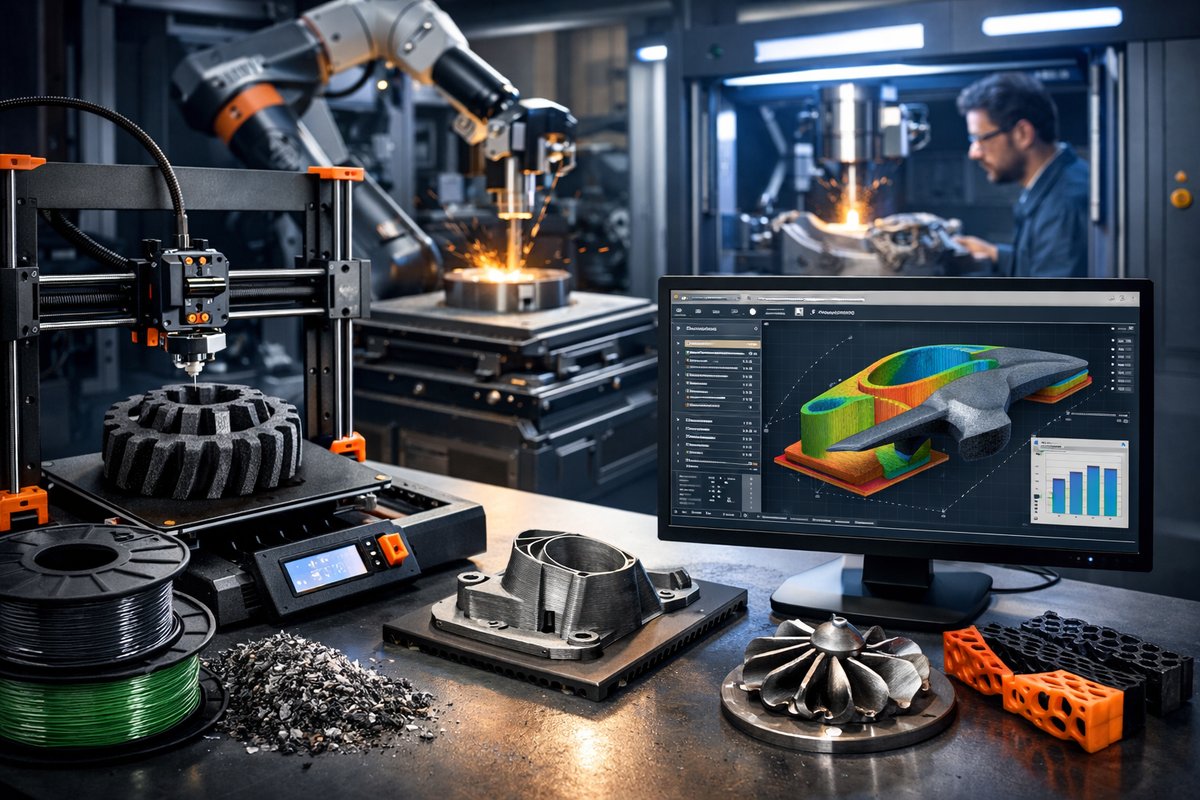

3D printing has evolved from niche prototyping to a practical tool for engineers, artists, medical professionals and hobbyists alike. Yet for many, balancing printer performance with budget constraints remains a challenge. Today’s generation of innovations focuses on driving down material waste, speeding up production cycles and streamlining post-processing. By embracing recycled feedstocks, modular hardware upgrades and smarter slicing algorithms, the additive ecosystem is becoming more accessible and sustainable without sacrificing quality.
At the heart of cost-saving efforts lies a renewed interest in circular materials. Conventional PLA and ABS spools typically arrive in single-use packaging, but a growing number of recyclers and DIY enthusiasts are reclaiming failed prints and scrap into fresh filament. Affordable desktop filament recyclers can grind and extrude old prints alongside virgin pellets, reducing filament expenses by up to 30 percent. On the resin side, eco-resins formulated from plant-based monomers and biodegradable carriers offer a lower-toxicity alternative to styrene-based formulations and can be processed in low-cost SLA and DLP systems with minimal hardware tweaks.
Expanding on low-cost materials, composite filaments loaded with wood, metal or carbon fiber particles are stepping out of the hobby area and into more serious applications. Wood-fiber PLA now behaves like a machinable board when sanded, while metal-filled filaments infused with iron or bronze powder can be machined after printing to achieve polished surfaces. These blends enable functional prototypes with realistic weight and stiffness without the expense of sintering furnaces or outsourcing. New pellet-fed extruder upgrades also allow users to swap in industrial-grade thermoplastic granules-often 30 percent cheaper per kilogram-directly into desktop machines, bypassing the need for factory-spooled filament.
Hardware innovation plays an equally critical role in cost reduction. High precision nozzles with hardened coatings extend service life when printing abrasive materials, eliminating the constant replacement cycle of brass tips. Direct-drive extruder modules can be retrofitted onto older Cartesian machines to improve retraction performance and enable flexible filament printing, cutting down on stringing and failed runs. Open-source initiatives have produced modular hot ends, complete with quick-swap cartridges and standardized mounts, so hobbyists can keep a steady library of materials without buying multiple printers.
Motion control has also become more economical. Silent stepper motor drivers once found only in premium machines are now available as plug-and-play boards for DIY builds, reducing acoustic pollution in shared workspaces. Belt tensioning systems and linear rail conversions have dropped in price thanks to bulk manufacturing, offering smoother travel and finer layer registration. In parallel, low-friction PTFE tubing and high-flex motor cables have been commoditized, extending machine longevity and reducing maintenance downtime.
Software architects are pushing efficiency further through advanced slicing and simulation. AI-driven slicing engines can analyze a 3D model’s stress distribution and adapt layer height, infill density and wall thickness on the fly-automatically reinforcing load-bearing zones while hollowing out low-stress areas. The result is a part that uses 20 percent less material and prints 15 percent faster than traditional uniform slicing. Cloud-based mesh repair tools handle geometry errors before they reach the printer, avoiding mid-print failures and wasted filament.
Parallel developments in machine-learning-based support generation allow for easier removal and less post-processing material. By mapping overhang angles and part geometry, these algorithms produce minute, tree-like scaffolds that break away cleanly under light mechanical force, reducing the need for solvents or extensive sanding. Built-in support sculpting features let users preview and tweak scaffold patterns in real time, balancing print time against finish quality.
Beyond standalone 3D printers, hybrid manufacturing cells are redefining the scope of in-house fabrication. Systems that combine additive layers with CNC milling tools can print a rough geometry and then machine critical surfaces or holes to precise tolerances-all within a single workstation. While initial investment is higher, the integrated workflow minimizes part handling, reduces alignment errors and accelerates batch production. Laser sintering units have begun integrating powder recovery systems to filter and reuse unfused metal powders, further defraying the high cost of metal additive manufacturing.
Post-processing stations have also shrunk from industrial behemoths to desktop appliances. Automated ultrasonic cleaning baths for SLA prints use water-based cleaning agents, cutting down on isopropyl alcohol expense and handling risks. Compact UV curing chambers with turntable drives ensure even light exposure, preventing warping and discoloration. Detachable build plates coated in flexible silicone allow finished parts to pop off easily, eliminating prying tools that can damage delicate features.
While cumulative hardware and material improvements drive per-part cost down, workflow automation adds another layer of economic gain. Open source tools and plugins can chain together slicing, printer operation, camera-monitored print completion and automatic bed leveling checks-turning a solo machine into a nearly unattended production cell. Small-scale manufacturers are even deploying barcode or QR code systems to track batches of spools and prints, improving traceability and reducing wasted raw materials.
Real-world experiments highlight the economics at play. A small engineering consultancy revamped its fleet of aged desktop printers with silent stepper upgrades and direct-drive hot ends, cutting failed print rates by half and slashing nightly fume extraction costs. A jewelry design studio switched to plant-based castable resin cartridges and an integrated wash-and-cure station, reducing post-processing time from hours to minutes while maintaining a clean studio environment. An educational makerspace equipped itself with pellet extruders and filament recyclers, lowering student supply fees and fostering sustainability skills.
Even the consumer desktop market is feeling the shift. Entry-level SLA and resin-based LCD printers now dip below three-figure price points, with resolution and build volumes once only found in prosumer machines. Small businesses and artists can prototype complex geometries with sub-50 micron layer thickness, then finish models in the same footprint used by tabletop hobbyists. The competitive pressure also means that feature sets like Wi-Fi connectivity, remote monitoring and encrypted print slicing are trickling down to mid-range systems, supporting both privacy and collaboration in shared workspaces.
While upfront costs continue to drop, the long-term economics of 3D printing increasingly hinge on sustainability and closed-loop workflows. Efforts to standardize resin recycling, palette indexing of filament reels and automated waste sorting are gaining traction, fueled by both environmental responsibility and a desire to tame rising raw material prices. Future developments may include biodegradable support structures that dissolve under mild conditions, or modular print heads that regenerate worn internal components autonomously.
In the face of rapid technological advance, one constant remains: makers and professionals crave tools that marry creative freedom with reliability and cost certainty. The latest wave of economical 3D printing innovations achieves precisely that-by rethinking materials, streamlining hardware, automating software and embracing circular practices. Layer by layer, these improvements are building not just parts, but a more sustainable and accessible future for anyone with a design vision.