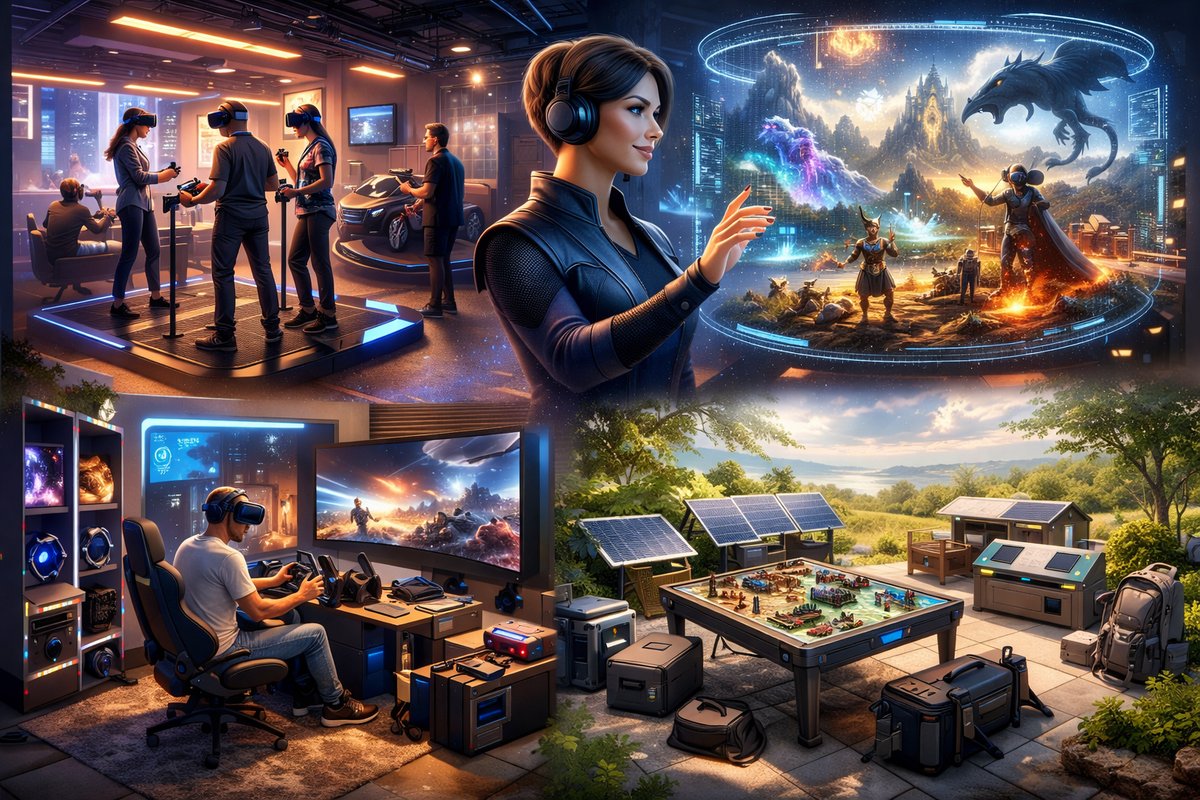

Across urban rooftops and suburban basements alike, a quieter revolution is unfolding in the gaming and entertainment world. Once defined by plugged-in consoles and sprawling arenas, today’s scene thrives on modularity, community-driven events, and eco-conscious innovations. Industry figures report that global gaming revenues topped $200 billion last year, yet it’s the intimate, localized experiences that are capturing headlines. Pop-up virtual reality lounges, mobile gaming caravans, and hybrid live-streamed tournaments are transforming how players connect, compete, and unwind.
In downtown districts, temporary play pods powered by solar panels are popping up on vacant lots. These climate-friendly hubs invite passersby to sample everything from VR escape rooms to cooperative multiplayer missions. Attendees often share that the novelty of a billowing canvas tent fitted with haptic floors and gesture-tracking sensors feels like stepping into a science fiction film. Urban planners and community organizers are collaborating on permitting models that allow these installations to rotate through neighborhoods, turning underutilized spaces into experiential playgrounds. The result is a ripple effect: local coffee shops and food trucks see traffic spikes on gaming days, and small artists are commissioned to paint mural-style backdrops that double as AR markers.
Concurrently, private residences are embracing the concept of “level-up sanctuaries.” A growing number of players are investing in modular LED backlighting, height-adjustable desks, and noise-canceling acoustic panels to carve out dedicated zones for play and streaming. One home-based event organizer described the effect as creating a personal “digital cathedral” where audio, lighting, and ergonomics fuse into an immersive ritual. Behind this trend lies a push for sustainability: manufacturing partners tout furniture built from reclaimed wood and recycled aluminum, while electronic components are touted as conflict-mineral free.
Meanwhile, AI is stepping into the role of dungeon master and referee. Game developers are integrating machine learning engines capable of monitoring player behavior in real time, adjusting difficulty levels, and generating narrative twists on the fly. In a recent trial of a live-service RPG, an AI overseer subtly shifted enemy tactics after detecting that a four-player raid was breezing through standard encounters. Players reported heightened tension and more satisfying triumphs, suggesting that adaptive algorithms may become as essential as graphics fidelity.
Local leagues have also begun to diversify beyond esports titans. Micro tournaments held in coworking spaces and community centers cater to nostalgic arcade battlers and tabletop role-players alike. These gatherings blend digital and analog: a bracket might conclude on a PC arena shooter, then segue into a quarter-order pinball duel. Prize pools are modest but earnest-gift cards for indie game stores, memberships to creative coding workshops, or curated loot boxes filled with artisanal dice and enamel pins.
Mobile gaming remains an undercurrent, but with a green twist. Electrified vans outfitted with retractable awnings and gaming chairs roll into parks, schools, and block parties. Solar roof panels charge onboard battery banks, enabling consoles and handheld devices to run without grid power. Event coordinators emphasize accessibility: open-format tournaments eliminate entry fees, and volunteers supply loaner headsets and controllers. The emphasis on inclusivity and low barriers reflects a broader push within the industry to welcome players from diverse backgrounds.
Streaming platforms continue to evolve alongside physical gatherings. Recent upgrades to low-latency broadcasting and interactive overlays allow remote audiences to vote on in-game modifiers, donate virtual items, or co-host matches with influencers in real time. One charity marathon raised over half a million dollars by letting viewers trigger in-game weather changes or grant players bonus power-ups. This fusion of interactivity and philanthropy has inspired grass-roots marathon organizers to partner directly with local nonprofits, turning every achievement unlocked into community impact.
On the hardware front, manufacturers are introducing modular components that snap together like building blocks. Adjustable monitor arms, swappable key modules for tactile keyboards, and magnetic light panels that form customizable backdrops all contribute to a sturdy yet adaptable setup. This design ethos not only appeals to gamers seeking unique looks but also aligns with repair-friendly and upgradability mandates championed by consumer advocacy groups.
Accessibility is another focal point. Adaptive controllers featuring oversized buttons, motion-sensitive joysticks, and voice-command integration are becoming more prevalent. Advocacy organizations host workshops teaching developers how to implement flexible control schemes and subtitle customization. As a result, players with limited mobility report feeling more welcome in competitive arenas and narrative-driven titles alike.
Looking ahead, experts predict a convergence between virtual and physical realms through augmented reality scavenger hunts and mixed-reality sports. Imagine donning AR glasses to chase digital creatures hidden in your neighborhood or playing a team-based shooter projected onto real-world walls. Trials of citywide AR quests have already drawn crowds in select pilot programs, with organizers citing increased foot traffic for local merchants and heightened social bonding among participants.
Despite the rapid pace of innovation, core values remain constant: curiosity, collaboration, and playfulness. Whether it’s a family hosting a LAN party in their backyard or a coworking lounge streaming a charity speedrun, the leitmotif is connection. The most memorable gaming moments aren’t solely about hyperrealistic graphics or record-breaking framerates; they hinge on laughter shared over voice chat, the thrill of a last-second clutch, and the spontaneous cheer of a brand-new community.
As hybrid events and home battlestations continue to proliferate, a few key principles stand out for anyone looking to stay ahead of the curve. Prioritize gear that supports both performance and comfort, opt for setups that can be easily reconfigured or transported, and embrace open-source or eco-friendly options whenever possible. Above all, cultivate a spirit of experimentation: the next groundbreaking league, game mode, or pop-up venue could be a storyboard sketched on a coffee shop napkin.
In the coming months, expect more micro-festivals, collaborative hardware drops, and AI-powered game nights. Watch for cross-industry tie-ins as beverage brands, streetwear labels, and local artisans co-create limited-edition gaming paraphernalia. Keep an eye on city councils exploring regulations for mobile entertainment units and on grassroots communities devising new codes of conduct for inclusive play. The landscape is fluid but full of promise: gaming and entertainment are no longer confined to screens or shelves. They’ve spilled into streets, rooftops, and living rooms, inviting anyone with curiosity to join the adventure.
Play, it seems, is serious business-and it has never looked more inviting.