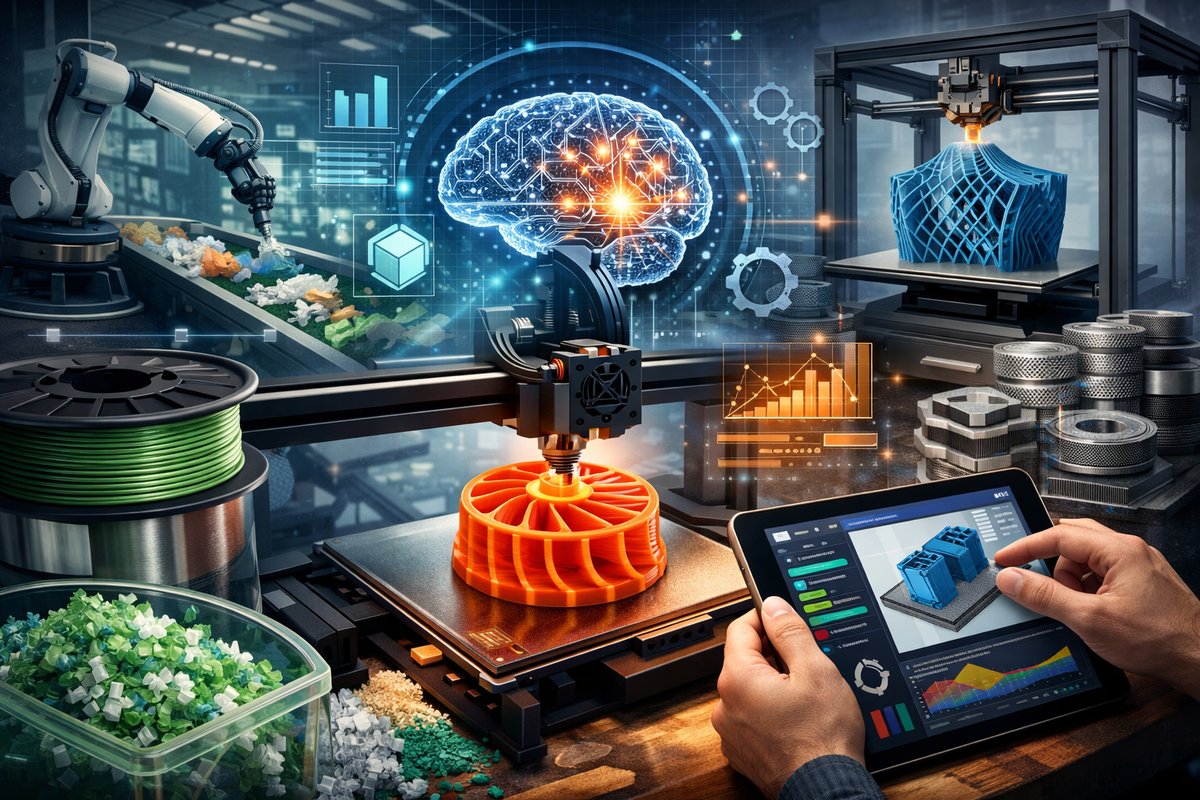

Throughout the world of additive manufacturing, one quiet revolution is unfolding: the drive to make 3D printing not just a showcase of technological wonder, but an accessible, repeatable, and budget-friendly craft. Whether you’re a hobbyist sculpting tabletop miniatures, an engineer fabricating custom jigs, or an educator guiding students through hands-on prototyping, the promise of turning digital blueprints into tangible objects now comes with fewer barriers than ever. Today’s innovations span hardware enhancements, material recycling workflows, and software intelligence, all aligned to stretch every dollar of build cost while boosting reliability.
At the heart of cost reduction lies material efficiency. Traditional fused filament fabrication (FFF) systems rely on uninterrupted spools of thermoplastic, yet innovations in filament recycling are changing the game. Desktop filament extruders can now ingest failed prints, support structures, and legacy scraps-converting them into fresh filament. The closed-loop approach not only slashes waste but transforms your workshop into a self-sustaining ecosystem. Imagine filtering out impurities with mesh sieves and regrinding old PLA into perfectly round strands of new filament, all without ever sending plastic to a landfill or ordering additional spools.
Resin printing, once limited by expensive proprietary cartridges, has witnessed a wave of open resin formulations and refillable tanks. Hobbyists can now choose from bio-based photopolymers that cure under standard UV wavelengths, eliminating the premium markup on closed systems. Combined with improved wash and cure stations that automate the post-processing cycle, resin-based workflows are now faster and less labor-intensive. Researchers have even adapted gravity-fed resin delivery systems to reduce resin waste during print initialization, ensuring every drop goes toward the final model.
Software intelligence also plays a pivotal role in trimming print times and material usage. AI-powered slicers analyze geometric complexity and automatically generate adaptive layer heights-thicker layers in low-detail zones and ultra-fine layers where curvature demands precision. This dynamic approach slashes build hours without compromising surface quality, making multi-color or multi-material jobs viable within shorter windows. Likewise, real-time print monitoring tools equipped with computer vision detect early layer deviations, allowing the machine to pause and correct instead of scrapping an entire part.
On the hardware front, dual-extrusion modules and modular hotends have become more affordable and user-serviceable. Makers can swap out nozzles of varying diameters mid-print or switch between thermoplastics and soluble support materials to achieve complex geometries. These modular assemblies often feature quick-release mechanics and standardized mounts, so upgrade kits are no longer the domain of large‐scale industrial machines. Open standards and community-driven designs ensure you can find replacement components without paying a premium.
For metal and composite enthusiasts, powder bed fusion systems are also evolving. Small-footprint laser sintering solutions now support metal alloys blended with binding plastics, enabling a low-temperature debinding process that reduces furnace time and energy consumption. While true metal 3D printing once demanded multi-hundred-thousand-dollar equipment, tabletop variants have brought the cost down dramatically. And with shared service bureaus offering pay-as-you-go scanning and post-processing, even small shops can prototype metal parts without heavy capital investment.
Beyond machine upgrades and new materials, process optimization often yields the greatest savings. Community-driven databases of print profiles help newcomers avoid trial-and-error by offering tuned settings for thousands of filament types, resin blends, and nozzle configurations. Coupled with intuitive bed-leveling probes and mesh compensation routines, these profiles cut setup time to minutes. The result is fewer failed first layers and more time spent experimenting rather than tweaking.
Education and collaboration also factor into economic feasibility. Online marketplaces now host parametric model repositories where designs can be customized on the fly-adjusting dimensions, textures, and structural supports without mastering CAD software. Those open-source parts feed directly into slicers, encouraging rapid iteration and lowering the barrier to entry for non-technical creators. Group buys for bulk filament orders or resin resin cartridges further reduce per-unit costs, while local maker collectives share equipment access and training sessions.
Sustainability remains a core value thread across these advancements. More printers incorporate HEPA-grade air filters and enclosed chambers to mitigate particulate emissions, safeguarding indoor air quality. Plant-based filaments continue to improve in strength and temperature resistance, giving eco-conscious makers a viable alternative to petroleum-derived plastics. As recyclers refine chemical depolymerization methods, broken prints and support residues could soon be returned to monomer form-closing the circle on polymer lifecycles.
Even the humble build plate has seen cost-saving reinvention. Flexible magnetic surfaces and peel-away sticker systems allow prints to pop free with minimal force, reducing the risk of damage to both the part and the plate itself. This reduces the need for frequent replacement of glass or specialized build sheets. Magnetic beds also enable swift plate swaps between multiple machines, speeding up production runs in home studios and small businesses alike.
Reliability, long a stumbling block for those seeking consistent yields, has steadily improved through closed-loop feedback. Integrated thermocouples, filament presence sensors, and electronic flow meters feed data to the control board. When the system detects anomalies-such as a sudden drop in extrusion pressure-it can adjust temperature, slow the feed rate, or send an alert before the part fails. Predictive maintenance schedules, informed by usage hours and sensor logs, ensure key components like fans and bearings are serviced before they become failure points.
Scaling 3D printing from one-off prototypes to small batch production hinges on workflow automation. Robotic arms can remove finished parts from the build plate and transfer them to wash stations, while custom conveyor setups clear printed layers from resin vats. Pairing these solutions with cloud-based printer management platforms means operators can queue dozens of jobs across multiple machines with a few clicks, maximizing uptime and minimizing manual labor costs.
As we look toward the next horizon, hybrid manufacturing methods promise to blend additive and subtractive processes in a single machine-milling precise features into printed parts without relocation. These symbiotic tools could eliminate the extra fixturing and alignment steps that traditionally inflate production cycles. When combined with real-time thermal compensation and adaptive path planning, the hybrid future holds promise for near-net-shape components right off the build platen.
Ultimately, the journey to economical, feasible, and successful 3D printing is not a single breakthrough but a mosaic of incremental innovations. From recycled feedstock loops and AI-driven slicing to modular hardware and automated post-processing, each advancement chips away at cost barriers and skill thresholds. Whether you’re exploring educational modules with students, launching a micro-factory for custom parts, or simply printing decorations at home, the toolkit has never been richer-or more affordable. The quiet revolution of layering material remains as exciting as ever, and the next generation of makers will inherit a landscape brimming with opportunity and sustainability.