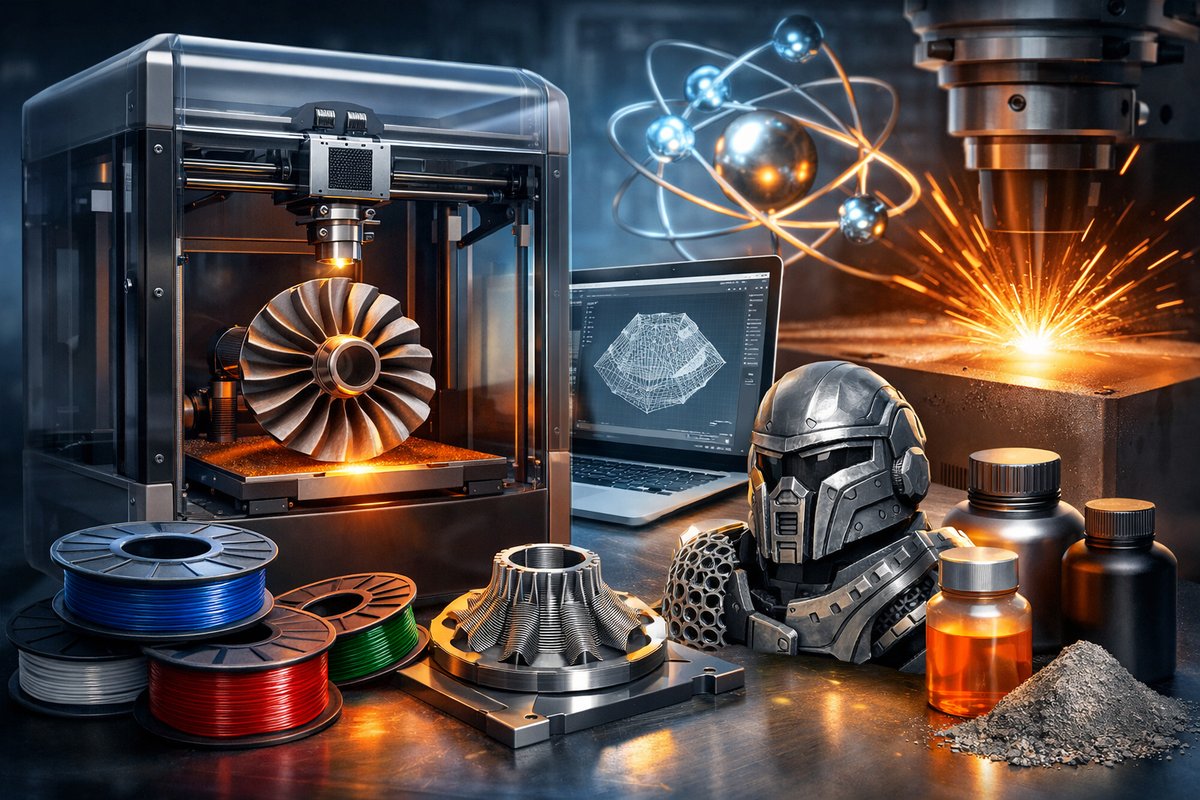

At the heart of the 3D printing revolution lies a simple yet powerful idea: build complex objects one thin layer at a time. Whether shaping delicate miniatures with melted filament or forging functional prototypes through laser-sintered powder, makers everywhere are tapping into a process where imagination meets precision. But real-world budgets, material waste and reliability hurdles have often stood in the way. Today’s community of hobbyists, engineers and educators is overcoming those limits with inventive, cost-conscious techniques that keep the dream of accessible fabrication alive.
Fused deposition modeling (FDM) remains the most affordable entry point. Open-source printer kits built from readily available parts now cost a fraction of what early desktop machines demanded. By choosing a modular frame design, users can swap hot ends, upgrade nozzles or expand print beds without replacing the entire printer. A shift toward direct-drive extruders also means more reliable filament feeding, fewer clogs and improved performance on flexible or composite materials. When every spare dollar counts, the ability to upgrade gradually preserves both cash flow and peace of mind.
Material costs can quickly eclipse hardware expenses if poorly managed. That’s why new filament blends are making a difference. Recycled-PLA spools reclaimed from landfill-bound prints, ocean-plastic filaments sourced from recovered bottles, and wood-filled or stone-filled composites let makers achieve unique textures without premium price tags. Some producers now offer pay-as-you-print refill stations where users deposit old spools and pay only for fresh material. By turning waste into workable feedstock, these circular approaches shrink costs and plastic footprints at once.
If speed and surface quality matter more than low entry cost, resin-based processes like MSLA and LCD curing beckon. Light-curing vats and matrix LED arrays have grown more affordable, while off-the-shelf bio-resins formulated from agricultural byproducts deliver cleaner prints with less brittle failures. Innovations in bottom-up vat lifters streamline layer release, reducing print time and energy use. Continuous digital light processing (cDLP) systems, inspired by industrial CLIP technology, now appear in budget units-allowing for near-seamless curing and even greater throughput.
Metal printing has typically been locked behind steep price walls, but that landscape is shifting too. Hobby-level binder jetting printers now cost well under five figures, using a two-step approach: first deposit a metal-powder slurry layer by layer, then sinter the green part in a countertop kiln. By decoupling printing from high-power lasers, binder jetting slashes equipment and maintenance costs while handling stainless steel, bronze or copper powders. For fabricators needing functional metal components without million-dollar budgets, it’s an accessible gateway into additive metallurgy.
Beyond hardware and materials, smarter slicing software plays a crucial role in trimming waste. Advanced infill patterns like gyroid, cubic subdivision and honeycomb provide structural strength with minimal filament use. Adaptive layer height algorithms adjust slice thickness dynamically across the print, using thinner layers for fine details and thicker ones for large, simple sections-cutting build time while preserving quality. Custom support generators pinpoint only the necessary contact zones, slashing cleanup labor and material consumption.
Recently, pellet-fed extruder attachments have emerged as a cost-saving alternative to standard filament drives. By feeding bulk plastic pellets directly into a specialized hot zone, these add-ons allow printers to run on industrial-grade resins originally destined for injection molding. The price per kilogram can drop to half that of retail spools, making large-format or high-volume runs far more economical. Some pellet systems even handle virgin and recycled polyethylene or polypropylene, broadening the palette to include food-safe, impact-resistant and flexible plastics.
On the software side, open-source communities are sharing calibration profiles, test prints and workflow automations under permissive licenses. Collaborative platforms host thousands of machine-specific profiles, streamlining setup for newcomers and veteran makers alike. Automated bed-leveling routines, nozzle height probes and live-monitoring plugins reduce trial-and-error, boosting first-layer adhesion success rates and slashing aborted prints that waste time and material. Community-driven print farms pool resources at makerspaces and schools, distributing build tasks across multiple printers to optimize uptime and throughput.
Post-processing can also be an unforeseen cost sink. Commercial solvent baths and ultrasonic cleaners carry ongoing refresh expenses. Today’s cost-aware users lean on reusable wash stations with closed-loop solvent filters or air-purged wash cycles that recover up to 80 percent of cleaning solution. Low-heat UV curing chambers built from hobby electronics kits cure parts evenly while minimizing electricity draw. For resin printers, simple ventilated enclosures with activated carbon filters keep fumes in check, avoiding pricey dedicated extraction units.
Education and training remain keystones of any sustainable fabrication ecosystem. Institutions are equipping classrooms with low-cost printers, open-source kits and shared filament banks. Students learn not only design and printing, but also repair, maintenance and material recycling. This holistic approach empowers the next generation to optimize every stage of the process-from model topology to end-of-life material recovery-amplifying cost savings while nurturing responsible makership.
Businesses seeking rapid prototyping find that these lean strategies translate into faster innovation cycles and lower development budgets. Small product teams use cloud-based slicing platforms to queue prints across multiple machines, turning ideas into tangible prototypes within hours. In-house binder jet setups for metal parts bypass outsourcing delays, while filament recycling stations on the shop floor reclaim production scraps to feed secondary applications like jigs, fixturing or marketing samples.
Artists and sculptors have joined the fray, blending 3D printing with traditional crafts. Economical resin printers allow them to explore intricate forms at microscope-level detail, then cast molds or develop mixed-media installations. Pellet-fed filament extruders enable large-scale kinetic sculptures that would otherwise be cost-prohibitive. By layering digital control atop analog artistry, creative professionals push the boundaries of both expressive potential and budgetary feasibility.
The journey toward truly accessible, economical 3D printing is ongoing. Emerging techniques like multi-material pellet co-extrusion promise to mix and match thermoplastics mid-print, opening doors to functional gradations without expensive cartridge swaps. On the software frontier, machine learning-driven slicing optimizers are beginning to predict print failures before they happen, adapting settings in real time to maximize first-print success. Researchers are even exploring entirely new feedstocks-from algae-based resins to carbon fiber-reinforced polyamides-that could further compress material costs while boosting performance.
No matter where you stand-hobbyist tinkering on evenings and weekends, classroom instructor guiding the next wave of innovators, or engineer refining the next breakthrough device-the innovations highlighted here share a common thread: the pursuit of less waste, lower costs and higher reliability. By embracing open platforms, recycled materials and smarter software, makers everywhere can unlock the true power of additive manufacturing without breaking the bank.
Three-dimensional printing began as an experiment in precision layering; today it’s a global movement toward localized, on-demand fabrication. When every gram of filament counts and every idle minute costs real money, these economical techniques transform potential roadblocks into stepping stones. The frontier before us is not just a matter of technology, but of community ingenuity and shared values-where sustainability and accessibility lead the way toward a future where anyone can bring ideas to life, one layer at a time.
As you explore, remember that every printer, filament spool and post-processing hack is part of a broader ecosystem. Contribute your own discoveries, tweak designs, share calibration data and keep pushing for more affordable, effective manufacturing in your corner of the world. The quiet revolution of making continues, and the next breakthrough could spring from your workshop, classroom or basement lab.
-
ELEGOO Mars 4 Ultra MSLA Desktop Resin 3D Printer - Amazon.com
Built-in WIFI connectivity, supporting both 2.4G and 5G networks with a transfer speed of 6-10Mbps, ELEGOO Mars 4 Ultra Resin 3D Printer eliminating the need ... -
Amazon.com: Protopasta 3D Printer Filament | Black Recycled PLA
Amazon.com: Protopasta 3D Printer Filament | PLA Filament 1.75mm | Black Recycled PLA | 1kg Spool : Industrial & Scientific. -
Gas Burner for Karu 16 Pizza Oven Gas Burner Attachment ...
Buy Gas Burner for Karu 16 Pizza Oven Gas Burner Attachment, Accessories for Karu 16 with Gas Converter Replacement Parts for Pizza Oven Gas Burner: Outdoor ...