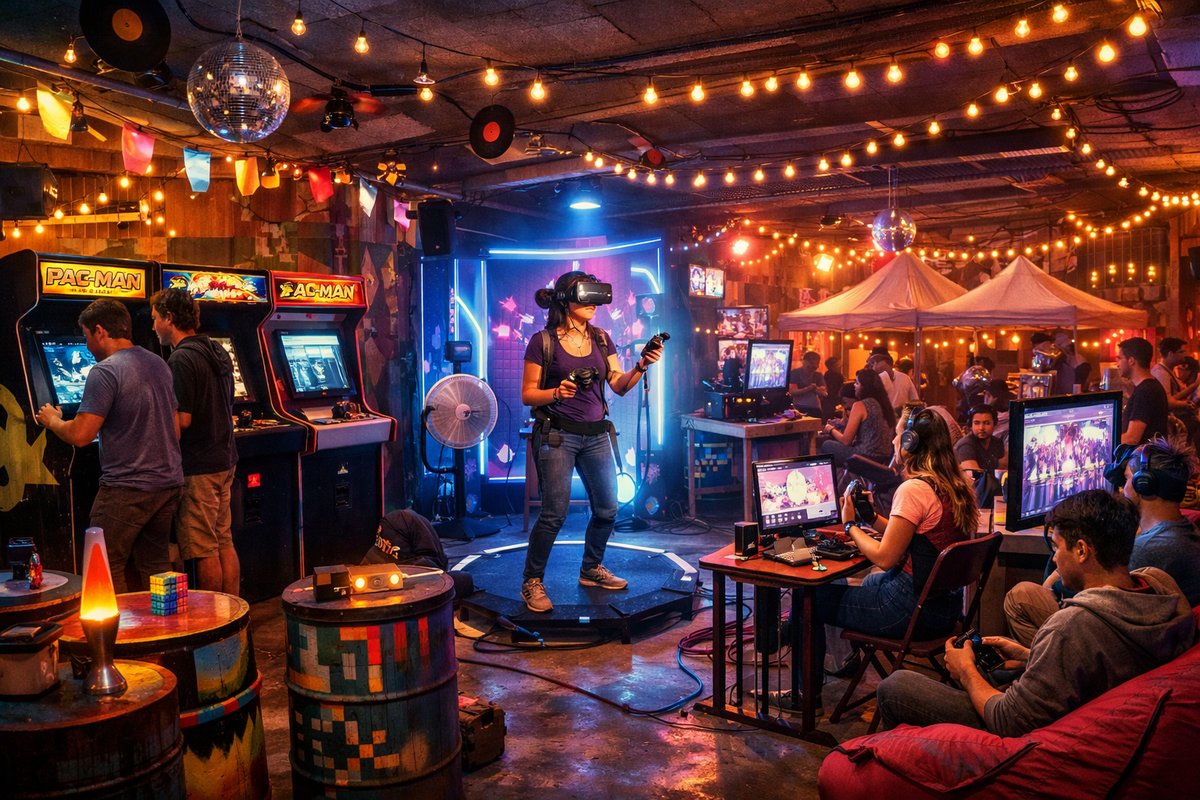

When a handful of volunteers in a Midwestern town rolled two retro arcade cabinets into the corner of a rec center gym, they never imagined they’d spark a movement. Within weeks, the modest setup evolved into a weekend-long gaming festival featuring a portable VR station, projector-mapped cosplay runway, and a mini-tournament bracket for local indie devs. Welcome to the age of micro gaming festivals: intimate, community-driven events that fuse digital thrills with hands-on creativity.
At their heart, micro gaming festivals are powered by DIY ingenuity. Instead of waiting for major conventions to roll through, small crews of players, makers, and local businesses pool resources. They rent or repurpose a vacant storefront, borrow folding tables from the library, and assemble secondhand consoles alongside streaming cameras. The result is a blend of nostalgia and novelty: a classic cabinet of claw-drop quarters sitting next to a sleek PC rig streaming eSports matches in real time.
One of the defining features of these gatherings is adaptability. Organizers often choose unconventional venues-a decommissioned schoolhouse, a converted shipping container, or even a public park pavilion. Portable equipment is essential: battery-powered speakers, mini projectors that clip onto tripods, and addressable LED strips that wrap around trees or beams. These modular elements allow each festival to adopt its own personality. In a lakeside town, boards of wood become makeshift tournament tables; in an urban loft, folding chairs double as commentary booths.
Cross-reality experiences have also found a natural home in micro festivals. By tethering immersive headsets to portable PCs and routing video feeds through capture cards, hosts can project VR gameplay onto large screens for onlookers. Augmented reality treasure hunts use smartphone apps to overlay digital clues across a neighborhood, turning local cafés into quest checkpoints. Attendees trade tips for troubleshooting headsets, soldering circuits for custom controllers, and testing motion-tracking gloves made from 3D-printed parts.
Sustainability has become a guiding principle. Rather than shipping brand-new gear long distances, organizers lean on upcycled furniture and open-source hardware. One festival famously transformed old pallets into standing desks for racing simulators. Another collected discarded computer towers from nearby schools to house indie arcade PCs. Recycling old cables and connectors keeps setups flexible, and flea market finds inject a warm, nostalgic vibe. Many festivals encourage attendees to bring their own gear for swaps or repairs, fostering a culture of shared responsibility.
Building community extends beyond playing games. Micro festivals often include panel sessions, lightning talks, and hands-on workshops. Local artists teach pixel art workshops on tabletops that double as digital canvases; hobbyist podcasters record live shows about retro board games under a tent draped with fiber-optic lights. For some towns, this marks the first time programmers, game designers, and casual players mingle in person, forging connections that last beyond the weekend.
Partnerships with small businesses play a crucial role. Food trucks specializing in gourmet snack mash-ups line up outside, offering loaded fries and mocktail flights. A neighborhood brewery taps custom-branded beers, decorating taps with joystick-shaped handles. Designers from local maker spaces 3D print keychain tokens as souvenirs, while vinyl-cutting workshops produce limited-edition stickers. Revenue is reinvested in future events or donated to youth coding programs, reinforcing the loop between gaming culture and civic life.
Live streaming has turbocharged the reach of micro festivals. With just a laptop, capture card, and a stable internet connection, volunteers host multi-camera broadcasts on social platforms. Viewers can switch between a first-person view inside a VR headset and a wide shot of a community tournament. Chat rooms buzz with remote attendees trying challenges alongside participants on site. Some festivals even sell digital passes, offering exclusive interviews, downloadable art packs, or custom emotes-all delivered with minimal overhead.
The pandemic pushed many gatherings online, but micro gaming festivals have rebounded by offering hybrid options. A small crowd can gather around a single console, while remote players join virtual rooms for co-op missions. Organizers livestream local DJs spinning chiptune and synthwave, layering audio feeds for in-venue speakers and online audiences alike. When health guidelines permit, a socially distanced LAN lounge springs up, complete with partitions fashioned from recycled display panels.
Accessibility and inclusivity are front and center. Many festivals dedicate space for adaptive controllers and quiet zones free from flashing lights and loud noises. Volunteer teams train as sensitivity guides, ready to assist neurodivergent players or those with mobility challenges. Wheelchair ramps are fabricated from donated planks, and braided rope barriers guide guests to tactile demo stations. Entry fees are kept low or waived entirely for students and seniors, thanks to grassroots fundraising and sponsorships from local co-ops.
The ripple effect of these micro festivals has been impressive. Indie developers discover passionate beta testers. High school students join hackathons that spring up alongside play zones. Brands-even those steeped in big-box retail-send small delegations of gear specialists eager to gather firsthand feedback. Public libraries report surges in game-design book loans, and local newspapers run weekend photo spreads of cosplayers and pixelated murals.
Critically, these festivals remind us that play is anything but frivolous. They harness curiosity, collaboration, and creation in service of community well-being. Neighbors who once passed each other on the street now strategize tactics at break-neck speed. Aspiring musicians remix retro game soundtracks on modular synthesizers while sharing headphones in a tent lit by color-shifting panels. Each gathering becomes a microcosm of possibility-a place where history, technology, artistry, and fun converge.
As micro gaming festivals proliferate, they adapt to local cultures rather than displacing them. In coastal towns, chestnut-brown surfboards double as display stands for handheld consoles. Mountain communities host pixel art hikes along forest trails, scrawling digital graffiti in augmented reality on tree trunks. Urban warehouses might focus on robot-vs-robot battles, while farmland venues showcase drone racing through cornfields. The fusion of site-specific quirks with universal gaming tropes fuels endless creativity.
Whether you’re a veteran tournament champion or someone curious about your first VR demo, there’s room in this burgeoning ecosystem. Subscription-free, low-cost, and driven by volunteers, micro gaming festivals promise a return to hands-on discovery and shared excitement. They remind us that no matter how polished our screens become, the truest magic happens when people come together to play.
As this movement spreads from hometowns to college campuses and backstreets to business districts, it’s worth asking: what might your neighborhood’s next micro gaming festival look like? Armed with a portable projector, a few LED strips, and an inventive spirit, you just might be holding the next level up for your local play scene.