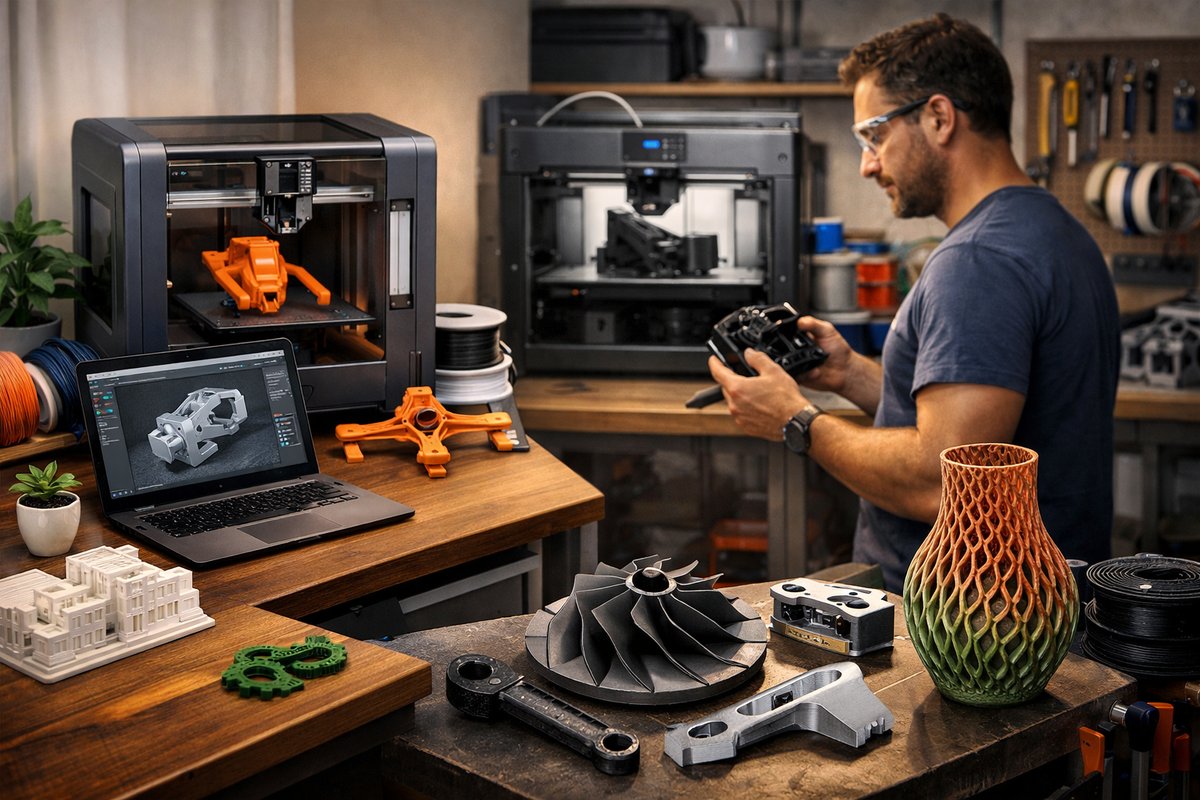

The hum of stepper motors and the soft hiss of filament melting into precise contours have become familiar sounds in maker spaces, garages, and design studios around the globe. Once a niche technology reserved for research labs, 3D printing has erupted into a worldwide grassroots revolution, powered by open-source builders, entrepreneurial tinkerers, and small businesses aiming to reshape how objects come into being. But with rising interest comes a familiar challenge: cost. How can the process of turning digital blueprints into tangible parts remain affordable, reliable, and energy-efficient as complexity scales?
A key battleground is materials. Thermoplastics like polylactic acid (PLA) and polyethylene terephthalate glycol (PETG) dominate most desktop machines thanks to low melting points and good mechanical properties. Producers have responded with value-priced filament bundles, often in multipacks that drop per-kilogram prices by up to 40 percent. Beyond bulk deals, hobbyists and small shops are taking recycling into their own hands. Open-source filament extruders can transform failed prints, discarded packaging, and waste plastic into fresh spools. Though the recycled filament may carry subtle color variations, it can serve for jigs, test fits, and non-critical prototypes at a fraction of the cost of virgin materials.
Composites have also matured. Wood-filled and metal-filled filaments let creators achieve natural wood grain or metallic finishes without the expense of post-processing real materials. Carbon fiber-reinforced blends provide remarkable stiffness for functional parts – particularly in drone frames, camera mounts, and lightweight robotics. By swapping a standard 1.75-millimeter PLA spool for a reinforced alternative, makers unlock performance once only possible on industrial machines, all while keeping material spend in check.
Hardware innovations further squeeze budgets. The rise of CoreXY and belt-driven kinematics has enabled low-cost kits to match the speed and precision of pricier Cartesian rivals. Multi-nozzle hotends are becoming mainstream, delivering dual-extrusion capability for soluble supports or color swaps without a second machine. Some printers feature integrated filament sensors, auto-calibration nozzles, and modular toolheads that swap between direct-drive extruders and high-temperature setups. These user-friendly upgrades reduce failed prints, cut down on wasted material, and shorten iteration time – every bit as important as raw unit price when tallying total cost per part.
Resin printing continues to disrupt, too. Digital light processing (DLP) and masked stereolithography (MSLA) platforms are now offered at desktop-friendly prices, bringing sub-50-micron resolution into reach. High-speed resins that cure in under a second per layer slash build times, while refillable vat systems minimize waste. A clever twist is the use of fine mesh filters to reclaim uncured resin, reinvigorating the economy of each bottle. Even better, generic UV-curing stations with programmable timers allow users to post-cure dozens of parts on a single turntable, reducing hands-on work and cutting energy use compared to sunlight-dependent setups.
On the industrial end, powder bed fusion has begun trickling down with desktop metal sinterers and low-cost thermoplastic powder solutions. Although still out of range for most hobbyists, these machines hint at a future where short-run metal parts can be produced on-site, bypassing traditional supply chain delays and tooling costs. For now, small-batch shops combine laser sintering services with local finish shops, achieving striking geometries and functional prototypes without massive capital outlay.
Software is another unsung hero in the cost equation. Advanced slicing engines now offer adaptive infill, variable layer heights, and integrated structural analysis, ensuring that each gram of filament is deployed exactly where it’s needed. AI-powered support generation reduces manual cleanup, and cloud-based slicing suites enable teams to queue prints and monitor farms from anywhere. Some platforms predict print success rates based on machine profiles and historic failure patterns, allowing users to tweak parameters ahead of time rather than scrapping half-built towers.
Layer adhesion and bed leveling – perennial pain points – have also seen breakthroughs. Flexible magnetic build plates with self-adhesive surfaces make part removal painless and cut down on print failures caused by warping. Automatic mesh leveling systems now map bed topography in seconds, feeding real-time corrections to the firmware. Eliminating manual shim-and-screw routines saves dozens of prints and dozens of grams of filament that once went into aborted first layers.
Energy consumption and sustainability are no longer afterthoughts. Low-power extruders, LED-based resin curing, and optimized print paths reduce overall watt-hours per build. Biodegradable PLA blends and bio-resins derived from plant oils are gaining traction, offering lower carbon footprints from cradle to landfill. Some enthusiasts even harvest local feedstocks – algae-based plastics and lab-spun biopolymers – as experiments in closed-loop manufacturing.
As prints move from prototype to product, economies of scale emerge. Small print farms – clusters of identical printers managed by a single host computer – leverage networked queuing and automated part removal to produce dozens, even hundreds, of identical components overnight. Smart splicing enables uninterrupted transitions between spools when a filament runs out, maximizing uptime. In medical and dental labs, this model is already powering affordable custom implants, guides, and models, all with rigorous traceability baked into the digital workflow.
Artists and designers have harnessed multi-material machines to co-extrude rigid and flexible filaments in a single object. Imagine a smartphone case with embedded shock-absorbing bumpers, or a piece of furniture whose internal lattice flexes under load. Gradient printing technologies, which seamlessly blend color pigments or shore hardness on the fly, are poised to add another layer of expression without inflating supply costs.
Quality-of-life enhancements round out the picture. Touchscreen interfaces, intuitive wizards for first-print calibration, and community-driven profiles on public repositories reduce the onboarding barrier for newcomers. Instead of spending days tweaking every variable, beginners can load a print in minutes and develop skills through experimentation.
The quiet revolution of affordable 3D printing isn’t just about lower prices. It’s about forging a resilient ecosystem where material waste shrinks, energy efficiency rises, and creativity scales without a proportional spike in expense. Whether you’re crafting replacement gears for an antique clock, mass-customizing ergonomic grips for power tools, or sculpting abstract forms that defy CNC machines, the path from concept to reality is becoming smoother, greener, and more accessible with every new layer.
And yet, the story is far from over. Continuous liquid interface printing (CLIP) promises industrial-grade throughput on desktop footprints. Multi-laser and multi-spectral resin systems are pushing layer times below a quarter second. On the thermoplastic side, embedded robotics and pick-and-place automation hint at fully autonomous factories making small-batch runs at scale.
In a world of supply chain uncertainties, additive manufacturing offers a compelling alternative: localized production lines that adapt on the fly. By marrying open-source ingenuity with plug-and-play modularity, the next generation of printers will be more affordable, more sustainable, and more capable than anything we’ve known. All it takes is a fresh roll of filament or a bottle of resin – and the courage to imagine an object waiting to be born, layer by layer.
-
phrozen Sonic Mega 8K S LCD/MSLA Resin 3D Printer, 43 µm High ...
phrozen Sonic Mega 8K S LCD/MSLA Resin 3D Printer, 43 µm High Resolution, 15 inch Mono LCD Screen, Fast Production Accurate Details, Large Printing Size ... -
PLA PETG Silk TPU Filament Multipack 1.75mm, 5 Or 10 Rolls ...
Amazon.com: PLA PETG Silk TPU Filament Multipack 1.75mm, 5 Or 10 Rolls, Neatly Wound 3D Printer Filament, No Bubble Printing Materials(Silk Dual 5kg Mix A) ... -
Sovol 3D Stainless Steel Funnel, Resin Funnel Filter Cup for SLA ...
... Resin, Double-Strainer Filter for 3D Printing Liquid, Coming with Cleaning Kit ... filters the contaminants while the resin is poured into the bottle; The ...