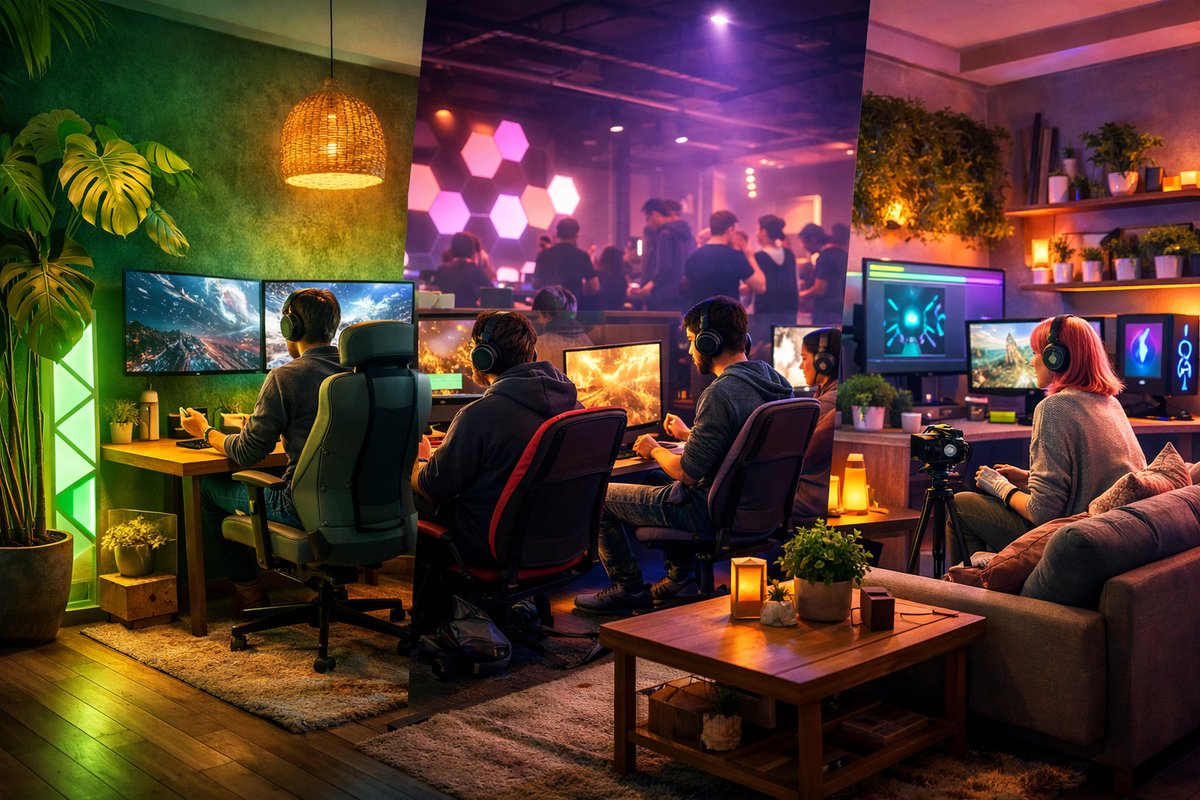

In living rooms, basements, and converted spare bedrooms around the world, a dramatic transformation is taking place. No longer content with a lone monitor on a folding table, enthusiasts of digital and analog play are embracing curated environments that marry cutting-edge tech with sustainable design and human-centered comfort. What began as do-it-yourself tweaks to playlists and RGB setups has blossomed into a holistic approach-one that views gaming and entertainment as a multi-sensory lifestyle experience.
In one coastal city, a group of indie developers teamed up with a local crafts collective to launch a “green LAN lounge” in a repurposed warehouse. Solar panels and reclaimed wood support rows of modular desks, while AI-driven overhead panels modulate color temperature and brightness in sync with on-screen action. The effect is less harsh neon glare than dynamic daylight cycling, reducing eye strain and enhancing immersion.
“At first we thought people just wanted bright lights,” says one organizer. “But once we introduced slow dawn-to-dusk fades and soft twilight modes, players hung around longer-and felt more connected to what they were playing and to each other.” This approach is finding its way into homes, too, as more gamers invest in smart LED systems that can be tailored to match the mood, genre, or pace of any title.
Soundscapes are experiencing a parallel renaissance. Spatial audio and ambient sound generators, once niche features on high-end headsets, are now embedded in home theater bars and Bluetooth-enabled speakers. Instead of static background music or burst-y sound effects, dynamic audio layers emerge and recede in response to in-game triggers, voice-chats, and even biometric signals like heart rate. The result is a living, pulsing environment that turns every mission objective or boss fight into an event worthy of goosebumps.
Designers working on custom playrooms have begun integrating sound-absorbent panels made from recycled textiles and bamboo fiber. These materials not only dampen echoes for clearer voice communication but also reduce reliance on heavy, synthetic foam. Paired with modular furniture-lightweight seating pods that can be snapped together for group play or separated for solo focus-the ecological footprint of these spaces can rival that of a mid-century living room.
Meanwhile, the resurgence of board-game cafes and pop-up arcades has added a tangible dimension to the broader movement. Neighborhoods in several metropolitan areas have seen mobile gaming hubs sprout up on sidewalks or in vacant storefronts. Equipped with solar-powered charging stations and foldable tables, these itinerant venues invite players to sample indie tabletop titles and retro arcade cabinets in alfresco settings. They double as social mixers, hosting open-air tournaments that stream live to online audiences, blurring the boundary between IRL and digital interaction.
Hybrid events are also gaining momentum in the console and PC realm. Weekend tournaments now feature livestreamed commentary booths set behind French doors or glass partitions, allowing in-person spectators to gather safely while remote viewers tune in from anywhere. Organizers deploy battery-backed Wi-Fi hotspots and portable climate controls so pop-up competitions can thrive in unexpected locations-from parking lots beneath solar canopies to converted shipping containers nestled between urban parks.
Back home, plush seating has become more than a matter of aesthetics or posture. Heated and cooled gaming chairs with adjustable lumbar support are helping reduce fatigue during marathon sessions. Cup holders and wireless charging pads built into armrests mean fewer breaks from the action. Some setups even include under-desk foot massagers that activate when players meet certain performance milestones, reinforcing a positive feedback loop that rewards both skill and self-care.
This emphasis on comfort and well-being has also given rise to specialized streaming rooms designed for content creators. These spaces merge studio-grade lighting with soundproofing and modular backdrops-often built from eco-friendly cork or felt panels-to help aspiring broadcasters craft professional feeds without a corporate budget. AI-enabled camera tracking and voice modulation tools handle the heavy lifting, leaving hosts free to focus on community building and on-screen creativity.
Content itself is shifting to complement these environments. Indie titles that center on exploration, sensory discovery, and nonviolent collaboration are carving out niche followings. Tranquil city-builders with dusk-to-dawn visual cycles, underwater life simulators that emphasize ambient sound composition, and cooperative puzzle games with dynamic color palettes are resonating deeply with players seeking soulful escapism.
Larger studios have noticed the trend, releasing special modes and hardware integrations that sync game events with external devices. A popular sci-fi RPG now offers firmware updates for compatible smart lights, triggering roomwide flashes and color washes during warp-speed travel or laser-tag firefights. Competitive shooters and sports titles likewise roll out settings that modulate fan zones, in-game chants, and crowd noise through localized speaker arrays-turning solo matches into spectator-style thrill rides.
Parents and families are joining the trend, too. Child-friendly “media caves” are being outfitted with blackout curtains, gentle LED strips that guard against midnight eye strain, and modular seating that accommodates both toddlers and grandparents. Toy chests on wheels slide in and out from behind screens, while convertible desks double as art stations for crafts and homework, preventing the playroom from feeling one-dimensional.
The rise of cross-generational play spaces owes much to the realization that social connection and sustainable design need not be mutually exclusive. Solar-easy LED kits, furniture made from reclaimed or renewable materials, and energy-efficient devices have become more affordable, lowering the barrier for households to embrace greener setups. In some communities, local governments are offering rebates or grants to support eco-upgrades in public gaming lounges and youth centers.
As the lines between digital and physical, online and offline continue to blur, one theme emerges: play is no longer confined to a screen or a controller. It’s an architecture of light, sound, and shared experience-a deliberate fusion of technology and humanity. Whether you’re huddled with friends in a pop-up arcade by day or crafting a multi-sensory haven in your home office by night, the quest for deeper immersion has opened up a world of design possibilities.
Looking ahead, expect voice-activated spatial controls that let you summon chat windows or lighting presets with natural language, biometric feedback loops that adapt gameplay to your stress level, and even more seamless integrations between hardware and environment. Communities will continue to experiment with sustainability, ensuring that the carbon cost of immersion doesn’t outweigh its social and creative benefits.
In the end, these next-generation play spaces aren’t just about the games themselves-they’re about fostering connection, well-being, and stewardship of our shared planet. Level up your setup with intention, and you might discover that the most rewarding quests unfold not on a screen, but in the spaces you build around it.