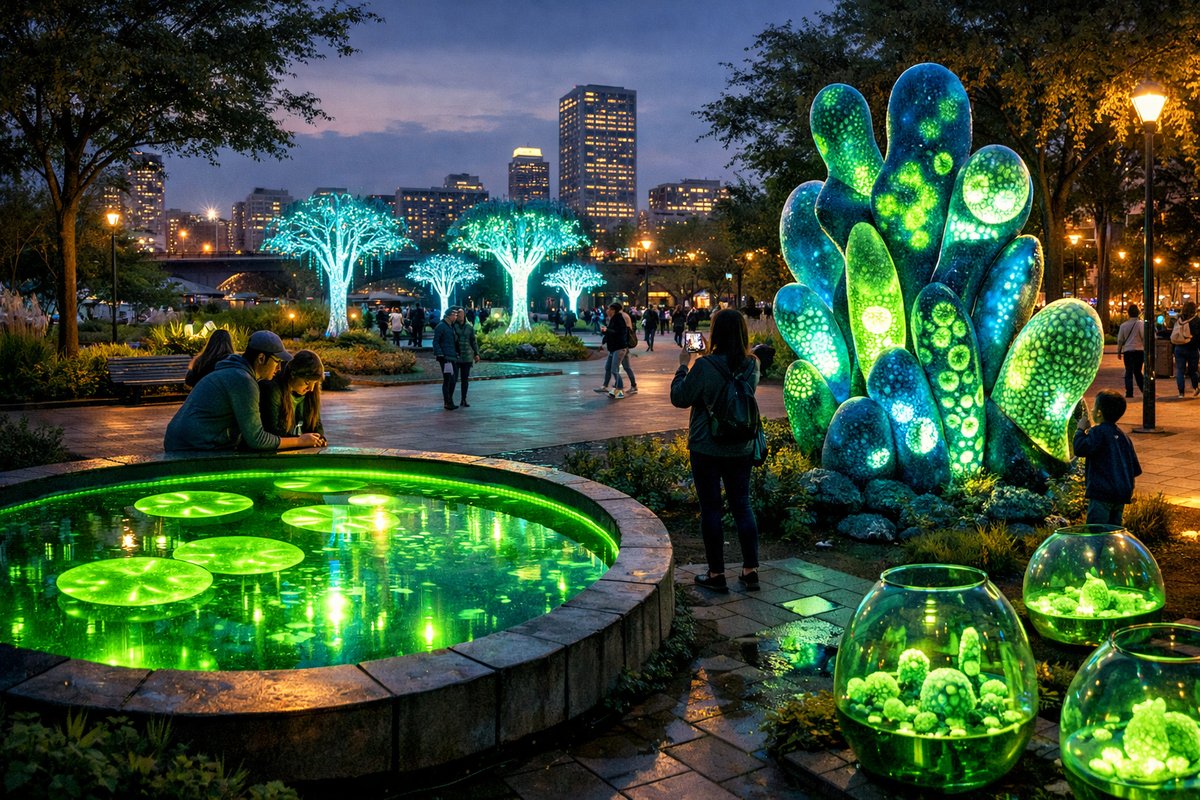

As dusk settles over the plazas and promenades of modern cities, a soft, living glow begins to emerge. It is neither the hum of neon nor the glare of streetlamps, but the gentle luminescence of genetically enhanced organisms-algae, bacteria and even plant cells-engineered to shine in the dark. These bioluminescent installations are moving beyond the confines of galleries and labs, venturing into public squares, waterfronts and high-traffic corridors. By fusing art, technology and sustainability, they invite passersby to interact with living matter in new, enchanting ways.
In recent years, bioartists and designers have pushed the boundaries of what can be considered a palette. Traditional pigments and brushwork give way to petri dishes, gene splicing and cell cultures. Pioneers in the field draw on techniques Nobel laureates helped popularize when they first unlocked the secrets of green fluorescent protein. Armed with CRISPR tools, glowing bacterial strains once confined to research benches now populate sculptural forms, wall-mounted panels and even wearable pieces. The result is a convergence of disciplines-biotech, ecology, architecture and public art-working in tandem to spark wonder while highlighting our fragile relationship with the environment.
A biennial public art festival in Rotterdam opened last spring with a series of shallow ponds seeded with genetically modified microalgae. At night, the installations pulsed in shades of aquamarine and emerald, reacting to movement and sound. Crowds gathered at sensors embedded around the waterline-each clap or footstep intensifying the glow, creating a synesthetic performance that felt both organic and otherworldly. In Singapore’s waterfront gardens, slender columns wrapped in living moss and bacteria were fitted with ultraviolet LEDs. When triggered by motion, the columns glowed a soft chartreuse, guiding evening strollers through winding pathways.
Further west, a Portland initiative commissioned local bioart collectives to create portable “living lanterns.” Hollowed wooden frames housed petri dishes of luminescent bacteria, flickering like campfire embers. Community workshops taught participants basic sterile-technique and culturing methods, emphasizing safety and transparency. Attendees left with simple kits to grow their own glowing cultures at home, subject to municipal guidelines on disposal and containment. These outreach efforts underscored a broader mission: demystify synthetic biology and foster informed public dialogue about living art.
At the heart of these installations lies a toolbox derived from fundamental discoveries in molecular biology. Enzymes like luciferase-first isolated from fireflies-catalyze chemical reactions that emit light. Fluorescent proteins, originally sourced from jellyfish, absorb and re-emit light at specific wavelengths. By inserting the genes that code for these proteins into microbial genomes, artists can coax cells to glow without external energy inputs beyond a minimal growth medium and occasional nutrient feed.
Unlike LEDs or neon, bioluminescent materials generate light through metabolic processes, offering a sustainable alternative that runs on very low power. Yet they require delicate balance. Temperature, pH and nutrient levels must be carefully maintained to sustain the glow. Many projects employ low-voltage UV LEDs to stimulate fluorescence in certain strains, creating hybrid works that combine living and electronic elements. Sensors and microcontrollers adjust lighting conditions in real time, ensuring that the organisms remain healthy while the spectacle endures.
Of course, introducing living organisms into public spaces raises regulatory and ethical questions. Municipal authorities grapple with biosafety classifications and permits for genetically modified microbes. Community advocates emphasize the need for clear labeling, risk assessments and containment protocols to prevent unintended release. Some art projects have responded by using only non-pathogenic strains or relying on “biobricks” that self-terminate after a few days. Transparency in sourcing and lab practices is now a cornerstone of responsible bioart.
Beyond regulation, public perception plays a critical role. Surveys conducted at interactive exhibits reveal a mix of fascination and unease. Viewers are intrigued by the seamless fusion of biology and design, yet wary of unseen genetic tinkering. To bridge that gap, many artists host open-lab days, inviting locals to observe culturing procedures under supervision. By taking the mystery out of the process, they cultivate informed appreciation rather than passive awe.
The educational potential of bioluminescent art is vast. Schools are adopting beginner-level kits that let students observe bioluminescent bacteria under simple LED lights. These kits come with transparent petri dishes, sterile swabs and pre-packaged growth media, packaged for classroom safety. Guided lesson plans explore microbial physiology, gene expression and ecological impact, turning public curiosity into hands-on learning.
Looking ahead, artists envision even more ambitious integrations. Imagine city façades covered in living panels that pulse with air-quality data or traffic patterns, their glow intensifying during peak pollution hours as a visual call to action. Wearable garments embedded with engineered yeast could light up at festivals, diffusing subtle fragrances in response to touch. Drone swarms might release microcapsules of bioluminescent plankton over waterways, tracing ephemeral patterns on the surface of rivers and lakes.
Part of the allure lies in the unpredictability of living systems. A power failure might dim LEDs, but living cultures can sustain a gentle glow for hours without electricity. Rainstorms can feed outdoor algae gardens naturally, while dry spells prompt artists to experiment with drought-resistant symbiotic communities. This dynamic interplay creates a living artwork that evolves alongside environmental conditions, offering a narrative of adaptation and resilience.
Critics caution that novelty alone cannot justify the ecological footprint of synthetic biology. Energy and water used in culturing must be weighed against the sustainability benefits of low-power lighting. Some institutions are exploring closed-loop systems that recycle growth media and harness composting processes to neutralize waste. Others pursue collaborations with waste-water treatment plants, feeding algae on effluents before returning purified water to the system.
As urban planners and cultural organizations seek to build greener and more engaging public spaces, bioluminescent installations offer a compelling model. They invite people to rethink everyday environments, turning sidewalks and plazas into stages for living light. With careful stewardship, these projects could become fixtures of city life, illuminating both our nights and our collective imagination.
In a time when sustainability and storytelling often feel like separate pursuits, bioart bridges the divide. It reminds us that the most striking innovations emerge at the intersection of disciplines-where curiosity, science and creative expression converge. As we step into glowing corridors and gather around living ponds, we glimpse a future in which art is not merely seen, but felt at the cellular level-alive, responsive and deeply connected to the world around us.