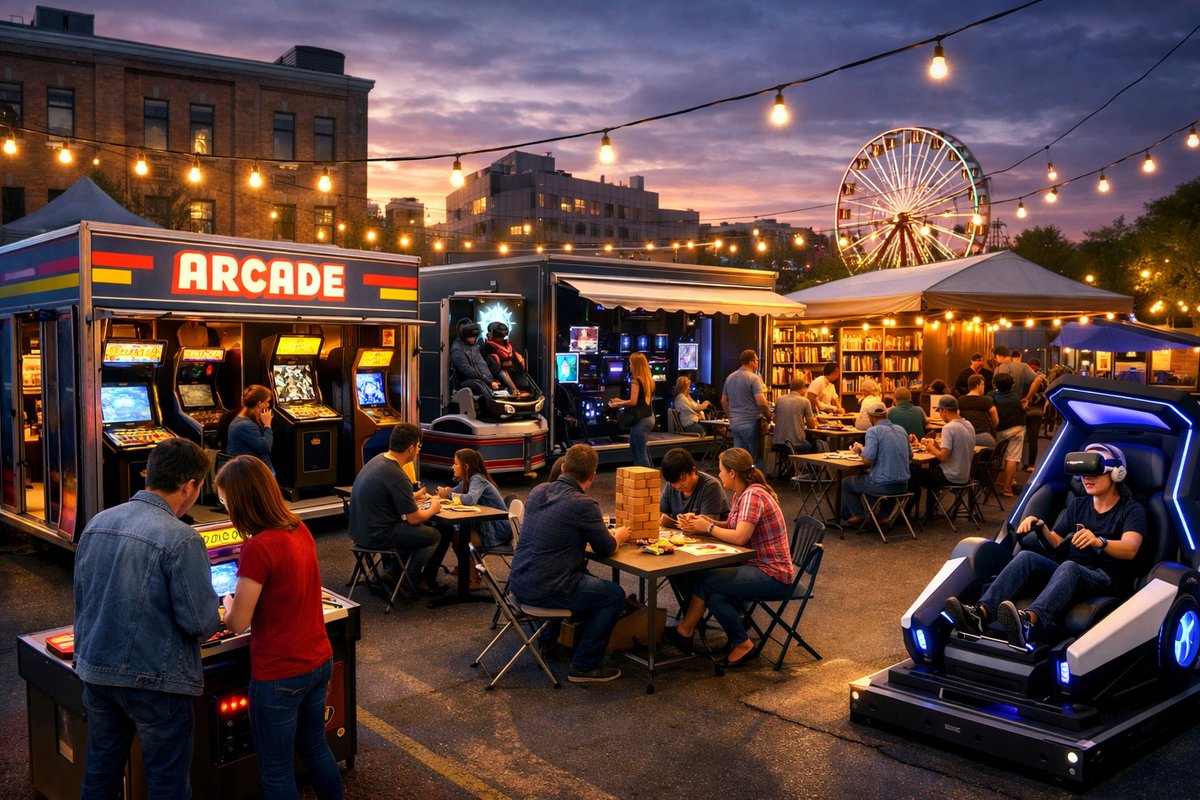

On a quiet Friday evening, a vacant warehouse near downtown morphs into a neon-lit arcade packed with pixelated cabinets, VR pods, and tabletop gaming tables. By Sunday, it disappears again, leaving only chalk footprints and the buzz of shared memories. This ephemerality is exactly the point. Across the globe, pop-up arcades and mobile play hubs have emerged as the latest frontier in community-driven gaming, turning underused spaces into impromptu playgrounds where nostalgia meets cutting-edge technology.
What began as small-scale retrospectives hosted by local gaming enthusiasts has ballooned into a full-blown phenomenon. In cities as diverse as Lisbon, Kolkata, and Detroit, organizers are tapping into a collective longing for tactile interaction-something that at-home consoles and streaming have struggled to replicate. The magic of gathering under one roof, selecting a joystick, sliding quarters into a machine, or huddling around a board game creates an energy that live streams and online lobbies simply can’t match.
Take PixelPop, a festival-turned-roadshow whose flagship event fills an abandoned brewery each summer. Attendees queue for hours to tackle classic arcade cabinets alongside bespoke VR escape rooms, all while DJs spin chiptune remixes. Around the world, smaller-scale versions adopt a DIY ethos: shipping containers retrofitted with gaming stations, modular LED walls projecting live tournament brackets, and food trucks serving pixel-patterned treats. For most hosts, the goal is less about profit and more about forging micro-communities that celebrate play at every level.
Cutting-edge hardware plays a starring role. Mobile VR trucks roll into neighborhoods equipped with high-resolution headsets, motion simulators, and haptic-feedback seats. Players strapped into these rigs report exhilarating immersion thanks to 4D effects-wind machines, mist sprayers, and dynamic seating that syncs with on-screen action. Meanwhile, custom-built “gaming pods” housed in retrofitted phone booths offer single-player challenges ranging from rhythm games to virtual hiking trails, encouraging quick sessions that keep lines moving.
Analog experiences remain equally vital. Tabletop game cafés on wheels park outside libraries and parks, inviting passersby to learn new board games guided by friendly volunteers. Titles like strategic city-builders, cooperative dungeon crawls, and storytelling card games share shelf space with classic chess and checkers. This blend of old and new appeals to families seeking screen-free interaction as well as gamers eager to explore the resurgence of analog design and craftsmanship.
A defining feature of these pop-ups is their hybrid connectivity. Many events stream live tournament matches from in-house consoles to social-media channels, allowing remote players to cast votes on in-game challenges or cheer on friends via chat. QR-code links on tables direct visitors to digital leaderboards, merch shops, and community forums. In this way, the line between on-site revelry and online collaboration blurs, forging a more inclusive play ecosystem that extends well beyond the event footprint.
Local businesses are quick to hitch a ride. Coffee shops chalk directional markers guiding gamers between stations. Pizza joints offer themed pie-and-play specials. Nearby retailers display pixel art installations to attract foot traffic. Municipal planners have begun exploring public-private partnerships, offering unused civic buildings at discounted rates for seasonal gaming festivals. Beyond the economic uplift, city leaders recognize the social value of these interactive spaces in fostering creativity, teamwork, and digital literacy among residents.
Inclusivity is at the heart of many pop-up concepts. Accessible controllers for players with limited mobility, quiet hours designed for neurodivergent guests, and family-friendly matinees ensure a broad spectrum of people can participate. Cosplay contests, speedrun challenges, and workshops on indie-game development cultivate a sense of ownership and pride among attendees. For communities long-starved of shared entertainment venues, these events offer both a cultural landmark and a catalyst for grassroots innovation.
Behind the scenes, passionate volunteers handle logistics, tech support, and programming. Some are veteran arcade technicians who scavenge parts from shuttered gaming parlors; others are 3D-printing hobbyists creating custom joystick mounts for adaptive controllers. Even sustainability enters the mix: pallets and shipping crates are repurposed into display stands, while solar generators and energy-efficient LED setups minimize environmental impact. In certain locales, excess snacks are donated to shelters, and leftover event signage finds new life as art installations in local schools.
Market analysts at a major research firm note that while home streaming services continue to dominate leisure reports, the fast-growing niche of experiential gaming is carving out its own segment-one valued at over a billion dollars globally. Smaller events often rely on ticketed entry or pay-per-play models, but sponsors ranging from independent game studios to nontraditional partners like coworking brands have begun underwriting free community days. This hybrid funding structure could make pop-up arcades a sustainable fixture rather than a fleeting novelty.
As the winter holidays approach, several cities are rolling out themed editions: a “Frostbite Festival” featuring retro skiing simulators, a mobile gothic castle housing multiplayer co-op horror quests, and pop-up ice rinks with integrated projection-mapped puzzle games. These seasonal twists underscore how flexible and adaptive the pop-up model can be, allowing organizers to tailor immersive experiences without the overhead of permanent venues.
Looking ahead, virtual backpack PCs and 5G hotspots promise to make remote sites as connected and powerful as professional studios. Imagine turning an empty field into a LAN party arena with cloud-based servers managing massive multiplayer battles. Or converting a shipping container into a solar-powered eSports lounge in a rural community that once lacked reliable broadband. The next wave of mobile play hubs will likely lean into these technologies, broadening access and reducing setup complexity.
For gamers craving more than solitary screen time, neighborhood pop-ups and traveling arcades are rewriting the playbook. They demonstrate how shared adventures-whether retro or futuristic-ignite human connection and community pride. Far from a nostalgic fad, this movement signals a shift in entertainment culture: one where physical space, local collaboration, and inclusive design converge to create unforgettable moments in pixelated light.
As one organizer aptly puts it, “We’re not just playing games; we’re building community.” And if recent attendance figures are any indication, that community is only just beginning to level up.