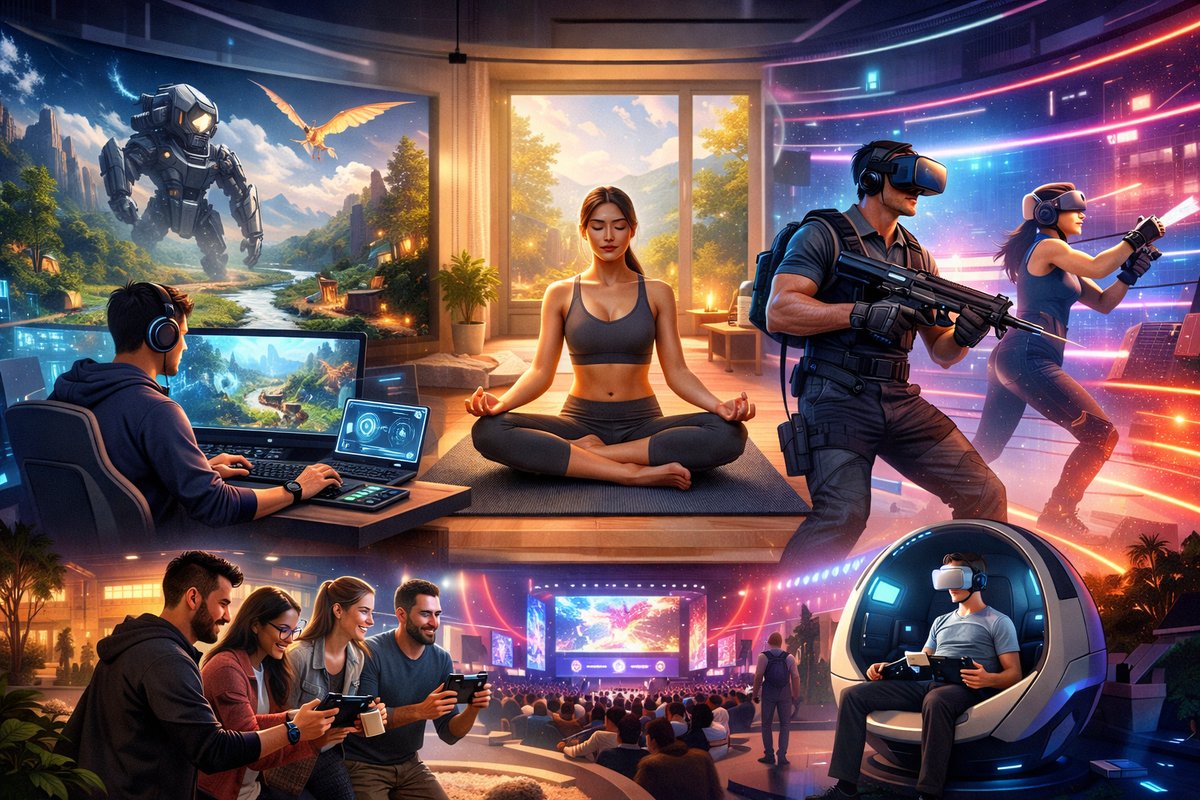

At a technology showcase in Berlin this spring, a prototype gaming arena drew crowds not with blazing graphics alone, but with an adaptive environment that shifted walls, lighting and soundscapes in real time. Powered by advanced AI, haptic flooring and projection mapping, the space demonstrated a future where the line between digital and physical play dissolves entirely. “We’re not just launching games,” one developer explained, “we’re curating entire experiences that evolve around each player’s actions, mood and even biometric feedback.”
Far beyond the plug-and-play desks of the past, today’s immersive gaming setups fuse artificial intelligence, ambient design and wellness practices to create environments that prioritize engagement, comfort and mental focus. Whether you’re a casual player exploring procedurally generated worlds or an esports athlete chasing peak performance, the next generation of gaming spaces is about more than pixels – it’s about the holistic experience of play.
Adaptive AI Worlds That Respond to You
Procedural generation has been a staple in gaming for years, but now machine learning takes it to another level. AI algorithms analyze player behavior, expressiveness and decision patterns to dynamically adjust game difficulty, narrative branches and environmental elements on the fly. In practice, that means a horror title might ramp up tension cues if you breeze through earlier encounters, or dial back intensity when your heart rate spikes above a healthy threshold.
One recent demonstration combined real-time sentiment analysis with environmental design. As players voiced frustration or excitement, overhead lighting shifted in color temperature, background music tempo responded to adrenaline levels and haptic feedback in the flooring conveyed subtle vibrations. The result felt akin to a theater that knows exactly when to dim the lights or raise the curtain for maximum impact.
Beyond spectacle, these adaptive systems have applications in education and therapy. Training simulations for first responders can scale scenario complexity based on trainee performance. Therapeutic games addressing anxiety or PTSD can tweak encounters to maintain a productive challenge without overwhelming the player. The fusion of AI and immersive design creates experiences that are as personalized as a streaming recommendation algorithm, but far more visceral.
Mindful Breaks and Wellness Integration
Long gaming marathons once left players drained, eyes strained and bodies stiff. Modern setups, by contrast, are embracing micro-rest features and wellness integrations. Wearable sensors track posture and muscle tension, prompting players to take brief guided breathing exercises or gentle stretches displayed on screen. Some headsets now include built-in timers that suggest a five-minute meditative pause after intense boss fights or prolonged sessions.
Spaces optimized for mindfulness also incorporate natural materials and biophilic design. A compact gaming corner might feature a live air-purifying plant, a cork-faced wall to reduce echo and adjustable ambient light that mimics the golden hour at dusk. These subtle touches create a cocoon of comfort, helping players stay present and focused even in the midst of high-octane competition.
On the software side, “focus playlists” curated by behavioral scientists fuse atmospheric soundscapes with low-impact tunes proven to maintain concentration. Instead of a generic looping track, these playlists evolve in sync with game events and biometric feedback, providing an unobtrusive nudge toward mental clarity.
Cross-Reality Arenas: Where Physical and Virtual Collide
Beyond the home office, venues around the world are popping up that blend projection mapping, motion tracking and sculpted environments to host cross-reality events. In these arenas, teams can chase flag captures behind actual obstacle courses while augmented reality headsets overlay enemy avatars, objective markers and environmental hazards.
One event space in Tokyo transformed a former parking garage into a multi-level battlefield. Walls doubled as screens, floors responded to footfall with force feedback and cloud-simulated weather effects – fog, rain and wind – were deployed to heighten immersion. By syncing dozens of wearable sensors, organizers could ensure safety, track performance metrics and dynamically redirect players to new zones based on crowd density.
These cross-reality arenas aren’t limited to competitive play. Escape-room style adventures leverage the same tech to craft narrative-driven journeys, while social hangouts project digital board games onto tables and morph the space into whimsical worlds for casual meetups. As 5G networks expand, event operators can stream avatar representations of remote participants, blending local and global audiences in a single shared space.
Community, Connectivity and Social Resurgence
Despite advances in solo experiences, community remains at the heart of play. Streaming platforms, cloud-based lobbies and virtual hangouts have kept players connected through pandemic restrictions. Now, hybrid models are emerging that let small friend groups gather in person while others join remotely via holographic projections or mixed-reality avatars.
Recent surveys indicate that 72% of players value shared experiences over isolated achievements. Game developers are responding by embedding communal hubs, spectator-friendly events and spectator zones in both virtual and physical venues. In one case, a developer integrated real-time spectator voting into a battle royale tournament, letting audiences influence supply drops or safe zone shifts mid-match.
Back at home, modular furniture designed for gaming dens can be reconfigured for screen sharing, board games or streaming marathons. Rolling whiteboards let strategy teams diagram tactics on the fly, while magnetic panels display collectible art prints and merch. The boundaries between study, work and play dissolve, creating a flexible ecosystem that adapts to each social gathering.
Designing Your Personal Play Space
Not every player has access to a downtown arena or high-end prototype, but many of the same principles can be scaled to a bedroom corner or studio apartment. Start by zoning your space: designate a “core play” area for your main screen and input devices, a “wellness corner” for breaks and stretches, and a “display wall” for art, collectibles or motivation boards.
Invest in adjustable lighting. An LED panel or desk lamp with tunable color temperature can shift from cool, focus-boosting daylight to warm, relaxing tones for downtime or streaming. Add a sound-absorbing rug and wall-mounted acoustic panels to reduce echo and maintain clear comms during multiplayer sessions.
Ergonomics is critical too. A desk that adjusts between sitting and standing positions encourages movement, while wrist-support accessories and an angled keyboard tray help prevent strain. A high-refresh monitor with adaptive sync ensures smooth visuals in fast-paced titles, and a low-latency gaming headset or earbuds keep audio cues crisp.
Finally, incorporate a mindful corner. A small yoga mat, a handful of resistance bands or a compact foam roller can slot into a closet or under your desk. Use guided break reminders to perform brief routines between levels. Over time, these micro-rest habits pay dividends in reduced fatigue and sustained focus.
Leveling Up: The Future of Play Spaces
As technology advances, we can expect even deeper integrations between AI, ambient design and community platforms. Imagine a gaming desk that senses your mood through thermal imaging and automatically loads a playlist or background scene to match. Picture a hybrid tournament where spectators join as AR avatars floating around the real-world arena, cheering on players in holographic form.
But no matter how sophisticated the tech becomes, the core of play endures: connection, creativity and the thrill of exploration. By blending immersive environments, wellness integration and community features, the next wave of gaming spaces promises to elevate both performance and enjoyment. Whether you’re building a compact at-home setup or visiting an adaptive arena, the future of play invites you to lose yourself in worlds that respond, recharge and bring people together like never before.