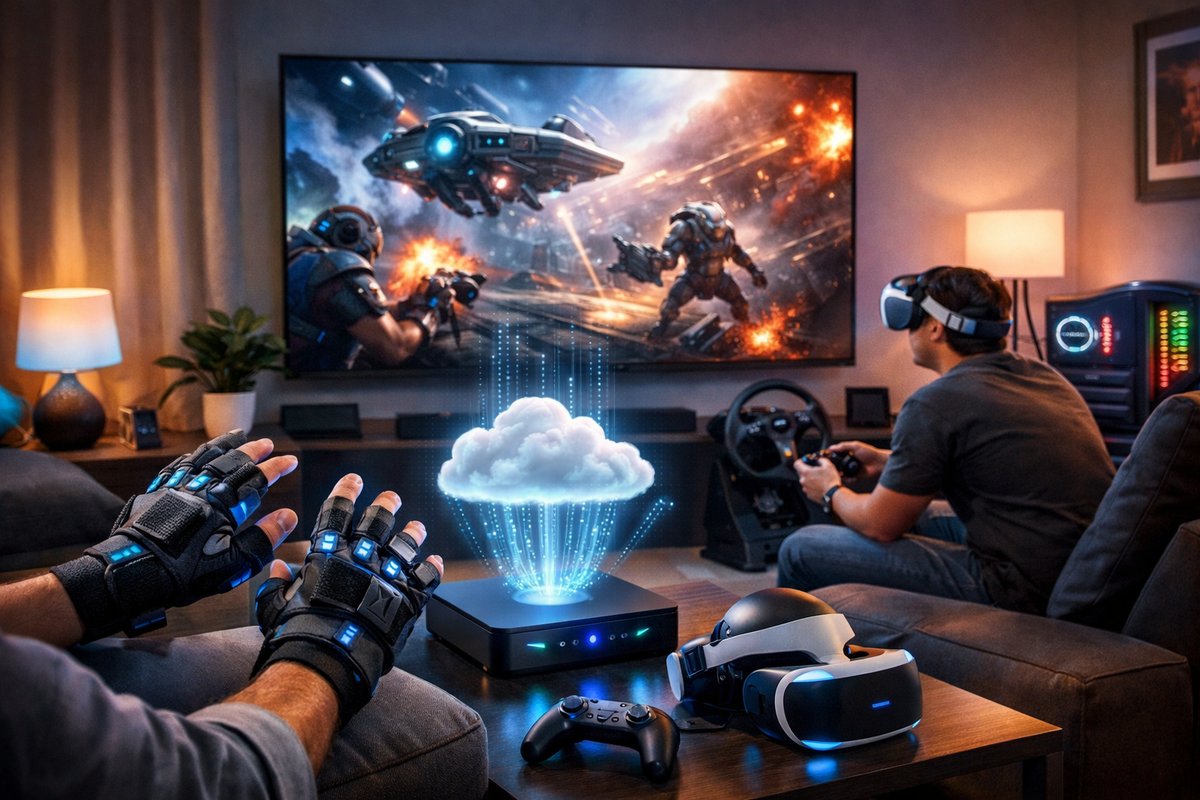

The quest to level up home gaming has never been more intense. A recent global rollout of a low-latency cloud gaming service has put blockbuster titles within reach on any screen, turning ordinary living spaces into launch pads for epic adventures. Players no longer need top-tier hardware to dive into visually stunning worlds; instead, they tap into remote servers that render games at high fidelity and stream them to PCs, laptops, even smart TVs.
At a major interactive technology expo this spring, developers unveiled next-generation haptic feedback gloves that promise to revolutionize how players feel virtual environments. These lightweight gloves use fingertip actuators to simulate textures, temperatures, and resistance, so you can sense the rough bark of a tree or the recoil of a blaster. Early demos highlighted a stealth-action game where players carefully traced the outline of a hidden mechanism, experiencing every notch and groove as if it were real.
Meanwhile, modular gaming desks are moving beyond simple cable trays and headset hooks. A new wave of motorized standing desks supports quick height adjustments via voice commands or smartphone app controls. These systems remember personalized presets-crouch mode for intense firefights, stretch mode for creative building sessions, and relaxed mode for casual streams. Built-in wireless charging pads and concealed power hubs keep controllers, headsets, and tablets within arm’s reach without cluttering the tabletop.
On the audio front, wireless surround headsets with spatial tracking are breaking free from bulky bases. Using onboard sensors to lock audio channels in space, these headsets let teammates’ voices drift naturally around you and pinpoint enemy footfalls with uncanny precision. Advanced noise filtering algorithms adapt the sound profile to your environment, dialing down outside chatter while amplifying in-game cues. Gamers report feeling more immersed and less fatigued during marathon sessions.
Lighting has also graduated from static RGB strips to AI-driven ambient systems that sync with on-screen action. Cameras and software analyze color palettes, tone changes, and movement, then translate them into real-time lighting shifts across a room. Imagine your walls glowing crimson during a dramatic showdown or pulsing blue as water surfaces cascade in an underwater level. Mood and immersion heighten when your environment literally breathes the game.
Virtual reality continues to expand beyond headsets into full-body experiences. An upcoming omnidirectional treadmill model lets players walk, jog, and sprint in any direction without drifting. Its low-friction platform and harness system track natural movement while maintaining stability. Paired with a lightweight VR headset and the new haptic gloves, users can storm digital castles on foot, duck behind cover, or chase foes without fear of bumping into physical walls.
Augmented reality is stepping up too. Transparent AR glasses are being tested in public beta, overlaying game elements over your real-world surroundings. Players can defend their living rooms from invading aliens, solve spatial puzzles on kitchen counters, or collect virtual artifacts in a local park. By blending physical and digital layers, these prototypes aim to make everyday environments part of expansive game worlds.
On the software side, adaptive gameplay engines use machine learning to tailor challenges to individual skill levels. These systems monitor reaction times, strategy patterns, and even heart rate from companion wearables. When they detect frustration or boredom, they adjust enemy AI, puzzle complexity, or resource availability to keep experiences balanced and engaging. Early trials suggest longer playtimes, higher player satisfaction, and reduced burnout.
Community-driven mod platforms are also evolving into curated marketplaces. Instead of wading through endless user uploads, players can browse verified mod collections that undergo quality and safety checks. These hubs support seamless integration with cloud-synced profiles, so custom levels, character skins, and gameplay tweaks stay in place across devices. For aspiring creators, built-in development kits let them script new mechanics without writing extensive code.
Beyond entertainment value, these innovations are spawning new social rituals. Friends are swapping virtual desk tours to show off customized lighting setups, replica props, and themed backdrops. Multiplayer VR lounges are hosting poetry nights, live concerts, and guided meditation sessions in virtual amphitheaters. Even fitness routines are gamified, with treadmill races in neon-lit fantasy cities and dance workouts choreographed to popular game soundtracks.
Privacy and sustainability are emerging as core concerns in this era of connected play. Manufacturers are exploring recyclable materials for controllers and desks, while data-minimizing firmware ensures personal information stays local unless users opt in to share performance statistics. Some companies are piloting trade-in programs for old hardware, refurbishing components for educational initiatives in underserved communities.
All these threads point to one overarching trend: blurring the line between play and reality. Whether you’re standing on a motion platform, feeling virtual rain drench your gloves, or watching walls come alive with synchronized light, the goal is the same-to create moments of genuine wonder. As hardware and software converge, home setups are transforming from static stations into dynamic playgrounds that adapt to players’ bodies, emotions, and creativity.
For lifelong learners and curious novices, the message is clear: the future of gaming isn’t confined to pixels on a monitor. It’s woven into every surface, every gesture, every breath. From the moment you power on your console or launch a streaming client, your living space becomes part of a larger narrative. The era of passive consumption is fading; in its place stands an interactive canvas where imagination, technology, and human connection collide. Buckle in-playtime has only just begun.