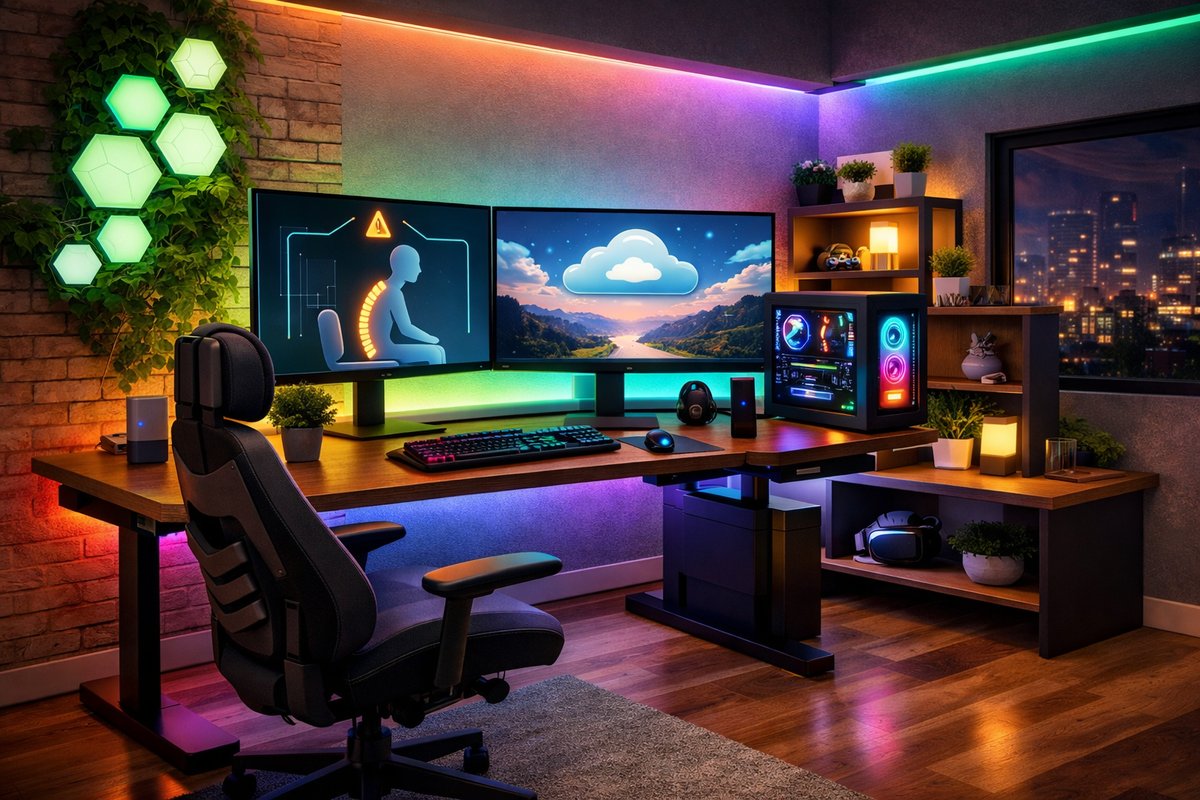

A quiet revolution has been unfolding behind the monitors and beneath the desks of gaming enthusiasts. No longer content with fixed setups, players are embracing adaptive environments that respond to in-game action, support long sessions with ergonomic insights, and even tread lightly on the planet. Industry data shows that the global gaming hardware and accessories market surpassed $45 billion last year, and experts forecast a compound annual growth rate of 7 percent over the next five years. This surge is driven in part by new demands for systems that do more than hold a keyboard and mouse-they anticipate your next move, adjust to your posture, and immerse you in multisensory feedback.
Take ambient lighting, for example. Once a novelty reserved for high-end rigs, dynamic LED bias lighting is now integrated directly into game engines. Color profiles shift in real time with on-screen events: flashes of red during combat, cool blues for underwater scenes, or vibrant greens when exploring alien jungles. Players report up to a 15 percent boost in perceived immersion, according to a consumer survey conducted by a leading peripheral manufacturer. Key SDKs allow indie developers to tap into this lighting pipeline, enabling a new genre of “responsive backdrops” in popular titles and live streams.
Alongside visual stimulation comes a growing emphasis on physical well-being. AI-driven posture coaches use built-in cameras or wearable sensors to monitor spinal alignment and send reminders when it’s time to stretch or readjust. Early adopters claim such systems can cut common complaints like neck stiffness and lower back pain by nearly half over a month of regular use. These solutions often pair with adjustable desks made from sustainable materials-bamboo, reclaimed wood, and recycled aluminum-merging eco-friendly construction with the flexibility of sit-stand setups. Some companies even offer modular kit designs so users can swap components rather than replace entire frames, extending product lifespans and reducing waste.
Portability has joined sustainability as another battleground. Cloud gaming services have tripled their user base in the past 18 months, sparking a demand for micro-consoles and TV sticks that slip into an HDMI port and stream AAA titles at 4K resolution. Gamers can shift from desktop to living room in an instant, preserving save states and input profiles across devices. With this shift, media rooms are evolving into multipurpose entertainment hubs-equipped with slim consoles, wireless controllers, and mobile-optimized audio systems that fold away when the next streaming marathon begins.
Competitive streamers have expanded this ethos into the social sphere. Ring lights calibrated to daylight temperature, compact studio microphones with noise-cancelling pop filters, and modular acoustic panels are now standard tools to deliver a polished broadcast. Viewers aren’t just tuning in for gameplay; they expect professional sound, crisp visuals, and on-the-fly scene transitions. Hardware makers have responded with low-latency capture cards that record gameplay and webcam feeds simultaneously, feeding into streamlined software suites. This turnkey approach lets content creators focus on personality and commentary rather than wrestling with technical hurdles.
Yet no setup feels complete without audio that moves with the action. Haptic feedback chairs and seat cushions provide nuanced vibrations-rumbling engines during a racing sequence or sharp pulses when delivering powerful blows. When combined with directional audio from a surround-sound speaker array or high-fidelity gaming headset, these tactile cues deepen the illusion of presence. Early experiments in scent diffusers, linked to in-game odor profiles, hint at even richer sensory layers on the horizon.
At the heart of this transformation is modularity. Clip-on trays for snacks and drinks, under-desk hooks for headphones, and built-in wireless charging pads keep clutter off the desktop. Monitor arms with 360-degree rotation allow viewers to flip between gameplay and chat windows. Mountable fans and small air purifiers attach to desk rails, ensuring comfort without encroaching on valuable real estate. Even cable management has evolved: magnetic channels beneath desktop panels organize wires and conceal connectors, while USB hubs with hot-swap bays let players plug in flash drives or external SSDs without crawling under the desk.
Research labs are already testing AI-driven lighting rigs that analyze streaming sentiment in real time-warm colors for supportive comments, pulsing alarms for spike in viewership, or dynamic themes that reflect peak engagement. These future solutions blur the line between player environment and broadcast studio, creating spaces that adapt seamlessly to community interactions.
As this wave of innovation washes over the industry, designers are left grappling with new challenges: how to craft gear that’s both customizable and affordable, durable and eco-friendly, intelligent and intuitive. The winners will be those who balance performance with practicality, delivering gear that feels like an extension of the player’s senses rather than a separate ecosystem.
For gamers, the takeaway is clear: today’s ideal setup isn’t a static desk and a flagship GPU. It’s a living system that responds to your body, your play style, and even your audience. Whether you’re a casual adventurer exploring indie dungeons or a pro navigating tournament brackets, adaptive environments offer a personalized edge. And as sustainability becomes a priority for both consumers and manufacturers, these setups promise to raise the standard not just for how we play, but for how we value the items we bring into our homes.
The future of play looks bright, literally and figuratively. From dynamic lightscapes to AI posture coaches, the next generation of gaming environments aims to wrap players in a responsive cocoon of sight, sound, and sensation. As technology continues to shrink the gap between virtual worlds and physical space, one thing is certain: when pixels meet physicality, the next level of immersion is just a firmware update away.