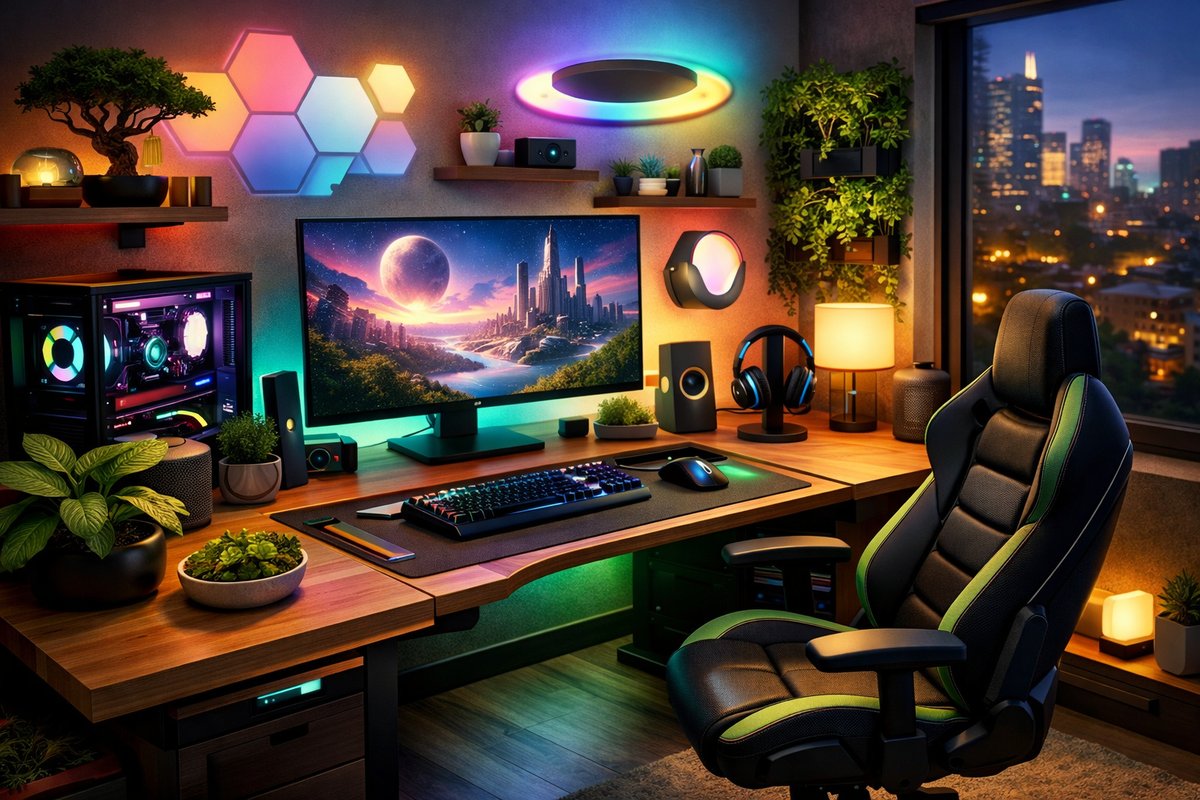

What started as simple plug-and-play consoles and basic desk arrangements has transformed into a sprawling landscape of configurable arenas, ambient ecosystems, and personalized performance hubs. Gamers today are no longer content to sit before a screen; they demand setups that respond to every heartbeat, adapt to changing light, and support both physical and mental well-being. Across living rooms, home offices, and dedicated playrooms, a fresh wave of hardware and design principles is converging under two guiding themes: sustainability and sensory immersion.
Modular design has risen from a purely industrial concept to the cornerstone of the modern gaming desk. Gone are the days of one-size-fits-all workstations built from unsustainable materials. Instead, players are opting for eco-conscious frames crafted from responsibly sourced bamboo or recycled steel. These desks feature adjustable heights, magnetic accessory mounts, and plug-and-play power modules that tuck away wiring to reveal a clean tabletop. What once required a tangle of zip ties and zippered sleeves now fits together in minutes, encouraging experimentation: swap a dual-monitor bar for a curved ultrawide rig, or attach an ambient LED strip channel when moonlight turns too harsh.
Lighting itself has stepped out of the static realm. Motion-sensing, color-tunable systems now sync with in-game events, music cues, or even biometric data. Imagine an adventure RPG that bathes your room in soft amber as the sun sets, then floods you with cool blue when a boss appears. Next-gen players can leverage AI-driven plugins that analyze on-screen color palettes in real time, projecting complementary hues onto walls and ceilings to extend the game world beyond the monitor. These dynamic scenes not only heighten immersion but can also be programmed to reduce eye strain by gradually shifting from vivid saturation to warmer tones during marathon sessions.
Soundscapes have followed a similar path. Traditional stereo speakers are giving way to spatial audio arrays, soundbars capable of discrete channel separation, and overhead setups that place virtual enemies all around you. But raw volume is only half the story. To combat echo and unwanted reflections, many enthusiasts are installing acoustic foam panels that double as art installations. These panels trap high frequencies and smooth out mid-range reverberation, delivering clearer footsteps in a stealth shooter or richer orchestral swells in a role-playing epic. When paired with a digital equalizer and head-tracking headphones, the effect is a three-dimensional audio bubble that fully encompasses the listener.
Ergonomics has also graduated from a simple lumbar cushion to a full-body support system. Gaming chairs now incorporate molded foam, adjustable headrests, and built-in haptic motors that vibrate in response to in-game impacts. Race-car seats once reserved for driving simulators have trickled into every genre, supporting longer stints without fatigue. And for those looking to blur the line between sitting and standing, convertible platforms combine desk risers with stability pads, allowing players to shift posture on the fly. This focus on movement and posture isn’t just a comfort trend-it’s a health imperative for anyone clocking dozens of hours each week.
Underpinning all of these physical upgrades is the shift toward cloud and edge computing. High-end GPUs have become modular, hot-swappable units that plug into external enclosures, while slim clients and micro-PCs handle basic tasks on-site. When heavier lifting is needed-ray tracing, machine-learning effects, or streaming VR-computations are offloaded to remote servers optimized for low-latency delivery. This hybrid approach lets users invest in only the hardware they truly need, reducing electronic waste while maintaining performance headroom through scalable subscriptions to graphical accelerators.
Virtual and mixed reality continue their steady ascent, too. Beyond bulky headsets tethered to powerful towers, lightweight AR glasses project interactive HUDs and social overlays onto your real environment. Treadmill platforms, once niche hardware for serious VR athletes, are now slim enough to store under a couch. Dedicated haptic vests and gloves recreate the texture of surfaces, while floor-mounted sensors gauge posture and balance, translating every lean or step into virtual exploration. As these devices migrate from research labs into consumer homes, developers are crafting more sophisticated experiences that blend digital terrain with living-room furniture-imagine ducking behind a coffee table during a light gun shooter.
What ties these transformations together is a growing awareness of user well-being and privacy. Smart desks with built-in occupancy sensors can log session length without capturing keystrokes, nudging users to take breaks. Biometric integrations-heart-rate monitors, galvanic skin-response sensors-are being harnessed not to sell ads, but to adapt gameplay difficulty, suggest relaxation modes, or even dim lights when stress levels spike. Such features respect personal data while delivering a more empathetic experience.
Brands across the gaming ecosystem are responding with modular SDKs, open API frameworks, and cross-platform interoperability. No single manufacturer holds all the keys; gamers can mix and match products from different vendors and still achieve unified control through community-driven software. This democratization accelerates innovation, enabling small studios and hardware tinkerers to share profiles, color-sync routines, and ergonomic presets without wading through proprietary ecosystems.
Looking ahead, the next frontier will likely focus on multisensory feedback-temperature-controlled surfaces that warm you next to a virtual campfire, scent diffusers releasing pine aromas in forest environments, or micro-tactile motors simulating rain. Early prototypes are already in lab settings, hinting at fully portable sensory capsules that transport users to distant worlds with astonishing fidelity. As sustainability principles guide manufacturing, these modules may be made from recyclable polymers and powered by energy-harvesting mats or compact solar panels.
In a landscape defined by rapid iteration and community collaboration, the concept of “your setup” is no longer fixed. It’s a living, breathing environment that grows with your skills, protects your health, and reflects your values. Whether you’re a newcomer assembling a budget-friendly corner station or a seasoned competitor outfitting a multi-room battle arena, the tools at your disposal now span every level of customization and conscience.
Play has always been serious business, but today’s generation of gamers demands more than raw specs and flashy RGB. They seek holistic spaces that honor sustainability, foster social connection, and respond to the rhythms of body and mind. From the material choices in your desk to the algorithms shaping your ambient mood, every element can deepen immersion and fuel focus. The future of play will be defined by setups that adapt to us as much as we adapt to them-bridging the gap between reality and the pixel-powered worlds we love to explore.