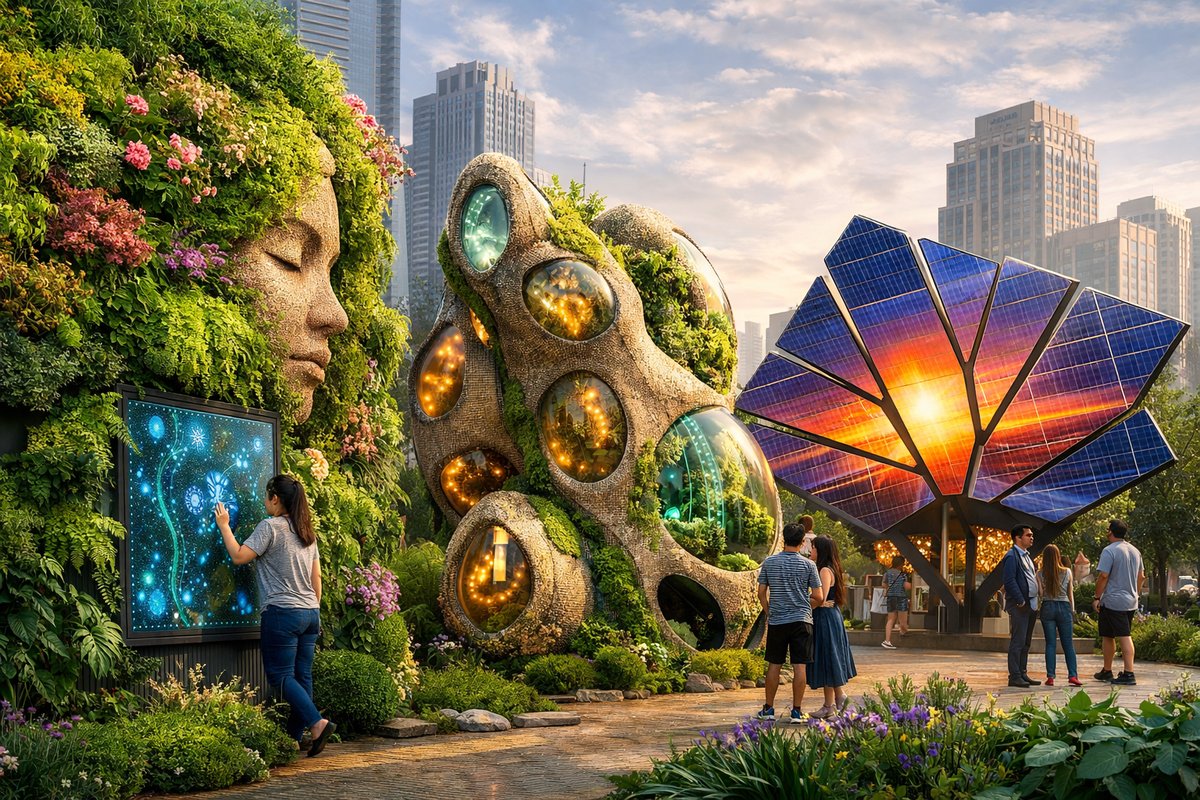

In many metropolises, the boundary between art and ecology is dissolving. Passersby no longer glance at static murals or granite plinths-they encounter works that pulse with life and draw energy from the sun. These living art installations harness fungi, plants, microclimates, and photovoltaic paint to reimagine public space as a regenerative, interactive canvas. From a mycelium pavilion sprouting in a former industrial lot to a solar-charged mosaic illuminating a nighttime plaza, artists and designers are pioneering new forms of expression that blur the line between city infrastructure and biodiverse habitat.
Last spring, a collective in London unveiled a series of hydroponic murals along a repurposed railway viaduct. Dubbed “Green Graffiti,” the vertical gardens are fed by a network of drip irrigation lines hidden behind reclaimed timber panels. Each panel hosts dozens of species-from ferns and mosses to edible microgreens-that form patterns reminiscent of pointillist paintings. Viewers can scan a QR code to learn about the local ecology, harvest a handful of peppery arugula, or even adjust the water cycles via a simple online interface. The result is an artwork that evolves daily, responding to seasonal shifts and community input.
Across the Atlantic, Chicago’s latest rooftop exhibit demonstrates how fungal mycelium can give form to architectural ambition. Artists inoculated lightweight panels with oyster mushroom spawn, then hung them beneath a solar shade canopy. Over the course of weeks, the mycelium network bound the substrate into sculptural alveolar structures that resemble the ribbed vaults of Gothic cathedrals. After fruiting, the installation offered public workshops in urban foraging, mushroom dyeing, and composting techniques. When the show closed, dozens of participants took home living plugs to start their own backyard myco-gardens.
Meanwhile, a collective in Madrid has experimented with photovoltaic pigments that turn entire walls into miniature power stations. By blending nano-scale solar particles into a translucent acrylic medium, they painted a large façade with color gradients that capture sunlight by day and power embedded LED diodes by night. The nighttime effect is a softly glowing cityscape-an ever-shifting constellation of light and shadow that communicates data on local air quality and foot traffic in real time. Far from a static billboard, the piece becomes a barometer of urban health.
Digital augmentation is also playing a key role. In Seoul, an interactive mural invites viewers to don gesture-tracking gloves and animate virtual vines, flowers, and insects across the painted surface. The motion data streams to overhead projectors that layer generative animation onto the brickwork, transforming a 200-year-old alley into an evolving augmented reality tapestry. Through this hybrid approach, the piece bridges traditional mural techniques and immersive gaming aesthetics, creating a new kind of street-level spectacle.
What unites these diverse projects is a shared philosophy rooted in biophilia and emotional intelligence. By incorporating living organisms, artists foster a deeper connection between residents and the natural cycles that sustain their cities. These installations spark curiosity and invite participation, creating moments of collective wonder in otherwise ordinary urban corridors. Community engagement workshops have become as integral to the creative process as the design studio itself, with participants co-authoring plant selections, sensor placements, and color palettes.
Underpinning the designs are arrays of low-power sensors, wireless irrigation controllers, and microcontrollers that automate environmental feedback loops. Soil moisture sensors gauge when plant modules need water, while light sensors adjust the brightness of integrated LED strips. Even the mycelium panels rely on custom electronics to regulate humidity and airflow, ensuring optimal growth without manual intervention. Many teams draw upon open-source hardware, 3D-printed enclosures, and modular components that can be repaired or upgraded over time, reflecting a do-it-together spirit.
The choice of materials is guided by sustainability principles as well. Bio-resins derived from plant oils bind natural pigments-such as iron oxide, carbon black from recycled wood, and ultramarine synthesized from non-toxic minerals-into weatherproof coatings. Modular planters are fabricated from reclaimed plastic or compressed agricultural waste, while hanging frames use corrosion-resistant alloys. Even the cables and tubing for irrigation and power are selected for recyclability, ensuring that when an installation reaches end of life, its parts can be repurposed rather than landfilled.
One striking example unfolded in São Paulo, where a former parking garage was converted into an indoor rainforest gallery. Visitors walked past towering columns draped in climbing jasmine and bromeliads, each cluster lit by soft-focus botanical lighting simulating sunrise and sunset cycles. Interactive stations allowed people to mix their own botanical essences-from lavender and rosemary oil-to diffuse into the microclimate, giving each visitor a subtle, personalized aroma. This sensorial layering created an immersive narrative about the city’s ecological history and the potential for rewilding abandoned spaces.
Beyond aesthetics, these living artworks deliver measurable environmental benefits. Green façades reduce urban heat island effects by shading concrete walls and cooling the surrounding air through transpiration. Vertical gardens filter airborne pollutants, trapping particulate matter and improving local air quality. Solar-powered light installations offset municipal energy consumption, while compostable substrates return nutrients to the soil. In neighborhoods with limited green space, the installations often become habitat corridors, attracting pollinators and beneficial insects to otherwise barren streets.
Of course, maintaining living art in public settings presents unique challenges. Weather extremes can strain irrigation systems, and vandalism can damage delicate plant modules. Wastewater run-off must be carefully filtered, and local regulations around public health require robust safeguards against mold and insect pests. Many teams collaborate with gardeners, engineers, and municipal agencies from the project’s outset to establish maintenance protocols and contingency plans for drought or freezing conditions. Long-term success often hinges on dedicated caretakers or community volunteers who commit to routine checks and seasonal pruning.
Looking ahead, the next frontier may lie at the intersection of living art and generative algorithms. Imagine a mural that senses rising urban temperatures and responds by sprouting different plant species, guided by machine-learning models predicting climate shifts. Or a bio-composite sculpture that adjusts its porosity based on real-time pollution data, filtering airborne toxins while reshaping its form. As sensors become more affordable and biological materials more versatile, artists will gain unprecedented control over time, growth patterns, and environmental interactions.
In an era when concrete jungles often feel disconnected from nature, living art offers a hopeful vision of cities that breathe, listen, and adapt alongside their inhabitants. By fusing biology, renewable energy, and digital design, these installations promise a richer, more resilient urban experience-where the walls around us are not just surfaces to admire, but living systems to nurture.
-
20 Non-Toxic, Archival Earth & Mineral Pigments for DIY Paint – Eco ...
Shop NATURAL EARTH PAINT ECO-FRIENDLY PAINT KITS at the Amazon Arts, Crafts & Sewing store. Free Shipping on eligible items. Save on everyday low prices. -
Amazon.com : 280 Pcs Barbed Connectors Irrigation Fittings Kit,Drip ...
Easy to storage and install: These irrigation kits have a box, convenient and will not leak easily,just push the tubing firmly over the barbs for a tight ...