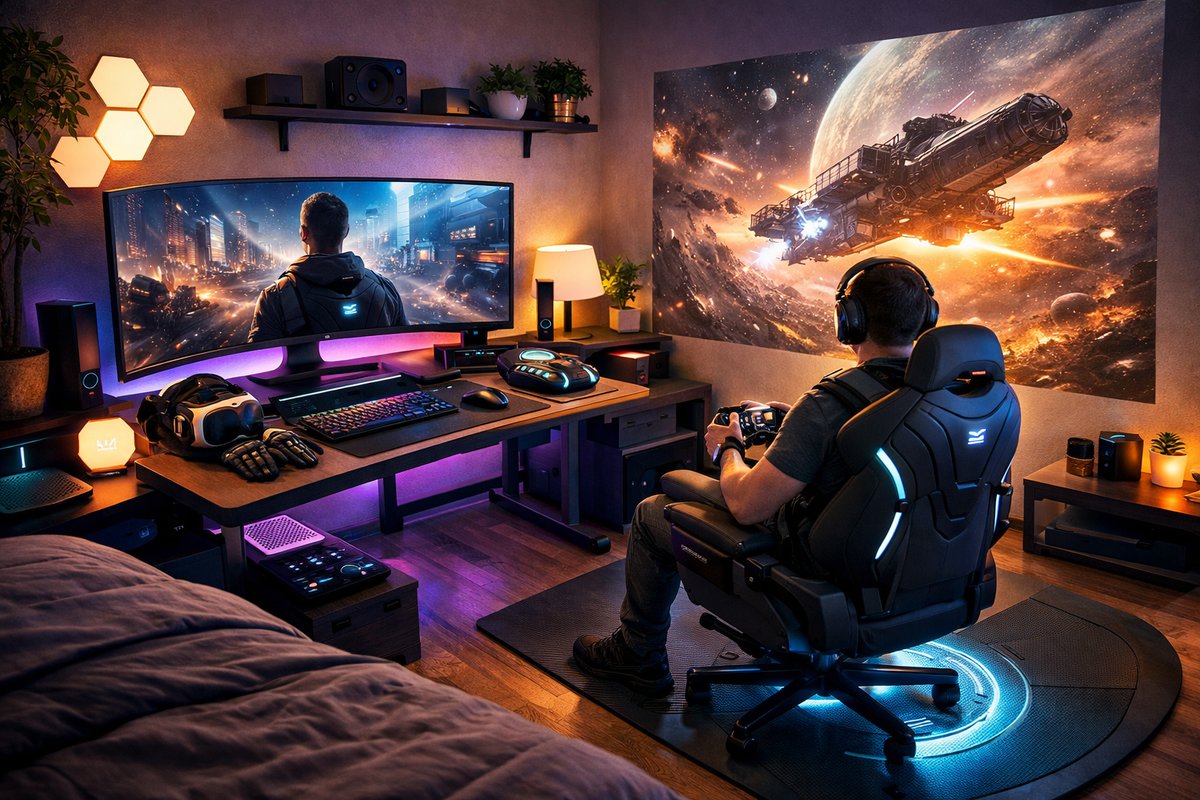

In living rooms, bedrooms and shared workspaces around the world, a subtle revolution is underway: play is no longer confined to a screen perched on a desk. Enthusiasts and newcomers alike are embracing modular, sustainable gear that transforms any corner into an immersive domain, where digital and physical elements merge to spark curiosity and social connection. From adaptable desks with quick-swap panels to ultra-portable projectors and next-gen haptic accessories, the emerging ecosystem prioritizes emotional engagement, privacy by design and energy-efficient materials-igniting a new chapter in how we experience games and entertainment.
At the heart of this movement lies the modular desk. Once a simple platform for a PC tower or console, it now serves as a dynamic stage for multiple play modes. Users can snap on elevated monitor arms that rotate into portrait or landscape orientation within seconds. Cable channels built into interchangeable tabletop panels hide power supplies, routers and external hard drives while keeping airflow unobstructed. Biophilic accents, such as cork inlays or bamboo edge trims, replace single-use plastics with renewable alternatives. These setups invite players to tweak layouts on a whim-swapping from a twin-screen productivity rig in the morning to a horizontal display array for racing sims at night-without tools or an afternoon of rewiring.
Meanwhile, projection systems are erasing the boundaries between digital content and physical surfaces. Ultra-short-throw projectors, once bulky and expensive, have slimmed down into compact units that sit inches from a wall or desktop. Paired with basic depth-sensing cameras, they can cast interactive overlays onto tables, turning any coffee table into a virtual board game. Motion tracking algorithms open the door to gesture-based controls for puzzle adventures or rhythm challenges, all without a bulky headset. And because these projectors run on low-power laser modules, they sip electricity and last for tens of thousands of hours before requiring minimal maintenance-an appealing detail for players who care about both the planet and their energy bills.
This blend of projection and gesture technology is already finding niche communities. Local meet-ups in coworking spaces and cafés host tabletop tournaments where players pass a single portable unit between them, each match spawning live reactions and laughter as spectators crowd in. The equipment fits in a backpack, making it ideal for traveling players who crave social connection wherever they roam. Organizers appreciate that these sessions can run without cloud services, preserving data privacy and allowing attendees to opt in without sharing personal profiles with a third-party server.
On the personal front, augmented reality glasses are stepping out of research labs and into consumer hands. Lightweight and transparent, they layer game elements onto real-world surroundings-invading a living room couch with virtual enemies or scattering puzzle clues across the kitchen counter. Developers are leveraging open-source frameworks to ensure ethical data handling: positional tracking stays local to the device, motion records never leave encrypted flash storage and optional facial expression analysis can be disabled by default. By embedding privacy at the hardware level, these headsets encourage trust, letting curious players explore hybrid worlds without sacrificing control over their personal data.
Perhaps most exciting is the rise of wearable haptic accessories, which add a tactile dimension to digital experiences. Haptic vests equipped with vibration arrays deliver directional feedback during action sequences, while glove-style devices use micro-linear actuators to simulate texture and resistance. Early adopters rave about feeling the tension of pulling back a bowstring or the impact of virtual raindrops on their skin. Though these products still occupy a premium tier, a growing number of open-source designs and crowdfunding campaigns are driving prices downward. Coupled with modular port connectors, players can retrofit older headsets or gamepads with haptic extensions, breathing new life into existing hardware and reducing electronic waste.
Immersive sound design has also leveled up in recent months. Spatial audio drivers in wireless earbuds now manage individual channel delays, creating a 3D sound stage small enough to wear on the go. Players walking through an urban stealth game might hear distant footsteps behind them or the rustle of foliage beneath their feet. When docked into a desktop charging pad, the same earbuds deliver full-spectrum music playback, toggling between Bluetooth and low-latency wireless modes. Energy-efficient driver technology extends battery life across marathon streaming sessions, and replaceable ear tips made from recycled silicone reduce single-use plastics.
More players are thinking about sustainability across every layer of their setup. Energy Star-certified monitors and power supplies help curb energy consumption, while upcycled desk panels crafted from reclaimed wood or recycled ocean plastics showcase a circular-economy mindset. Communities are sprouting around hardware swap meets and modding workshops, where gamers trade excess parts or collaborate on DIY solutions. This grassroots ethos emphasizes extending device lifespans and minimizing landfill contributions, challenging the throwaway culture once synonymous with rapid upgrade cycles.
With hybrid play so accessible, many are rediscovering the social joy of local co-op experiences. Small form-factor PCs equipped with entry-level graphics cards now cost less than a premium headset did just a few years ago. Local networking features allow two or more rigs to link over a private mesh, running competitive matches, LAN parties or collaborative design sessions without touching the internet. This offline model appeals to privacy-minded users, parents concerned about screen time moderation and educators exploring immersive tools for teaching math or history in interactive 3D environments.
Streamers and content creators are embracing these setups too. Affordable broadcast-quality webcams, clip-on ring lights using high CRI LED arrays and modular audio mixers help aspiring hosts curate professional-grade feeds. Attention to cable management, acoustic dampening panels and diffused backlighting not only enhances the viewer experience, but also encourages mindful work-life boundaries-integral for mental wellbeing. Viewers feel more connected when they glimpse the intentional design of a play space rather than a cluttered corner strewn with wires and empty energy drinks.
As these trends converge, the line between play and performance blurs. Modular tech empowers users to craft environments that adapt to their moods, workflows and social circles. Immersive gear fosters deeper emotional connections, whether that’s the thrill of a virtual adventure, the camaraderie of a co-op raid or the satisfaction of a creative project brought to life through mixed reality. Sustainability and privacy serve as guiding principles, ensuring that as play becomes more elaborate, it also becomes more responsible.
By breaking down barriers between screens and spaces, these innovations democratize advanced setups once reserved for high-budget studios. Weekend hobbyists can curate museum-quality soundscapes. Small-town gamers can host projection-based tournaments. Teachers can integrate gesture-driven simulations into classroom curricula. And all of them can do so with gear that respects the planet and protects personal data.
In the coming months, we expect to see new joint ventures between open-source communities and established manufacturers, further lowering price points for haptic devices and AR headsets. Software platforms will add offline sandbox modes, enabling creators to build world-spanning experiences without ever connecting to a central server. And modular hardware ecosystems will continue to expand, with standardized docking ports and universal mounting rails bridging brands and product lines.
The age of static, single-purpose gaming rigs is fading. In its place stands a flexible, values-driven landscape where innovation serves both the individual and the collective good. As players assemble their next immersive arena-whether on a reclaimed wood tabletop or a minimalist aluminum frame-they’re not just leveling up their own experience. They’re contributing to a vibrant ecosystem of shared discovery, mindful design and endless creative possibility.
So take a moment to reimagine your corner of play. Start small: swap out that old USB hub for a modular power strip with smart energy monitoring. Experiment with a low-profile projector that can holographically expand your next co-op session. Plug in a haptic glove prototype from an open-source collective and feel the difference in your next strategy match. By approaching each upgrade as both a technical and a values-driven choice, you’ll unlock new dimensions of fun-without losing sight of sustainability, privacy or the simple joy of play.
Welcome to the future of gaming and entertainment setups: where every surface can be a stage, every gesture a command and every community a global campus for curiosity.