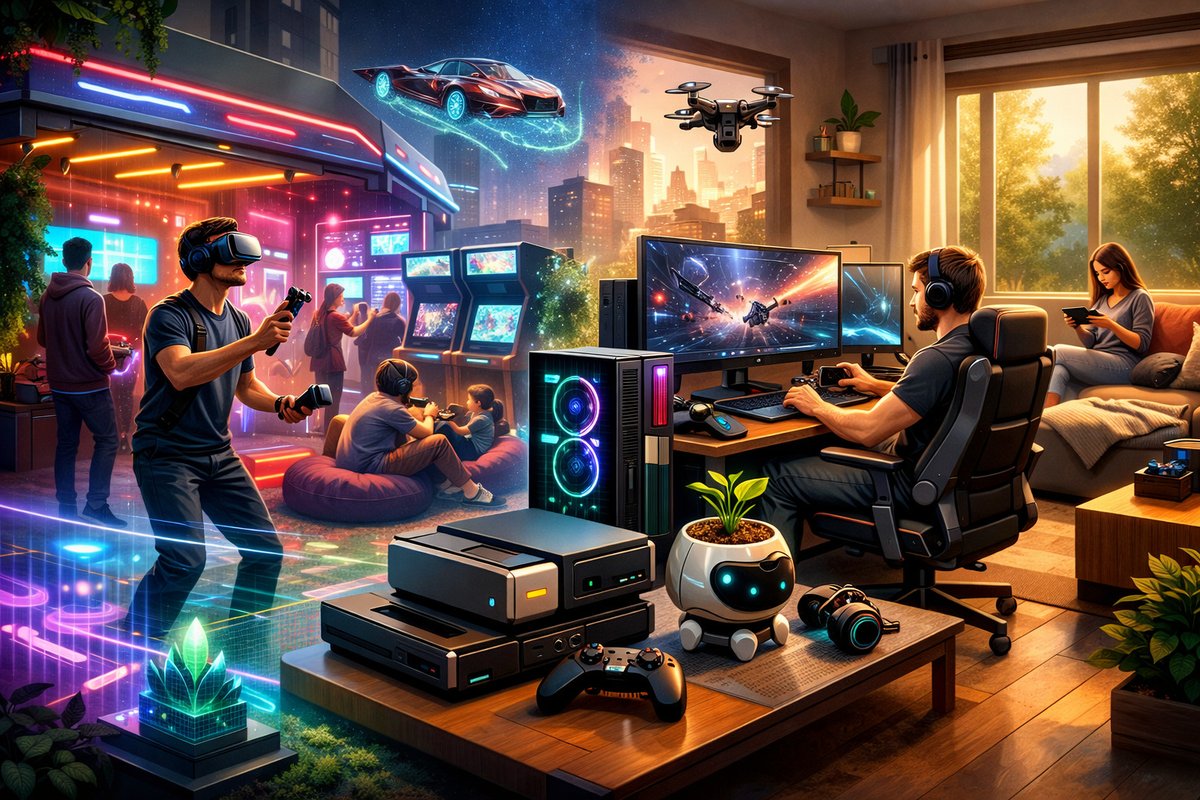

Play has evolved beyond the traditional living room console setup into a sprawling ecosystem that spans street-corner pop-ups, subscription-free streaming platforms, and customizable hardware bricks. Every surface can now be a virtual arena and every handheld device a portal to community-driven challenges. This transformation speaks to a broader appetite for deeply personal engagement, fueled by recent gains in augmented reality shipments-up nearly 18 percent last quarter, according to tech analysts-and a 25 percent surge in revenue from local arcade operators.
At the heart of this renaissance is modular hardware design. Components once locked inside monolithic consoles now arrive as swappable blocks or snap-in modules, allowing players to build a bespoke rig suited to any purpose. One system, for example, lets users mix a graphics accelerator block with a detachable controller dock and battery pack, creating a handheld powerhouse by day and a home base station by night. These building-block consoles also embrace sustainability: replaceable parts extend product lifespans, and eco-certified materials reduce e-waste by up to 30 percent compared with traditional designs.
Meanwhile, hybrid pop-up spaces are redefining community gaming. In city centers and suburban plazas, temporary kiosks host collaborative quests that blend projection-mapped tables with motion tracking. Attendees form ad hoc teams to conquer digital boss encounters, then unwind with local indie tunes or themed craft beverages. Organizers report that these events attract not only hardcore fans but also families seeking a weekend outing that feels both novel and accessible.
One developer behind a recent downtown activation explained that the goal was to create “playable storytelling environments where digital avatars mingle with live actors.” Augmented reality headsets layer character dialogue onto sculptural stage pieces, and sensor-embedded floors trigger in-world surprises as players traverse the scene. Early feedback shows a 90 percent satisfaction rate among participants, with many praising the seamless interplay between physical set elements and real-time graphics.
Home gaming is leveling up in parallel. Living rooms are being outfitted with mini-arcade cabinets, fold-out projection screens, and networked controllers that communicate via low-latency wireless links. Consumers are gravitating toward open-source dash software that transforms any smart TV or projector into a unified game launcher. One popular toolkit supports both retro classics and VR streaming titles, enabling households to switch from platformer marathons to horror experiences in seconds.
Cloud gaming services have also matured, pushing high-fidelity titles to modest hardware with minimal lag. Tap a dining table, and it becomes a battlefield; tap a coffee shop wall, and it turns into an interactive display. Networked algorithms dynamically adjust frame rates and input polling based on connection quality, delivering a surprisingly consistent experience even when bandwidth dips. This on-demand model puts the deep libraries of AAA publishers within reach of casual players without requiring hefty console investments.
Enthusiasts who prefer a more tactile approach are building custom desktop rigs. Components like modular graphics cards, liquid-cooling loops with transparent reservoirs, and customizable backlit chassis are now available as off-the-shelf kits. These setups double as showcase pieces, with clear panels revealing pulsing coolant and programmable LEDs that sync to in-game events. The result is a visual centerpiece that fuels both performance benchmarks and living-room aesthetics.
Sustainability is a growing priority across hardware makers. Controllers crafted from recycled ocean plastics are entering the mainstream, and biodegradable packaging has reduced single-use waste. Accessory makers are experimenting with modular grip shells that can be swapped to fit different hand sizes, extending usability across multiple family members or friends who share the same device. This shift toward eco-friendly design aligns with broader consumer demands for products that respect the planet without sacrificing fun.
Emotional intelligence is also a key design pillar for the next generation of entertainment platforms. Accessibility features-such as adaptive controller mappings, high-contrast HUD options, and real-time text-to-speech for in-game chat-are becoming standard. Community forums dedicated to inclusive design have sprouted up, where disabled players collaborate with developers to fine-tune features. The outcome is a more welcoming environment where gamers of all abilities can connect and compete on equal footing.
The cross-generational appeal of these innovations is striking. Grandparents reminisce about classic pinball experiences while trying out motion-sensor mini-games with their grandchildren. Teenagers form co-working teams to tackle creative puzzle scenarios that reward collaboration over kill counts. Local libraries and youth centers are equipping reading nooks with e-paper rulebooks and 3D-printed terrain for tabletop RPGs, blending digital aids with tactile elements.
Industry projections suggest that immersive gaming hardware and services will account for nearly half of all consumer entertainment spending within five years. Analysts predict that shipments of mixed-reality headsets alone could exceed 25 million units annually by the turn of the decade, driven by educational and corporate use cases as well as home entertainment. This momentum hints at a future where play is not confined by screens or physical boundaries but flows seamlessly across devices and venues.
As boundaries between virtual and physical play spaces continue to blur, the most exciting developments are those that place agency in the hands of the player. Whether assembling a modular console from a parts bin, popping into a neighborhood arcade kiosk, or streaming a blockbuster title on a refurbished media streamer, individuals are curating experiences that align with their tastes, values, and budgets. The next frontier of gaming and entertainment lies in personalization and connection-an era where every deck of cards, every projection wall, and every handheld unit can spring to life with infinite stories waiting to be told.
The era of one-size-fits-all entertainment is ending. In its place emerges a mosaic of hybrid experiences that blend the best of hardware innovation, community-driven events, and eco-sensitive design. As players demand richer, more accessible, and more sustainable forms of play, the industry is rising to meet the challenge. What began as an experiment in modular components is fast becoming a movement that celebrates curiosity, creativity, and connection.
And for those still assembling their first home gaming station or planning their next local pop-up adventure, the message is clear: the tools are here, the communities are gathering, and the stories are ready to unfold. All that’s left is to press start.