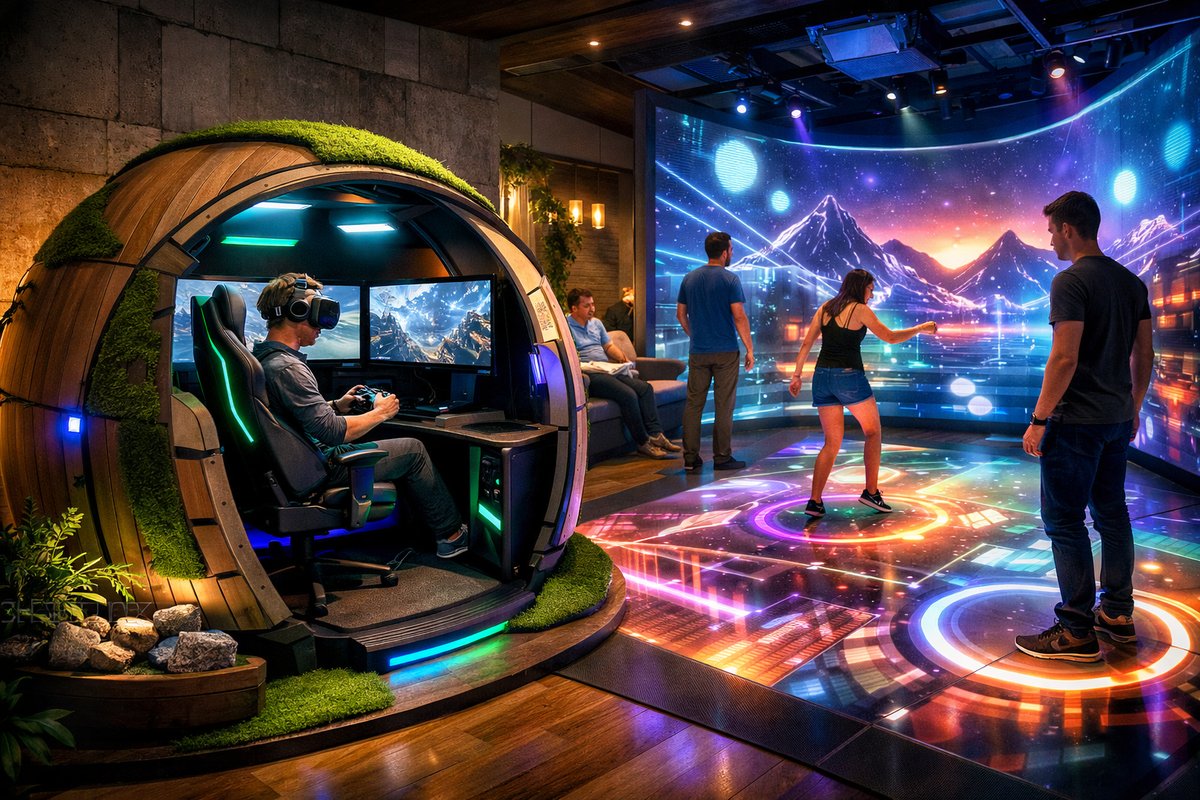

From ambient lighting that adapts to on-screen action to recycled-wood gaming desks with integrated cable management, the push toward more engaging play environments is reshaping how we game and entertain. Gone are the days when a sofa, a screen, and a controller sufficed. Today’s players crave setups that spark curiosity, foster focus, and even echo the futuristic worlds they explore in their favorite titles.
Designers and DIY modders alike have embraced an ethos of emotional intelligence, prioritizing ergonomics, user comfort, and mindful consumption. That means chairs built with adjustable lumbar support and breathable fabrics, desks crafted from reclaimed bamboo, and headsets that balance high-fidelity audio with noise cancellation. The result is a marriage of form and function, where every component contributes to a deeper, more thoughtful play session.
On the professional side, studios and co-working hubs are experimenting with hybrid lounge-arena concepts. Imagine reserving a private pod for an epic boss raid, then wandering through an adjoining communal space to compare loadouts over locally roasted coffee. These hubs often feature modular seating, wall-mounted screens for spectator modes, and sound-proofing systems that let every group pursue its own vibe without intrusion.
Interactivity has evolved, too. Haptic feedback vests and gloves once relegated to niche exhibitions are trickling into consumer wardrobes. By adding subtleties-like the gentle thrum of a dragon’s wings brushing past your skin or a satisfying kickback when firing a virtual bow-they deepen immersion without overwhelming the senses. Meanwhile, AI-driven lighting rigs track in-game events in real time, shifting hues to match the mood, whether you’re exploring neon-lit cityscapes or creeping through shadowy dungeons.
One rising trend feels almost cinematic: projection-mapped micro arenas. These compact setups use pico projectors and motion sensors to spill digital scenes across floor and wall surfaces, creating interactive tableaux. A dungeon stretch might snake across the carpet, while a starship bridge forms around the player on curved white panels. It’s an ingenious solution for renters or small apartments, since the entire installation collapses down into a suitcase when not in use.
Community remains at the heart of these innovations. Online forums dedicated to sustainable modding share blueprints for everything from sound-deadening foam panels made from recycled denim to solar-powered charging stations for wireless controllers. Pop-up workshops in urban centers teach participants how to integrate ambient audio speakers into upcycled furniture. The result is a growing library of open-source designs and a smarter, greener ethos that keeps excitement high and waste low.
Yet even with these dazzling advances, experts stress balance. “High-impact visuals and haptics amplify immersion,” says a design consultant specializing in experiential spaces, “but downtime is vital. Setup stairside tension with mindfulness moments-soft lighting, gentle audio washes-to prevent sensory burnout.” This holistic view extends to selecting decor and snacks, too: think noise-absorbing wall panels covered in mood-boosting botanical prints, and eco-friendly mugs for herbal tea that ease stress between quests.
On the software front, cross-platform integrations are lowering barriers for social play. Titles that once confined battles to consoles now let PC and mobile owners team up seamlessly. Companion apps can summon real-time maps, invoke music playlists, or trigger reactive lighting cues-turning even remote gatherings into vibrant, live-action affairs. One recent indie release lets friends join co-op lobbies from their smart TVs without a single controller; they use phone cams to track motion, then sync haptic bracelets for shared feedback.
Looking ahead, the next frontier may be olfactory augmentation. A handful of startups are prototyping scent diffusers that cue forest pine when you step into an open-world wilderness, or the acrid tang of laser blasts in sci-fi shooters. Combined with localized temperature control-subtle warmth when blazing desert sands, a chill breeze for Arctic missions-these multi-sensory dreams edge ever closer to reality.
Even without full-blown scent or climate modules, there’s room for anyone to elevate their play space. Swappable monitor mounts free up desk real estate for charging docks and collectible displays. Magnetic cable organizers keep high-speed cords neat and accessible. And for those chasing apex comfort, ergonomic footrests with adjustable angles ensure posture stays pristine through even the longest gaming marathons.
For movie nights and streaming marathons, these same principles apply. Couch-side snack organizers with compartments for popcorn, dips, and utensils keep eyes on the screen instead of the kitchen. Ultra-portable projectors can transform a blank wall into a private theater, while portable surround speakers wrap listeners in cinematic sound. Add a plush throw blanket made from recycled fibers, and you have an eco-conscious cinema lounge in any corner of the home.
Above all, today’s play spaces reflect the values of their creators: innovation married with responsibility, immersive tech grounded in emotional wellbeing, and a commitment to communal learning. Whether you’re assembling a solo VR hideaway or coordinating a hybrid gaming launch event, the tools and techniques at your disposal have never been more versatile-or more mindful.
As the line between living room and legend continues to blur, one thing is clear: play, in all its forms, remains serious business. And with each new breakthrough-be it a low-emission sound panel or a pocket-sized projection rig-players are empowered to explore, connect, and escape in ways previously confined to the realm of imagination.