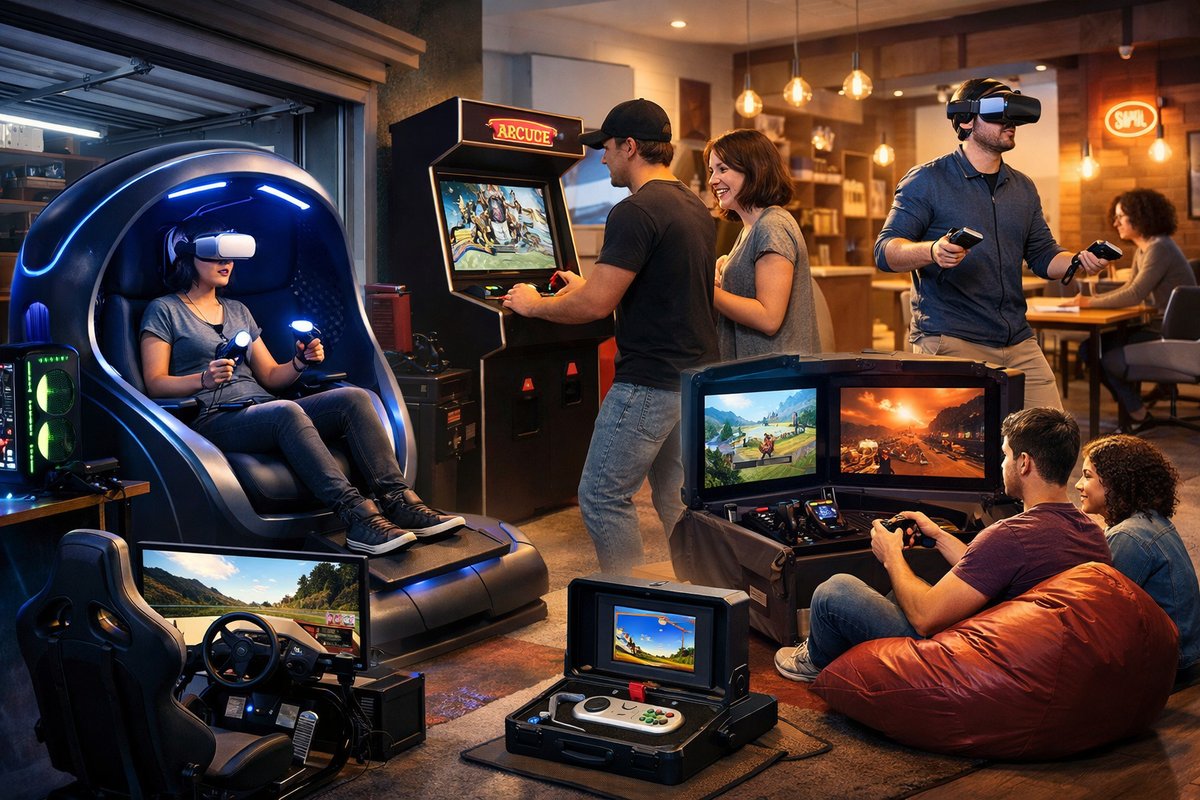

In recent months, a quiet revolution has taken root in homes, offices, and urban nooks around the world. Gamers and casual players alike are harnessing compact, modular gear to carve out personalized playgrounds that blend digital immersion with social rituals. These micro-gaming spaces, ranging from pop-up VR capsules to curio-laden console corners, are pushing the boundaries of what it means to “game at home.”
What started as living-room tweaks-an extra monitor here, a sofa-cum-gaming desk there-has blossomed into a movement toward all-in-one pods and transformable furniture designed specifically for play. Imagine a sleek enclosure with sound-dampening panels, immersive lighting, and built-in controls that you can roll into your study. Or picture a communal zone in a coworking lounge where wireless headsets materialize at the push of a button, inviting impromptu multiplayer sessions.
At the heart of this trend is a desire for intentionality. Home offices have already become hybrid zones for work and leisure, but many players crave an even more distinct separation between the two modes. Modular arcade cabinets, portable monitors, and climate-controlled VR pods promise a “play capsule” you can set up, break down, or reconfigure in minutes. Gone are the days of bulky consoles tethered to permanent TV stands.
These setups aren’t just about convenience. They carry an emotional resonance: a dedicated corner for shared victories, a retreat for solo deep dives into sprawling virtual worlds, or a stage for streaming to friends. Some startups are even experimenting with micro-arenas that combine sensory feedback seats, haptic floors, and ambient sound zones-all in a footprint barely larger than a hall closet. The goal? To evoke the electric thrill of an arcade without leaving your home, dorm room, or pop-up shop.
Designers are also weaving sustainability and adaptability into the equation. Lightweight aluminum frames, eco-friendly acoustic foam, and swappable faceplates let you customize aesthetics while minimizing waste. If you tire of neon lines one month, you can snap on recycled wood panels the next. Smart cable management systems hide cords inside hollow beams, preserving clean lines and reducing trip hazards.
Community hubs have picked up on the craze as well. In some cities, coworking spaces now offer reservation-based gaming pods alongside standing desks. Local cafés are transforming outdoor patios into al fresco gaming zones, where sip-and-play packages pair house-blend coffee with timed access to handheld consoles. Even libraries have begun trialing “digital play corners,” stocked with handheld emulators and streaming licenses for indie titles.
From a social perspective, micro-spaces address two key pain points: scheduling conflicts and space constraints. Instead of coordinating a full-blown meetup at someone’s apartment, a group of friends can book identical pop-up pods in a shared venue for a couple of hours. When the session ends, the pods stow away neatly until next time. For those living in tight quarters-dorm rooms, studio apartments, or shared flats-portable gear means no more sacrificing dining tables for controllers.
The hardware fueling these play capsules spans a wide spectrum. Compact mechanical keyboards with low-profile switches offer desktop tactility without hogging prime real estate. Wireless gaming headsets free players from headphone cables winding around chair legs. Foldable monitors with USB-C power let streamers broadcast double-window layouts on the go. And don’t underestimate the power of programmable LED strips: a few feet of addressable lighting transforms any corner into a pulsing, game-themed environment.
VR proponents have taken note too. Portable VR headsets with inside-out tracking have dropped to a price point that makes pop-up pods financially realistic for many households. Couple that with slip-resistant mats and minimalist haptic belts, and you’ve got a high-drama simulation that still packs down into a duffel bag. This mobility fuels impromptu LAN events in parks, conference lobbies, or even office break rooms.
Game designers are responding by creating shorter, more shareable experiences tailored for tight spaces. Instead of sprawling open worlds meant for hours-long sessions, look for bite-sized challenges-VR escape rooms, rhythm-based shooter minigames, and narrative vignettes you can complete during a coffee break. These titles often come with built-in crossplay features, so you can drop in a buddy on a handheld device or streaming link.
For streamers and content creators, micro-gaming spaces are a boon. A purpose-built capsule ensures consistent acoustics, cozier ambient lighting, and minimal background clutter. Many small-team houses are converting half a closet into a shared streaming booth, outfitted with ring lights, collapsible green screens, and noise-isolating panels. Even better, these setups can double as gig stations for remote collaboration-switch from a livestream to a virtual co-working session in seconds.
The shift toward modular gaming is still gathering momentum, but the implications are clear. By unshackling play from fixed furniture and dedicated rooms, micro-spaces empower anyone to dial in their ideal level of immersion. Whether you crave the buzzing neon of a city arcade, the hush of a bunker-style VR chamber, or the living-room comfort of a plush L-sectional, there’s a solution that can be erected, enjoyed, and tucked away when it’s time to reclaim your space.
As we look ahead, expect further convergence between furniture design, audio-visual engineering, and interactive software. Imagine a folding desk that automatically syncs with your cloud-based library, or a beanbag chair that adapts its firmness based on your posture. We’re only just scratching the surface of what personal play capsules can be.
If you’re intrigued by the promise of a dedicated micro-play space, start small. Swap your ordinary monitor for a portable display. Add sound-absorbing panels behind your seat. Experiment with modular shelving to store controllers and game cartridges. Before long, you’ll have a self-contained capsule that fits your routine, your budget, and your wildest imaginations.