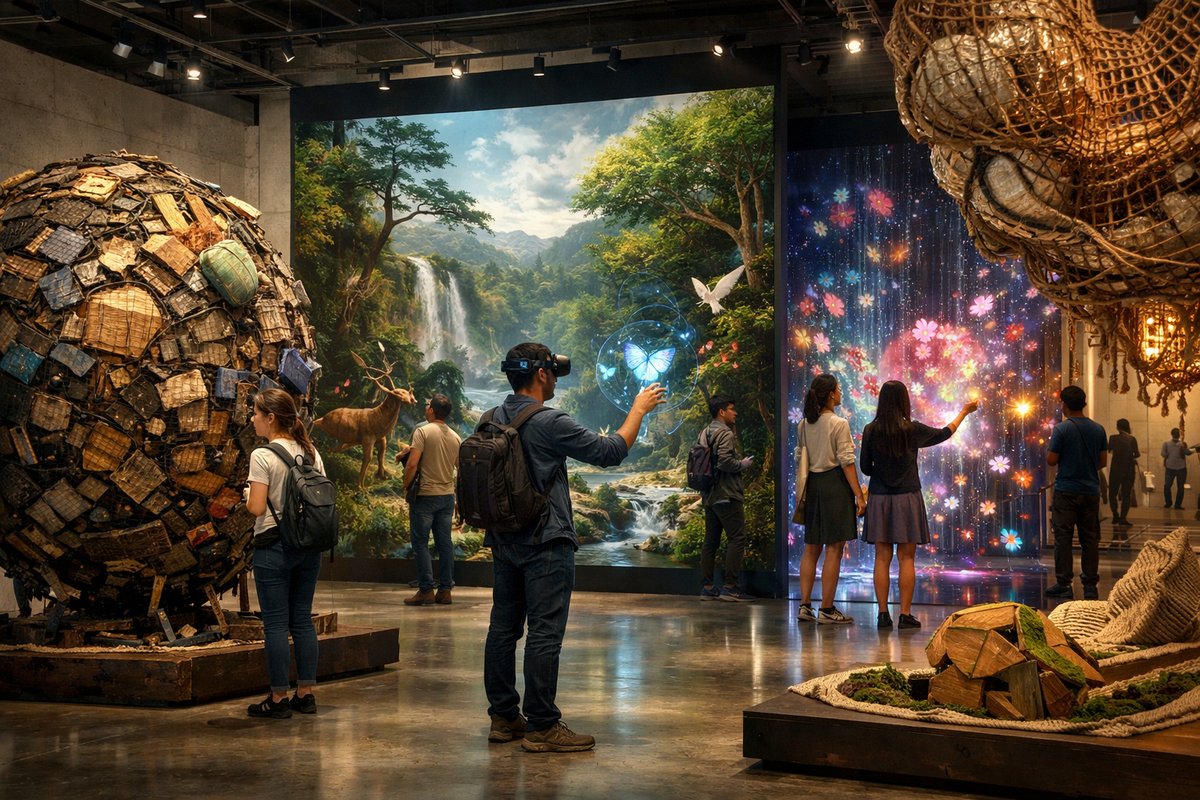

A sprawling exhibition space in a historic warehouse district has been transformed into a vibrant laboratory where material science, environmental activism, and digital innovation collide. From towering sculptures spun from repurposed plastic water bottles to generative artworks coded in real time, this global biennial reframes the boundaries between craft and algorithm. As visitors step through each gallery, they encounter works that bear witness to pressing ecological challenges while inviting wonder at the elaborate interplay of code, light, and texture.
In one gallery, a series of sinuous forms emerge from walls of compressed ocean debris. These installations use 3D printing techniques to reshape plastic fragments into sleek, biomorphic shapes. Nearby, an artist deploys mushroom-derived mycelium foam to fashion furniture-like seating pods that, unlike conventional foam, will decompose naturally when the exhibition ends. Through explanatory plaques and interactive displays, attendees learn how these materials can reduce landfill waste and lower carbon footprints in design and architecture.
Digital creators occupy another wing of the venue, transforming blank facades into canvases of light and motion. Using projection mapping, they animate patterns that respond to crowd movement and ambient sound. Augmented reality murals overlay digital layers onto printed backdrops, visible through tablets and smartphones. One large-scale piece invites passersby to draw abstract shapes in a virtual sandbox, watching them cascade into a communal sea of color. By merging physical textures with live software, these works blur the line between gallery art and interactive game design.
Venturing further, visitors don wireless headsets to enter a virtual studio where brushstrokes extend infinitely into three dimensions. This VR painting environment allows participants to sculpt intangible forms in midair, exhibiting them alongside more traditional clay works. Designers who specialize in mixed-reality tools explain their goal of democratizing access to high-end fabrication, highlighting open-source code libraries and low-cost head-mounted displays that make complex workflows accessible to independent artists and students alike.
Continuing the theme of hybrid practices, several graphic design studios showcase prototypes for sustainable packaging and signage. Panels describe how plant-based inks derived from algae, beetroot, and other natural pigments can replace petroleum-based dyes without sacrificing vibrancy. A demonstration station allows visitors to press eco-friendly ink onto recycled cardboard, illustrating that small shifts in material sourcing can yield massive environmental benefits when scaled up by brands and institutions.
Organizers emphasize that the fusion of sustainability and technology is not limited to materials but extends to conceptual approaches. A philosophically grounded installation uses generative algorithms to dictate the arrangement of upcycled glass shards, forcing viewers to confront the tension between human intention and machine autonomy. Another series of interactive touch-screens poses ethical questions around artificial intelligence in creative fields, asking participants to consider who holds responsibility when an algorithm produces a bestselling illustration.
The biennial also offers workshops led by practitioners who push material boundaries in hands-on sessions. Attendees can experiment with desktop ceramic 3D printers that extrude clay rather than plastic, crafting bespoke vessels from locally sourced clay blended with recycled porcelain. A nearby booth explores encaustic painting techniques using beeswax and natural earth pigments, paired with solar-powered LED fixtures that shift in tone according to weather data from nearby sensors. These micro-experiences offer a tactile counterpoint to the digital spectacles unfolding elsewhere in the space.
Despite the celebratory atmosphere, several exhibits confront the darker side of innovation. One immersive theater piece uses choreographed UV projections to simulate ecological collapse, enveloping viewers in a dissonant soundscape of industrial hum and crackling fires. Another work repurposes obsolete electronic components-circuit boards, battery cells, lcd screens-into delicate assemblages that evoke both longing and critique, touching on themes of planned obsolescence and e-waste.
Audience reactions range from awe to introspection. Some linger for hours in front of kinetic sculptures powered by small wind turbines, while others cluster in intimate alcoves to view delicate paper-based reliefs crafted from shredded school textbooks. Many express surprise at how seamlessly the array of approaches cohere around a shared ethos: design can be beautiful without being wasteful, and technology can serve ecological regeneration rather than unchecked growth.
Critics note that the biennial’s emphasis on process over perfection offers a refreshing shift. Instead of polished final products, many installations reveal prototypes, code snippets, and material tests as integral parts of the display. This transparency aligns with values of openness and continual iteration, encouraging designers and visitors to see failures and experiments not as dead ends but as vital steps in creative practice.
Looking beyond the exhibition walls, several participating studios plan to apply these methodologies to real-world problems. Architects envision modular housing panels constructed from recycled composites, while product designers explore subscription models for refillable art supplies that minimize single-use packaging. Graphic designers propose campaigns that educate consumers about the life cycle of everyday objects, using augmented reality posters that animate data visualizations about carbon footprints.
The biennial closes on a note of cautious optimism. While the challenges posed by climate change, resource scarcity, and rapid technological shifts can feel overwhelming, this gathering demonstrates that art and design possess the power to reimagine futures. By combining ancient techniques-such as clay working and natural dye extraction-with generative code and immersive installations, the event sketches a blueprint for an industry that prizes resilience, empathy, and ecological stewardship.
As attendees filter out of the converted warehouse under the low glow of retrofitted LED lanterns, many carry sketches, sample tabs of pigment, and QR codes linking to open repositories of design files. These artifacts, along with the conversations sparked by the biennial, promise to ripple outward, inspiring new projects in studios, classrooms, and makerspaces worldwide. In a moment when creativity must respond to urgent global needs, this exhibition reminds us that the most profound innovations often arise at the intersection of tradition and transformation.