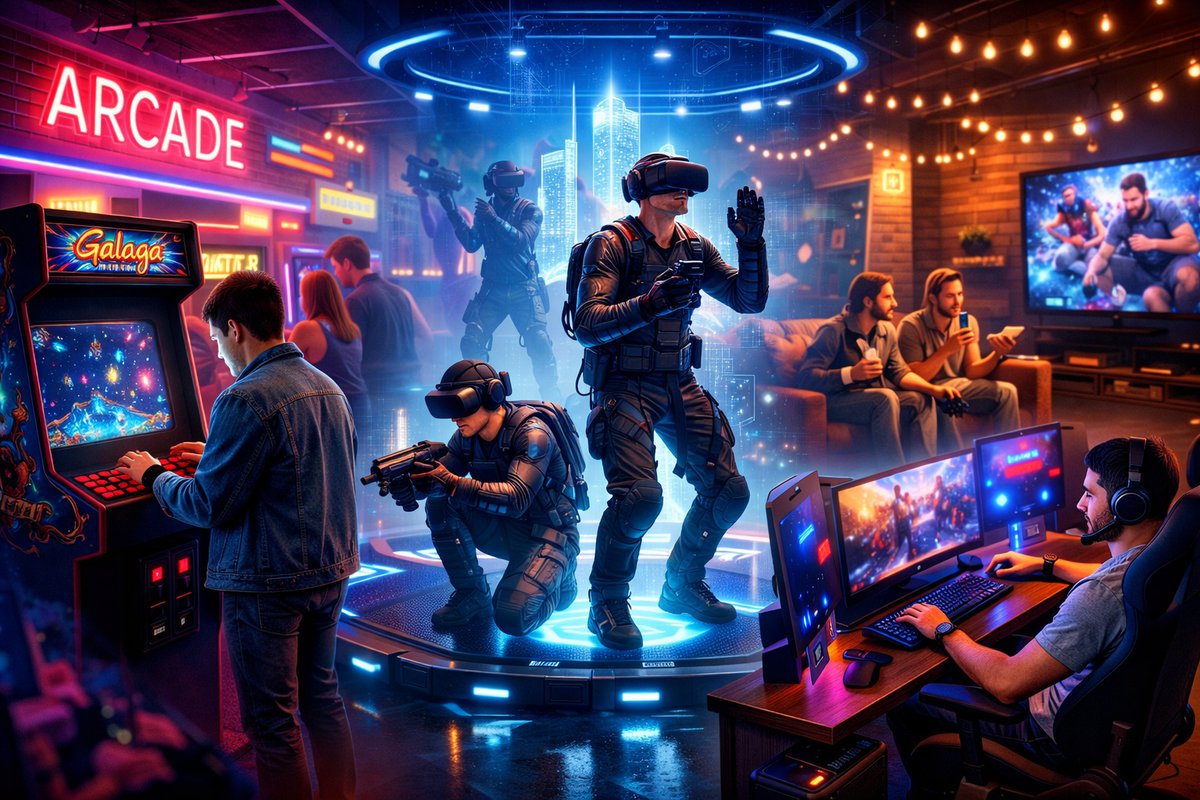

In neighborhoods once dominated by coffee shops and indie bookstores, a new kind of social hub has emerged: immersive gaming venues that merge nostalgia with high-tech thrills. Across major metropolitan areas, entrepreneurs are opening retro arcades, board-game cafés, VR arenas and e-sports lounges in spaces that cater to both casual players and hardcore enthusiasts. This shift reflects a broader cultural moment in which the boundaries between play, entertainment and socializing are dissolving.
It began with a modest retro gaming bar in a revitalized warehouse. Within months, its rows of classic cabinets-featuring pixel-perfect versions of side-scrolling beat ’em ups and 8-bit shooters-became a local sensation. Foot traffic climbed 40 percent in the first quarter alone, according to a city report, and nearby businesses saw a corresponding uptick. Inspired by that success, other proprietors quickly followed suit.
One of the most talked-about openings this year was a multi-level venue that combines a board-game café, private mini-LAN rooms and a VR arena. Guests start their visit by ordering artisan snacks and handcrafted sodas, then choose from a library of more than 200 tabletop titles. Families, friends and date-night duos can settle into cozy booths under warm Edison bulbs, while competitive groups can book soundproof pods equipped with high-speed internet for marathon gaming sessions.
A short elevator ride brings visitors to the VR floor, where they suit up in head-mounted displays and haptic feedback vests. Proprietors emphasize the reliability of their hardware: “We invested in commercial-grade virtual reality headsets that deliver true room-scale immersion,” says the venue’s operations manager. Motion-tracking gloves let players feel virtual objects-down to the weight of a sword or the rebound of a basketball rim. For those worried about motion sickness, specially designed treadmills offer 360-degree freedom of movement.
Industry analysts note that this trend aligns with growing consumer interest in experiential entertainment. As streaming services and on-demand gaming subscriptions proliferate, brick-and-mortar destinations must offer something that can’t be replicated at home. Live events, tournament nights and interactive theater productions have become key differentiators. In one city, an immersive detective game uses live actors, hidden clues and augmented reality to transform an old shipping container into a makeshift crime scene.
According to recent data from a national leisure-activity survey, visits to gaming venues increased by 22 percent year-over-year. Even more striking, the average spend per guest rose by 18 percent, suggesting that people are treating these outings as destination experiences rather than occasional diversions. A local economic development board reports that new gaming hotspots have become catalysts for wider neighborhood renewal, drawing foot traffic that benefits restaurants, shops and galleries.
At the same time, home gamers are taking cues from these venues. Tech reviewers point to a spike in demand for home-use virtual reality systems, modular gaming chairs and customizable mechanical keyboards. Streamers looking to replicate the ambient glow of an arcade floor have added programmable LED strip lights behind monitors and along furniture edges. Microphone and camera setups designed for multiplayer livestreams are also selling out rapidly.
Even coffee shops are getting in on the action by offering “game and brew” nights, where patrons gather over board games and specialty lattes. One café owner says that hosting weekly chess tournaments and cooperative board-game sessions has nearly doubled evening foot traffic. Nearby restaurants have reported that these events often lead to extended dining stays and new customer referrals.
Beyond casual play, e-sports arenas are also expanding. These large-scale venues feature stadium seating, pro-grade network infrastructure and broadcast studios capable of streaming tournaments to thousands online. Regional leagues have formed partnerships with local sponsors to offer college scholarships for top-performing teams. Some arenas even host after-hours community nights, opening their high-end rigs for public use at reduced rates.
Experts attribute the appeal of these spaces to human connection. “Gaming has always been a social activity-it’s just that for a while it was confined to living rooms and desktops,” says a cultural sociologist specializing in play. “Now gamers want to share milestones-level breakthroughs, epic wins, collaborative puzzles-in an environment that feels vibrant and alive.”
For urban planners, the rise of gaming venues presents both opportunities and challenges. On one hand, they can drive foot traffic to underutilized districts and support mixed-use development. On the other hand, questions about noise, crowd control and zoning regulations have prompted city councils to develop new guidelines for late-night operations. In one case, a permit was revised to allow ambient sound levels of up to 70 decibels after 9 p.m., provided venues implement sound-absorbing wall panels.
Looking ahead, emerging technologies promise to push immersive experiences even further. Cloud gaming services are experimenting with edge computing to deliver high-fidelity VR without bulky local hardware. Augmented reality overlays, accessed via lightweight smart glasses, are being tested in pop-up gaming parks where participants chase virtual creatures through public plazas.
Meanwhile, designers are exploring mixed-reality escape rooms that blend physical sets with digital projections. Imagine stepping into a pirate ship cabin where maps shift on the walls and artifacts come to life through projection mapping. In another concept, a rooftop park transforms at dusk into a giant interactive gaming board, with players controlling drones via smartphones to capture illuminated targets.
These developments suggest that gaming venues will remain at the forefront of experiential entertainment, offering a dynamic interplay of technology, creativity and community. For gamers, whether casual or competitive, the message is clear: play has graduated from solitary screens to multifaceted social stages.
For venue operators and wannabe entrepreneurs, the key takeaway is that authenticity and quality matter. Investing in reliable hardware, curating engaging content libraries, and fostering a welcoming atmosphere can set a space apart. Community-focused programming-tournament nights, creative-writing workshops where role-playing games fuel storytelling, board-game meetups organized by local hobbyists-can turn a venue into a cultural anchor.
As the lines between physical and digital play continue to blur, cities may find that embracing this wave of immersive gaming can revitalize neighborhoods and bring new forms of social interaction to the forefront. Whether you’re reliving childhood favorites, teaming up for a virtual heist, or competing under the bright lights of an e-sports stage, one thing is certain: play is serious business.
-
True Wireless Open-Ear Headphones-LEFT SIDE ONLY
The JBL SoundGear Sense True Wireless Open-Ear Headphones are designed for studio monitoring, DJ, and live monitoring. These headphones come in a sleek ... -
Watercolor VR Headset Clipart, 10 High Quality Jpgs ...
Watercolor VR headset clipart, 10 High quality JPGs, Commercial use, Instant download, Virtual reality, $2.19 4.9 (479) Digital Download -
Wayfair Launches Virtual Reality App to Customize ...
“By combining our advanced first-party 3-D scanning and visualization capabilities with Facebook's virtual reality headset, the Wayfair Next ...