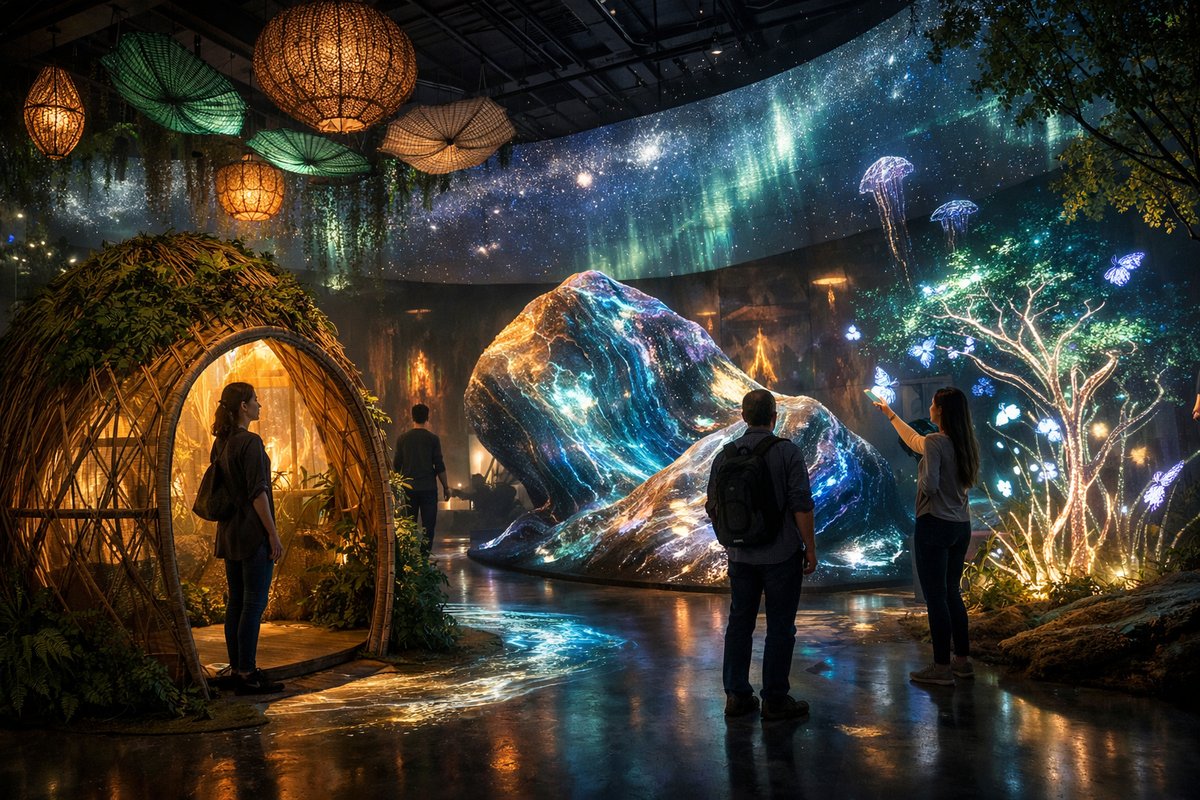

Urban art spaces have begun redefining the gallery experience, trading static canvases for breathing, responsive installations that blur the line between audience and artwork. This spring, a major exhibition in a repurposed warehouse district unveiled four large-scale environments inspired by coastal forests, desert dunes, tropical rainforests, and alpine ecosystems. Each installation combines recycled materials, projection mapping, and motion sensors to create dynamic ecosystems that shift in color, sound, and structure as visitors move through them.
In one gallery hall, a dome constructed entirely from recycled ocean plastics curls overhead like a giant clam. As visitors step inside, embedded LEDs respond to footsteps and voice, illuminating swirling patterns of blue and green across the dome’s ridges. The architect behind the piece, a collective of industrial designers and marine conservationists, spent months sourcing salvaged plastic from shoreline cleanups. Their goal was to highlight ocean pollution while demonstrating the creative possibilities of repurposed waste.
Nearby, an installation driven by desert motifs invites guests to navigate a field of towering, kinetic sculptures that sway like sand dunes in a digital breeze. Infrared sensors detect proximity, triggering subtle shifts in sculpture height and ambient desert wind recordings. The artist describes the piece as a “living archive” of shifting dunes and the precarious balance of arid ecosystems. Built from lightweight metal alloys and weather-resistant polymers, these sculptures endure timed exposures to sunlight, creating changing patterns of shadow and reflection throughout the day.
A third environment takes cues from rainforests, with hanging tendrils of biodegradable fabric woven into a canopy of interactive leaves. Each leaf is embedded with sound modules that play recordings of local bird calls, rainfall, and dripping canopy moisture when gently touched. As more leaves are activated, the audio layers build into a chorus that mirrors a real forest awakening. The designers used open-source software to synchronize sound with touch, allowing each visitor to improvise an audio composition that grows organically as they explore.
Completing the quartet is a chilled installation echoing alpine landscapes. In a climate-controlled chamber, visitors walk over a floor of frosted resin panels that crackle with underfoot motion sensors. Projectors cast images of drifting mist and drifting snowflakes onto suspended acrylic screens. The chill in the air, set several degrees below ambient gallery temperature, reinforces the sensory immersion. This piece aims to spark conversation about climate change’s impact on mountain ecosystems, reminding viewers how rising temperatures and receding glaciers threaten freshwater sources.
Beyond physical installations, the exhibition features an augmented reality experience accessible via gallery-provided tablets. Viewers can scan markers on each structure to unlock digital overlays: time-lapse footage of coral reef bleaching, animated desert flora responding to rainfall, biome cross-sections revealing the water cycle, and data visualizations of glacial melt statistics. This AR layer adds depth to the sensory journey, marrying scientific documentation with poetic visual storytelling.
Curators emphasize that these works are more than art objects; they’re collaborative research projects between artists, environmental scientists, technologists, and community groups. In the run-up to the opening, artists held workshops with local residents, teaching them how to design sensors, code interactive maps, and build small-scale prototypes from recycled salvage. Local students contributed leaf recordings, tide data, and weather station logs that inform the installation’s real-time behaviors. This community-driven approach underscores a growing trend in art and design: creative practices that engage the public in co-creation and stewardship.
A documentary film accompanying the exhibition follows the artists across months of fieldwork. Viewers see teams wading through mangroves to retrieve plastic waste, trekking across desert flats to measure dune movement, camping beneath rainforest canopies to record ambient sound, and ascending glacial moraines to collect ice samples. The film intercuts these expeditions with interviews in design studios, where sculptural prototypes are 3D-printed from bio-resin and sensors are calibrated to translate environmental data streams into visual patterns. Premiering in a mini-theater adjacent to the installations, the documentary deepens the viewer’s understanding of the creative journey-from concept sketches to interactive realities.
Critics have praised the exhibition’s seamless fusion of art, ecology, and technology. One review noted that “these installations don’t simply represent nature-they behave like ecosystems in dialogue with their audience.” Another highlighted the exhibition’s “quiet urgency,” observing that the playful interactivity masks a sobering environmental message. By inviting people to co-author each piece through movement and touch, the works foster a sense of responsibility rather than passive observation.
Gallery directors also report unexpected outcomes: visitors linger for hours, returning multiple times to discover new behaviors as sensor software evolves through real-time data updates. Students and educators are booking extended visits, using the exhibition as a living laboratory for STEAM (science, technology, engineering, art, and mathematics) programs. Local sustainability groups are hosting panel discussions in the gallery space, bridging the gap between artistic expression and civic action.
This immersive, nature-inspired model is already influencing design practices beyond the exhibition walls. Architectural firms are exploring sensor-driven façades that adjust transparency and shading to mimic environmental cycles. Landscape designers are integrating interactive water features that respond to rainfall patterns, offering both aesthetic delight and educational insight into water conservation. Even product designers are experimenting with recycled materials and embedded electronics to create everyday objects with responsive capabilities-planters that signal soil moisture levels, textiles that change color with ambient temperature, and furniture that records air quality data.
As urban centers worldwide seek to reconnect citizens with ecological systems, the gallery’s pioneering approach offers a template for future public spaces. Parks and plazas could incorporate sculptural elements that record and display air pollution readings in real time. Transit hubs might feature projection-mapped tunnels replicating seasonal leaf changes. Community centers could host workshops where participants build modular, sensor-based installations for neighborhood streets.
By placing nature’s processes at the heart of interactive art, designers are not only reshaping how we engage with galleries but also how we perceive our role within larger ecosystems. These projects challenge the common urban disconnect from natural cycles-reminding us that plastic pollution, desertification, deforestation, and glacial melt are not distant concerns but part of the fabric of everyday life. In doing so, they invite city dwellers to become active contributors to environmental storytelling and conservation efforts.
As the exhibition continues to attract thousands of visitors each week, its influence ripples outward through workshops, public programs, and spin-off projects. Emerging artists and technologists who cut their teeth on this collaborative model are already planning pop-up prototypes in neighborhood laundromats, schoolyards, and subway concourses. They envision a future where interactive, eco-driven art is not confined to museum walls but woven into the public realm-inviting people of all ages to listen, touch, and respond to the living data around them.
In an era marked by digital detachment and ecological crisis, these nature-inspired installations offer a hopeful counterpoint: art that not only reflects the world but resonates with it, empowering communities to explore, learn, and act. The convergence of sustainable materials, environmental research, and responsive technologies is proving that the next frontier of visual expression isn’t on a canvas-it’s in the living interplay between human presence and the natural systems we share.
-
Vtuber Drawing Tablet Asset | Wacom Cintiq (pack 2) - Etsy - Etsy
This Digital Drawings & Illustrations item by LemonStxDesign has 438 favorites from Etsy shoppers. Ships from United States. Listed on Aug 3, 2026. -
ABS Children's Educational Drawing Board Electronic Drawing Tablet
You'll love the Miuer ABS Children's Educational Drawing Board Electronic Drawing Tablet at Wayfair - Great Deals on all products with Free Shipping on most ...