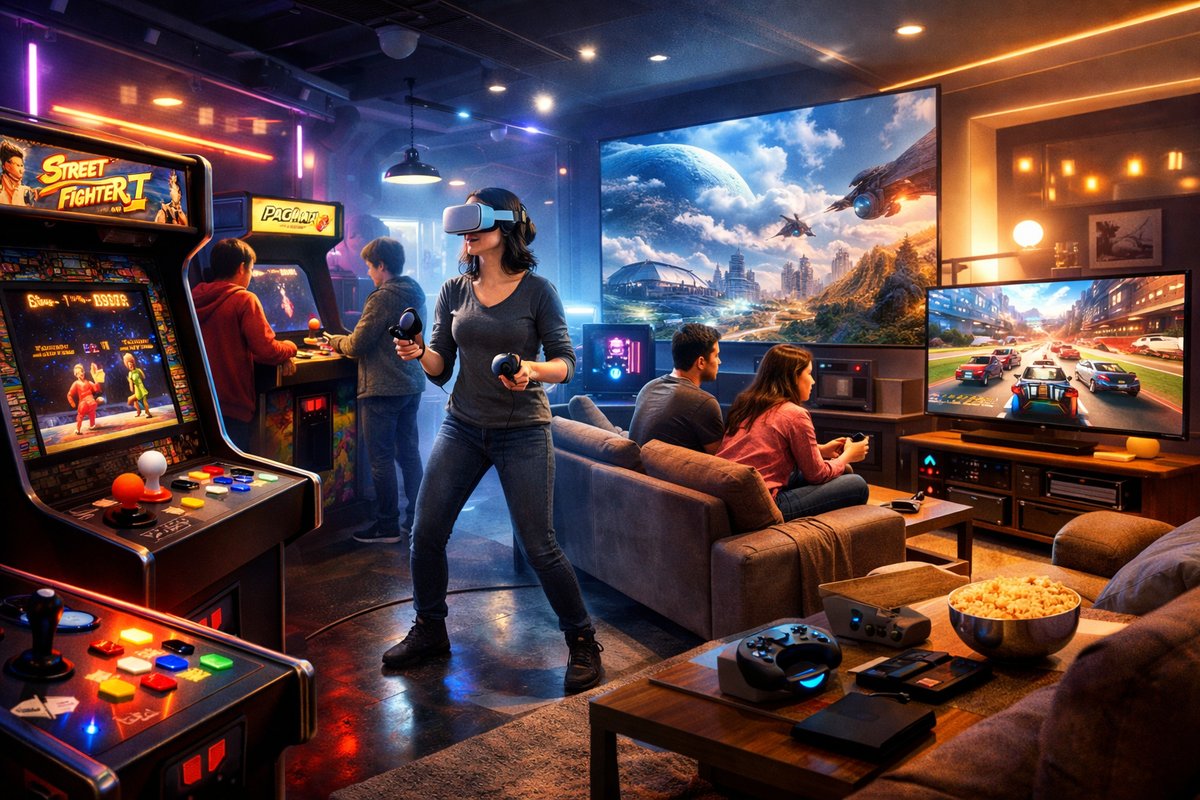

In a dimly lit warehouse repurposed from an old textile factory, clusters of friends lean into retro arcade machines while others slip on headsets to dive into virtual realms all powered by cloud streaming. Here, the hiss of neon lights dances with the hum of high-speed internet as gamers switch seamlessly from pixelated side-scrollers to expansive open-world shooters without missing a beat. This hybrid space is more than nostalgia and tech rolled into one-it’s a living experiment in community, creativity, and the future of play.
Across major metropolitan areas, independent operators are transforming underused commercial real estate into collaborative gaming sanctuaries. These hybrid hubs offer local flavor and DIY spirit alongside professional-grade hardware and global connectivity. Patrons can book time on classic arcade cabinets, complete with authentic joystick resistance and CRT-style visuals, then hop over to cloud-powered pods that stream content from servers around the world. The result is an ecosystem where thousands of titles, from cult indie gems to the latest triple-A releases, are accessible under one roof.
The numbers behind this phenomenon are striking. According to industry analysts, the market for VR arcades and shared play spaces has grown by nearly 20 percent annually in recent years, fueled by renewed interest in in-person events. Meanwhile, global cloud gaming services have reported a surge in concurrent usage, with players citing convenience and library size as key draws. In tandem, home gaming accessory sales-particularly modular furniture modules, lighting kits, and high-precision input devices-have spiked as enthusiasts seek to replicate the immersive ambience of public hubs at home.
What makes these hybrid hubs tick isn’t just the array of hardware; it’s the community-first mindset. Weekly tournaments, collaborative design workshops, and pop-up indie showcases draw in diverse crowds, from seasoned eSports competitors to families enjoying their first co-op outing. Organizers emphasize emotional well-being, offering dedicated chill zones with beanbags, soft lighting and low-noise acoustic panels. Some even host sound therapy sessions and mindful cooldown activities between matches, acknowledging that gaming isn’t just about competition-it’s about social bonding and mental recharge.
Meanwhile, back at home, the influence of these communal hubs is palpable. Enthusiasts are carving out pockets of their living rooms for dual-purpose setups that serve as workstations by day and virtual battlefields by night. Cloud streaming stations anchored by compact consoles or mini PCs handle the heavy lifting, while Bluetooth-connected gamepads and wireless controllers keep cables from overtaking every surface. RGB lighting strips trace the contours of desks and shelving units, creating a dynamic visual pulse that syncs to in-game action or curated ambient playlists.
Leveling up your personal setup doesn’t require a warehouse or a six-figure investment. Modular shelves can display a curated collection of retro cartridges and figurines. Acoustic foam panels mounted on walls not only improve sound isolation but double as art installations when arranged in geometric patterns. A simple USB-powered LED bar mounted behind a monitor can transform any desk into a scene straight out of a professional studio. These small upgrades create sensory layering that deepens immersion and signals to the brain that playtime is sacred.
Sustainability has also crept into the conversation. Local makerspaces are teaching players how to retrofit thrifted furniture into arcade-style cocktail tables. DIY enthusiasts share guides to strip down used shelving units and refinish them with stencils and vinyl graphics. Some hubs even run repair clinics where community members trade skills-soldering a joystick in exchange for a few rounds of a top-ranked fighter. This circular approach reduces e-waste and reinforces a sense of shared stewardship over the gaming experience.
Beyond aesthetics and hardware, the emotional intelligence cultivated through shared play is increasingly recognized. Parents report that family sessions in hybrid arcades foster communication skills among siblings. Friends describe a sense of accountability and courtesy that emerges when high-stakes matches take place in public spaces. Even solo streamers who once played to an empty room find unexpected motivation when they record in a lounge surrounded by fellow creators, with on-site moderators helping maintain healthy chat culture.
Yet the hybrid model faces hurdles. Real estate costs can pressure independent operators to optimize every square foot, leading to cramped layouts or sporadic scheduling. Rural areas often lack the broadband infrastructure needed for high-quality cloud streaming, pushing more remote communities to rely on local servers or offline play. And while open-membership hubs thrive in urban centers, smaller towns struggle to sustain a critical mass of paying members.
In response, some entrepreneurs are taking the show on the road. Retro gaming trucks equipped with mobile satellite dishes travel to rural festivals and corporate events, bringing pop-up experiences to areas starved of broadband. Microconventions hosted in community centers or public parks blend vendor booths, tabletop tournaments, and live-action experiences. These roving platforms demonstrate that the hybrid spirit doesn’t depend on a fixed address-it depends on a willingness to adapt setups to local needs.
Looking ahead, developers and hardware makers are exploring deeper integration between physical play spaces and virtual worlds. Imagine stepping off a classic arcade cabinet and having your in-game avatar reflect the same unlocks and high scores in a shared metaverse. Or picture environmental sensors in a lounge adjusting temperature, scent and lighting to match the mood of a game you’re playing. Early prototypes of these systems are surfacing at tech expos, hinting at an era when hybrid hubs will be highly responsive, feeling more like living organisms than static venues.
As the boundaries between home and public play continue to blur, one thing remains clear: serious play brings people together in ways that transcend age, background and location. Whether you’re settling in for a solo campaign on a cloud-streamed RPG or teaming up for a local arcade showdown, the fusion of tech, community and creative design is elevating play beyond mere pastime. In these hybrid environments, every joystick twitch, every headset calibration and every shared laugh becomes part of a collective story-one where each player writes the next chapter.
For gamers scanning the horizon, the message is simple but powerful: find your balance between home comfort and communal energy. Experiment with modular upgrades that reflect your play style. Seek out local hubs or pop-up events that spark connections. And remember that the gear you choose-whether an ergonomic chair, a responsive keyboard or a set of ambient lights-should serve not just the game, but the people you play with and the memories you create. In the end, play really is serious business-and the world is your arena.
-
Headphone Holder Desk Organizer Gaming Room Decor Gift Him ...
4 days ago ... Headphone Holder Desk Organizer Gaming Room Decor Gift Him Gamer for Gamers Headset Stand Computer Setup Workspace Audio Equipment Rack. -
Arozzi Aria Gaming Headset - Wayfair
Equipped with 2 USB charging ports and 3 power outlets, charge your multiple devices simultaneously. The built-in surge protector prevents damage to your ... -
CyberPowerPC Gamer Master Gaming Desktop, AMD Ryzen 5 ...
Panorama RTX 5060, AMD Ryzen 7 5700X Processor, 16GB RAM, 512GB Gen4 NVMe SSD, WiFi 6E BT, RGB Gamer Keyboard Mouse, HDMI DP, Windows 11 Pro, Best Prebuilt ...