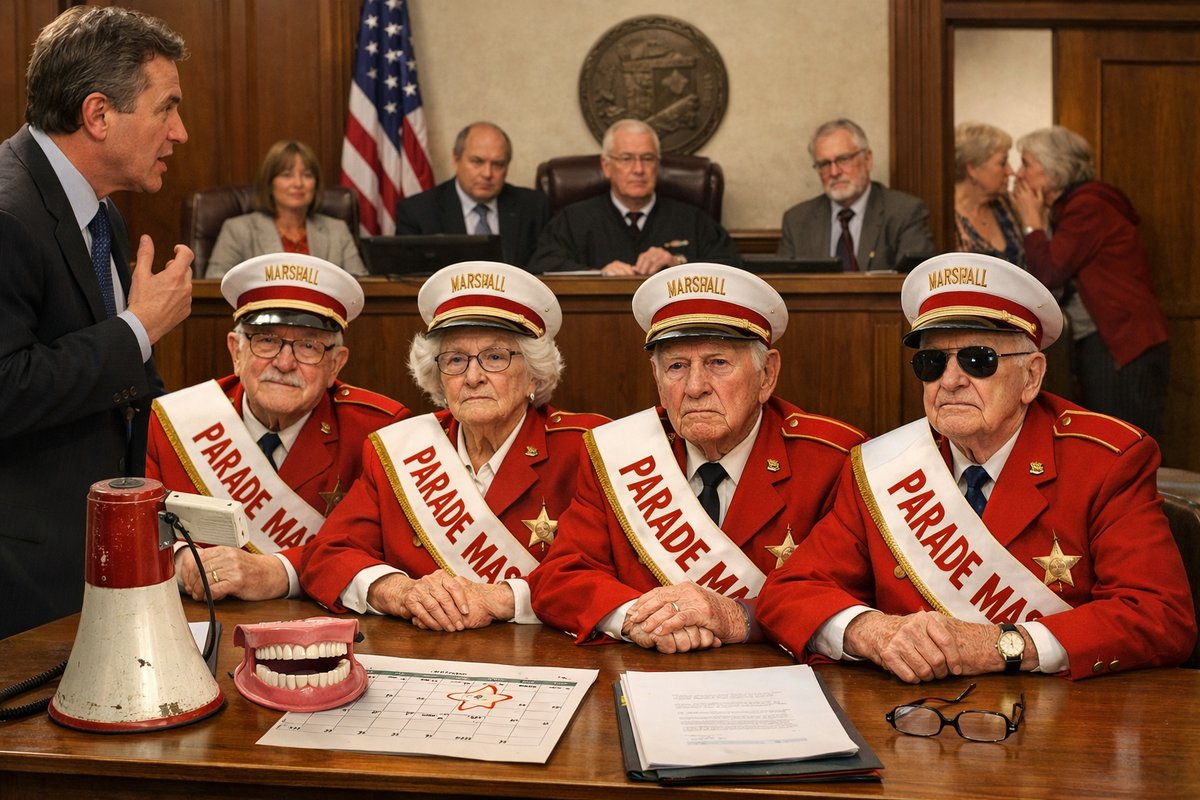

Glazerton’s sleepy Tuesday was shattered when a group of retired parade marshals, led by a spry 78-year-old known affectionately as ‘Squeaky’ Jenkins, filed a lawsuit accusing the city of decades-long negligence. The complaint claims that the volunteers-once tasked with directing floats and keeping unruly marching bands in line-never received the promised megaphones, forcing them to rely on croaky voices, worn whistles, and improvised hand signals.
According to court documents, the city council’s original pledge, scrawled on a scrap of letterhead after a post-parade nap in 1983, promised “state-of-the-art bullhorn devices” for every marshal. But when the first shipment arrived three years later, the story goes, the megaphones were sent to the fire department instead-where they allegedly remained locked in a storage bay marked “Do Not Use.”
The suit demands not only replacement megaphones (complete with siren functions) but also an official standing ovation at next year’s Fourth of July extravaganza, retroactive emotional support, and a line-item in the municipal budget for dental coverage-citing decades of strained vocal cords and chipped teeth from clenched whistle-blowing.
City council members, caught mid-coffee, scrambled to respond. One alderman issued a statement insisting that the marshals received “ample acoustic assistance,” including three portable speaker systems in 1990-and that any loss of hearing among senior citizens is “purely coincidental.” Another council aide suggested that marshals had actually been provided a set of vintage tin cans and string, a popular DIY communication method in the late ’80s.
Unconvinced, Jenkins and his compatriots donned reflective vests and assembled a picket line outside City Hall. Though some passersby mistook them for early-morning walkers, the sight of cane-wielding retirees chanting slogans like “Amplify Our Legacy” and “No Voice Left Behind” quickly drew a crowd. Local baker Celeste Nguyen arrived with a platter of “Applause Cupcakes,” each frosted with a tiny edible clapperboard.
The picket, initially scheduled for two hours, stretched into an all-day vigil. Sandwiches donated by the historical society kept spirits high as marshals took turns reading poignant excerpts from old parade programs. One tear-stained passage recounted how Jenkins once guided a troupe of jugglers around a misplaced elephant prop-an ordeal he recalls as “the high point of my career, aside from that time the mayor tripped over my clipboard.”
Faced with escalating media attention, the council offered a compromise: a single refurbished megaphone (sans siren) and a symbolic round of applause at tomorrow’s town meeting. The marshals rejected the offer outright, branding it “an insult to decibels everywhere.” Their counterproposal included a fleet of ten siren-equipped megaphones, an annual “Marshals Appreciation Day,” retroactive dental reimbursements, and a trophy case in City Hall featuring original parade memorabilia.
Rumor spread that the council even considered deploying a squad of rookie volunteers to handle next summer’s festival, hoping to sideline the octogenarian marshals. That notion prompted an outraged letter from Jenkins’s legal team, warning of “emotional distress, civic disillusionment, and possible outbreaks of polka dancing.”
Behind the scenes, negotiations took on a theatrical flair worthy of a community playhouse production. A mediator reported finding negotiation briefs hidden under trucker hats at a roadside diner, and draft agreements stained with spilled orange juice. One witness claims a late-night session devolved into karaoke, with council staff singing ballads about lost whistles while marshals unplugged the PA system.
Meanwhile, Glazerton residents have taken sides. A local artist started painting portraits of the marshals mid-chant, while the garden club drafted a petition demanding confetti cannons at the next protest. Social media has lit up with #AmplifyGlazerton, as neighbors debate whether this is a noble stand for the elderly or simply a ploy for free party favors.
In an ironic twist, Jenkins admitted in open court that he’d secretly installed two of the council’s original megaphones in his garage-both untested and possibly missing batteries. When asked why he hadn’t disclosed them earlier, he shrugged, quipping, “I wanted to see how badly they’d panic.”
At press time, the city’s attorney is said to be drafting an ordinance to create a citizen-led Megaphone Oversight Committee, while marshals are reportedly finalizing demand bullet points by hand, using fountain-pen ink and precisely calibrated punctuation. The case is set for trial in six weeks, just in time to overshadow next month’s annual senior Bingo tournament.
As Glazerton braces for a courtroom standoff that feels part legal drama, part community theater, one thing is certain: this lawsuit has turned a forgotten civic duty into a full-blown cultural spectacle. Whether the marshals walk away with their sirens and standing ovations, or are forced to rely on whistles for another generation, their legacy is already echoing through the town’s hallways-and probably into the next parade.
-
Champion Sports Megaphone with Siren, Handheld Microphone ...
Buy Champion Sports Megaphone with Siren, Handheld Microphone, Shoulder Strap, Powerful Bullhorn Loudspeaker with Adjustable Volume Control for Sport Events ... -
Amazon.com: HIONJIN Megaphone High-Power Handheld ...
Buy HIONJIN Megaphone High-Power Handheld Megaphone with Music Alarm Function, High-Definition Recording, Long Standby: Megaphones - Amazon.com ✓ FREE ... -
Adastra MG-220D High Power Megaphone 30W Siren Sound ... - eBay
Switchable siren function. Output power 30W max. Handheld or shoulder strap operation. Designed by Jarilo Design. Effective distance 600m. -
Vintage Megaphone, Soviet Loudspeaker, Electric ... - Etsy
Aug 21, 2022 ... Vintage, horn loudspeaker - megaphone, a portable device for ... basic site functions; ensuring secure, safe transactions; secure account ... -
5 Core Megaphone 50W Multi-Function with Talk Siren Record ...
You'll love the 5 Core Megaphone 50W Multi-Function with Talk Siren Record Volume Control 4501 USB at Wayfair - Great Deals on all products with Free ... -
FINNERO Sport Softshell Dog Jacket, Reflective All Season ...
Dog Reflective Vest Adjustable Dog Safety Service Vest Pet High Visibility ... Nvzi-c Windproof Dog Winter Jacket Dog Coat Warm Dog Vest Cold Weather ...