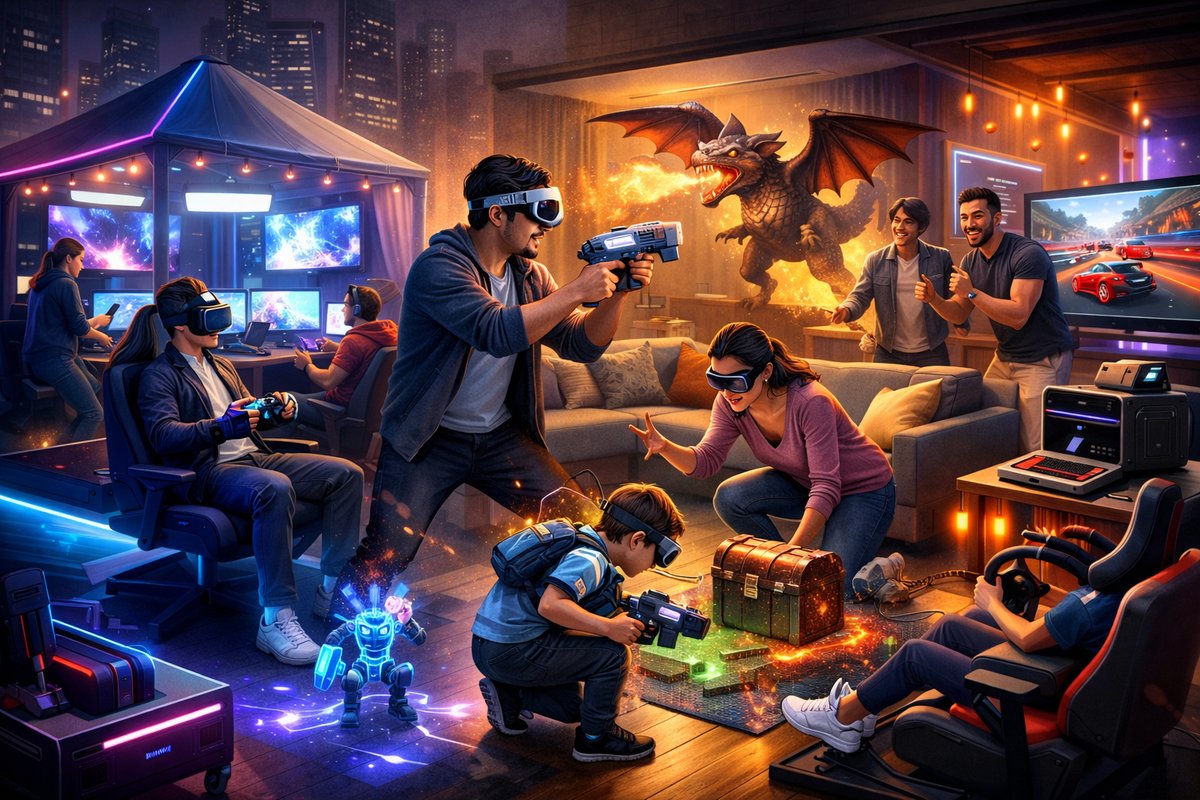

The way we play is undergoing a remarkable transformation. It’s no longer a simple choice between couch-side consoles and sprawling arcade halls. Instead, enthusiasts are navigating a hybrid frontier where cloud-powered arcades pop up alongside neighborhood living room gatherings, and immersive audio-visual setups blend seamlessly with portable, on-the-go hardware. Driven by advances in cloud streaming, spatial computing, and a growing appetite for shared experiences, games and entertainment are reinventing the very notion of “play.”
Across metropolitan rooftops, shipping containers are being converted into micro-arcades that beam high-fidelity streams of triple-A titles at sub-100-millisecond latency. These temporary venues host evening tournaments, themed events, and digital art installations that morph pastel holograms into tribal rhythms via location-aware projectors. Far from nostalgic flashbacks to bleeding-edge pinball machines, these cloud arcades serve up the latest open-world spectacles in environments where players can mingle, challenge each other, or simply spectate from an island of beanbags and minimalist LED pods.
Meanwhile, living rooms are leveling up. A new suite of spatial audio bars, ultra-wide-field lenses, and modular projection walls transforms a weekend match into a stadium-scale affair. Friends gather around collapsible tables that snap together in seconds, hosting board-game-style overlays on top of console sessions. The line between digital and analog blurs: finger-tracked controllers simulate sculpting blocks of marble, while augmented reality overlays conjure virtual characters that leap from tabletops into the air. What was once the domain of major studios is now in reach of anyone with a high-speed connection and a penchant for do-it-yourself flair.
That do-it-together ethos extends to the gear itself. Sustainable, secondhand controllers and drop-in sensor kits let players tune existing consoles for motion capture, haptic feedback, or theatrical lighting. Community-run tech swaps and maker-workshop socials teach novices how to rewire retro arcade sticks, solder LED rings into headsets, or even 3D print custom thumb grips. These gatherings foster curiosity while reducing electronic waste-ensuring that last decade’s peripherals find a second life working alongside cutting-edge cloud clients.
On the service side, cloud gaming providers are opening physical outposts in unexpected corners of the city. A suburban coffee shop might double as a streaming lounge offering ticketed time slots on high-spec servers, complete with latency-monitoring dashboards on display. Patrons can order espresso flights between matches, brainstorming hybrid tournaments that start in-store and finish online. The concept of a “home court advantage” gains new meaning when your neighborhood café provides pro-grade performance for every genre, from fast-twitch fighters to sprawling role-playing epics.
In the competitive sphere, grassroots eSports teams are sprouting from these hybrid venues. Without the need to outfit dozens of PCs, teams can rent cloud-powered rigs by the hour, coordinating across virtual LANs for global qualifiers. Event organizers partner with local businesses to host qualifier nights that stream directly onto social platforms, complete with live commentary, digital cheering animations, and real-time crowd polling. The tournament ecosystem is now more inclusive, enabling aspiring players-even those with older hardware-to prove themselves on a level playing field.
Virtual reality and augmented reality have also found fresh momentum in communal spaces. Portable VR pods equipped with folding screens and noise-cancelling walls can be set up in parks, galleries, or even offices. Participants don lightweight headsets tethered wirelessly to backpack-mounted compute units, traveling seamlessly between digital realms and real-world meeting points. Shared VR puzzles, synchronized dance-rave experiences, and co-design workshops allow groups to collaborate within immersive environments while still feeling the camaraderie of face-to-face interaction.
Cloud-native games are capitalizing on this social renaissance. Titles built around short-session matches and dynamic world events encourage players to drop in whenever they can-whether on a home console, a smartphone, or a café-based streaming station. Cross-platform progression and unified chat channels ensure that your clan stays together, even if half the group is at a friend’s apartment and the other half are on a bus en route to work.
The economic impact is significant. Retailers who once focused solely on shelf-stocked discs now curate demo stations for cross-platform titles and host launch parties that invite local DJs or art collectives. Subscription play passes bundle cloud-streamed games with exclusive community perks: art drops, developer Q&A sessions, and real-world scavenger hunts that unlock digital loot. All of these innovations underscore a shift from passive consumption to active participation.
At a deeper level, this hybrid evolution of play reflects changes in how we connect and recharge. Digital well-being advocates remind us that play is not merely an escape-it’s a vital form of self-expression and emotional restoration. Hybrid gaming spaces can act as social support networks, fostering friendships across geographical divides. Modular gear and DIY events encourage creative agency, while communal experiences strengthen empathy and collective problem-solving.
Even as streaming technologies advance, offline touchstones remain crucial. Home theater seating, acoustic-panel installations, and artisanal snack bars within gaming rooms preserve the sensory richness of tradition. LED accent lighting sets the mood, while programmable ambient soundscapes adapt in real time to match in-game action. In a sense, we’re curating multi-sensory theme parks in our own homes-albeit ones that we can fold away before breakfast.
Looking ahead, researchers are exploring brain-computer interfaces that translate emotional states directly into game mechanics. While that frontier remains experimental, the current hybrid model already empowers players to define their own rules of engagement. Whether you’re coordinating a pickup match in a virtual skate park, hosting a couch co-op story mission enhanced with custom lighting cues, or jamming in a makeshift VR music studio, play has become an act of community building as much as entertainment.
As more developers, venues, and players embrace this hybrid paradigm, the boundaries of what counts as “gaming” will continue to expand. The living room, the coffee shop, the rooftop container, and the VR pod all become interconnected nodes in a vast network of shared experiences. It’s a different kind of high score-one measured not by points but by memories, creativity, and the connections forged along the way.
In this next wave of play, serious business means serious fun. Modular setups, sustainable gear swaps, and cloud-powered venues ensure that anyone, anywhere can jump in without missing a beat. And with each new pop-up arcade or living room upgrade, the world of entertainment grows richer, more collaborative, and more accessible than ever before.
-
ROCCAT Magma Silent Gamer PC Keyboard with 5 Zone/10 LED ...
... Gaming Keyboard with Linear Red Switches, Detachable Type-C Cable Mini Keyboard ... COSTOM Mechanical Keyboard,75% Gaming Keyboards Rgb Custom Keyboard with Hot ... -
MageGee Mechanical Gaming Keyboard, New Upgraded Blue ...
104 mechanical keys are conflict free, allowing you to press or hold multiple keys simultaneously. 12 multimedia combination keys on the top of the keyboard ( ...