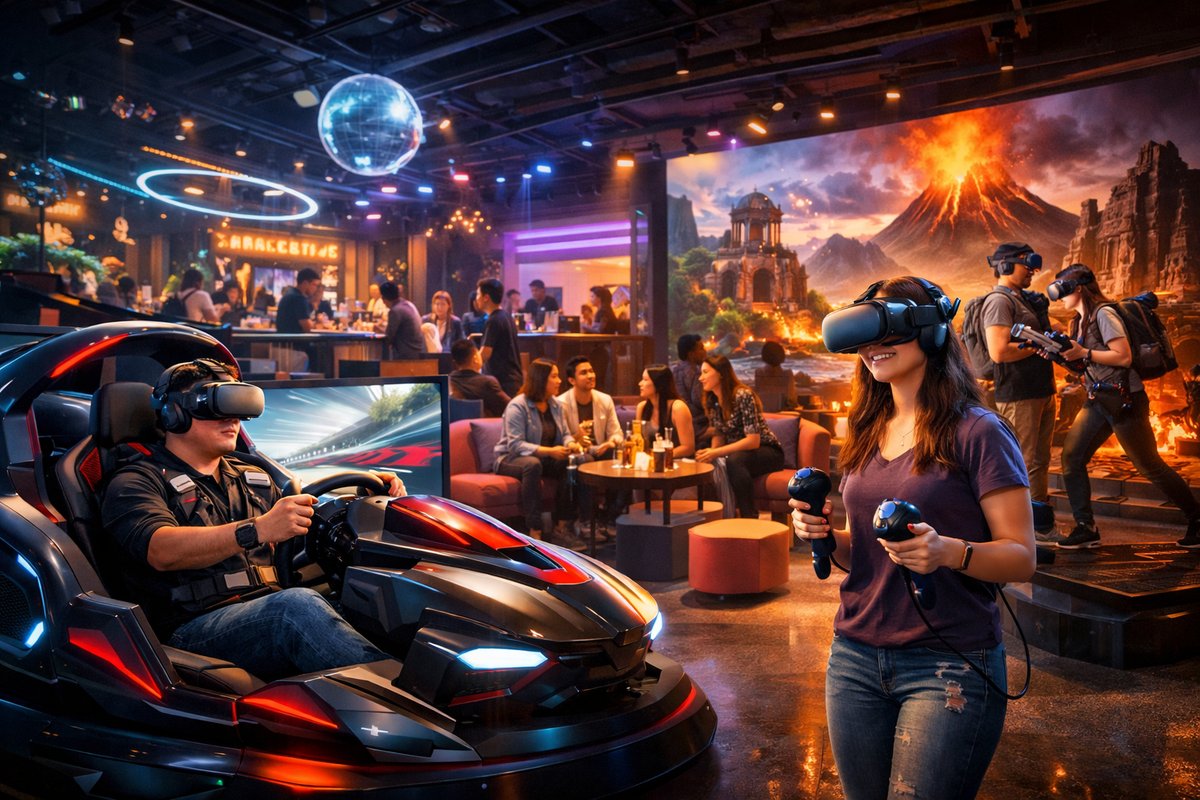

The boundary between living room gaming and out-of-home entertainment is dissolving faster than ever. Across major cities and small towns alike, entrepreneurs and developers are launching hybrid venues where high-end hardware and social spaces collide. Gamers can slip on a VR headset at a converted warehouse café, race in zero-latency pods, or drop into live tournaments while sipping artisanal coffee at a corner table. These venues aren’t just novelties-they signal a broader shift toward collaborative, immersive experiences that cater to both hardcore players and casual visitors.
In Berlin’s Kreuzberg district, one pioneering gaming lounge has installed custom VR racing pods equipped with motion-feedback chairs and metal-textured steering rims. The system tracks every bump on a virtual track, sending subtle vibrations through the seat to simulate road conditions. Across the room, cloud-streaming stations let remote participants join in real time. Players who can’t make the trip log in via a lightweight VR headset from home, and their avatars appear on wall-mounted screens alongside local competitors. It’s a seamless blend of physical presence and online access that feels less like a videogame and more like a spectator sport.
Designers are paying just as much attention to ambiance as to raw computing power. Modular tables with built-in wireless charging ports serve as communal hubs where friends can gather between matches. Mechanical keyboards with hot-swappable keycaps offer personalized feedback for fast-paced strategy titles. Customizable LED strip lights line the ceilings and walls, programmed to pulse with in-game events or synchronized to live-DJ sets on weekend nights. Warm seating nooks and lounge areas invite newcomers to watch a match, ask questions, and discover new titles without feeling intimidated.
Hybrid venues have also become hotspots for group watch parties and community tournaments. Large-format projectors are used to broadcast major esports finals on screens wider than most home theaters. Fans gather for popular league championships, armed with noise-cancelling wireless gaming headsets for clear comms when they step onto the floor to try their hand at the featured game. Nearby snack bars serve popcorn made fresh to order, with options ranging from classic butter to smoky chili-lime. Comfortable throw blankets and oversized floor cushions create an inviting vibe that feels part sports bar, part living room.
The appetite for location-based entertainment is extending into full-blown theme park attractions, too. A major new venue in Tokyo recently unveiled “Echoes of the Labyrinth,” a VR adventure that spans three floors. Participants navigate a shifting maze tracked by motion-capture floors and wear haptic feedback gloves that recreate every brush of a virtual vine or glint of digital wind. Group puzzles require coordinated gestures, and dynamic set-pieces rise from the ground at key narrative moments. It’s less a ride than a co-created story in which players physically inhabit every twist and turn.
AI-driven characters play a growing role in these experiences, offering interactive dialogue that adjusts to player choices. At a gaming hub in Seoul, NPC hosts greet visitors by name and adapt commentary based on skill level. If someone struggles with a strategy puzzle, the AI might materialize a friendly hologram to offer a hint or demonstrate the move. The lines between scripted attractions and living narratives are blurring-immersive storytelling designed to feel emotionally responsive rather than pre-recorded.
This surge of hybrid entertainment isn’t confined to a few global cities. Across Europe, small towns are retrofitting historic warehouses into community gaming centers. In Singapore, co-working spaces are adding VR lounges to attract digital-nomad crowds. From Bangkok’s central business district to suburban Vancouver, local gaming clubs are partnering with café owners and boutique bars to create rotating pop-ups. These micro-venues prioritize flexible furniture, energy-efficient PCs, and subscription-free access models that lower entry barriers for curious newcomers.
Later this month, fans of immersive cinema and interactive play will gather for the first-ever Hybrid VR Film Festival in Barcelona. Screenings of narrative shorts will alternate with live Q&A sessions, and attendees can hop into adjacent VR pods for experience tie-ins that expand on each story world. Independent modding crews have been invited to host a parallel hackathon, showing off custom controllers, sound-reactive LED costumes, and experimental haptic suits.
Sustainability has become a core concern as these venues scale up. Organizers are choosing modular furniture made from recycled materials, and many gaming rigs are built with energy-saving components that power down unused units between sessions. LED lighting systems incorporate ambient sensors to adjust brightness in real time, cutting down on consumption. At a refurbished factory space in Stockholm, staff designed their own desk pods from upcycled shipping pallets and fitted them with motion-activated power strips.
The DIY spirit is also thriving in home settings. Enthusiasts are crafting tabletop arcade cabinets from retired CRT TVs, integrating mini game libraries on compact consoles running open-source firmware. Others are building micro-arcades into built-in shelving units for small apartments, complete with bi-directional screens that allow spectators to watch local games. These at-home hubs often double as remote broadcast stations for casual tournaments among friends, combining capture cards with cloud-streaming software.
One dedicated player in São Paulo described how she transformed her living room into a weekend pop-up lounge. She invested in a high-refresh mechanical keyboard and a noise-isolating wireless gaming headset for smoother online scrims. LED strip lights frame her television, shifting through color palettes that match her energy level. A compact popcorn maker sits atop a side table for spontaneous movie marathons. And a plush throw blanket drapes over her ergonomic gaming chair-allowing friends to settle in for sessions that can last well into the early hours.
On the content side, developers continue to release expansive open-world titles designed with these hybrid hubs in mind. The recently launched survival epic allows cross-play between VR and traditional console users, with dynamic events that can be viewed on big screens or joined from remote pods. It’s accompanied by a sci-fi film called “The Creator,” which hit digital streaming platforms earlier this year. Watch parties for the movie tie into in-game challenges that unlock custom cosmetic items when viewers complete virtual puzzles.
Players and venue operators agree that today’s fusion of social cafés, VR arenas, and community pop-ups represents more than a fleeting trend. It’s an ecosystem where technology, design, and human connection converge. Whether you’re dropping into a neon-lit arcade café in London or tuning in to a VR film screening from your couch, hybrid play spaces are inviting everyone to reimagine what it means to come together and explore new worlds. The next wave of entertainment won’t be tied to a single device-it will be wherever you choose to gather, compete, and create shared moments that resonate long after the headset comes off.
-
Keychron V5 Max Custom Wireless Mechanical Gaming Keyboard ...
Enhanced Typing Experience: Upgraded MCU, gasket design, and sound-absorbing foam for lasting comfort and fluid typing. View all item details ... C/BT5.0 Gaming ... -
JBL Quantum TWS Air - True wireless gaming earbuds - Black
Gaming Headset with Microphone, Compatible with PS4 PS5 Xbox One PC Laptop, Over-Ear Headphones with LED Light, Noise Canceling Mic, 7.1 Stereo Surround ... -
Tranquility 15lb Cooling Reversible Removable Cover Cozy ...
Buy Tranquility 15lb Cooling Reversible Removable Cover Cozy Antimicrobial Weighted Blanket, Indigo Blue at Walmart.com.