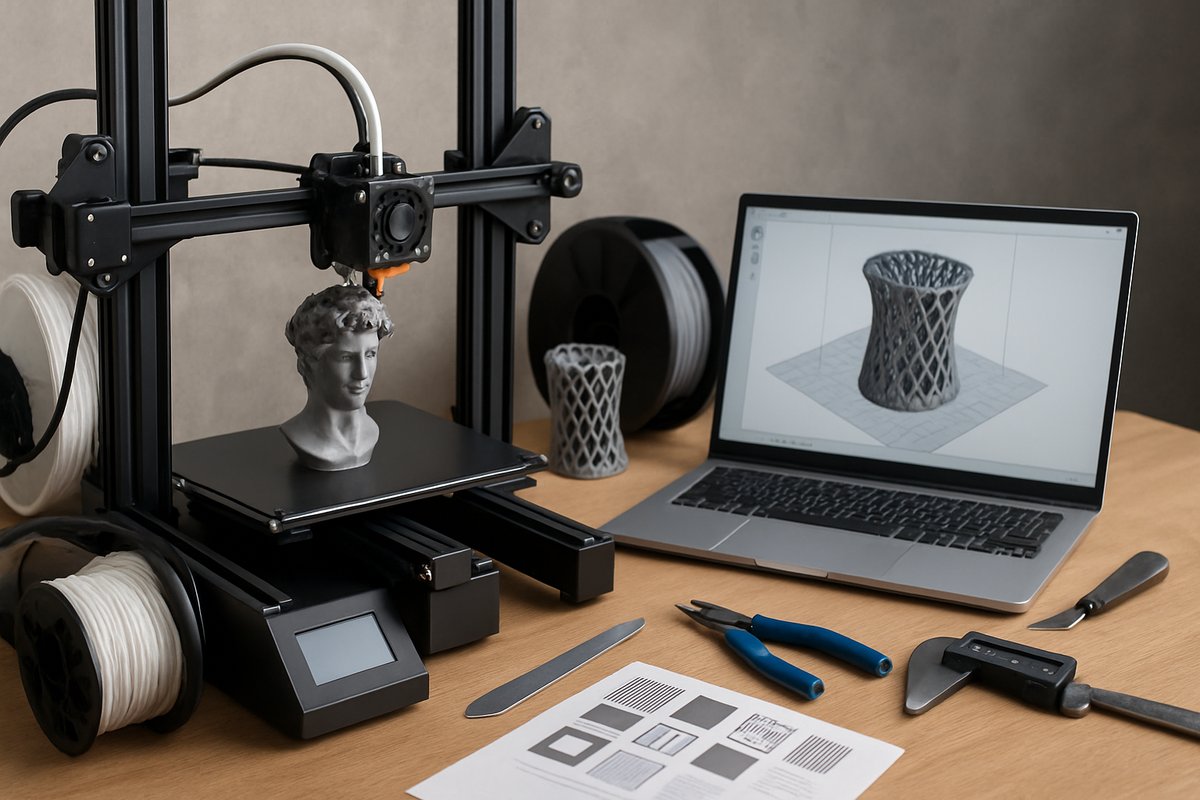

From hobbyist desks in bedrooms to industrial research labs, 3D printing continues to transform the way we design, prototype, and produce physical objects. What once was the province of engineers and early adopters has become a versatile toolkit for artists, educators, entrepreneurs, and makers of all stripes. This guide unpacks the full spectrum of modern additive manufacturing, covering everything from thermoplastics and resins to calibration tricks, slicing strategies, and eco-friendly practices.
Early adopters remember a time when bed leveling was a nerve-racking ritual: balancing sheets of paper under the nozzle, tightening screws by hand, and praying the first layer would stick. Today’s machines offer auto-leveling sensors and guided calibration wizards, but the fundamentals still matter. A consistent first layer sets the stage for every successful print. Invest time in cleaning the nozzle tip and bed surface, fine-tuning Z-offset settings, and storing filament in a dry, climate-controlled environment. Those steps alone can reduce failed prints by more than half, according to community-survey data.
When it comes to materials, PLA remains the go-to for beginners: biodegradable, low-warp, and available in endless colors. Yet the landscape has expanded dramatically. PETG bridges PLA’s ease of use with greater strength and chemical resistance, making it ideal for functional parts. Flexible filaments like TPU open doors to custom phone cases, wearable accessories, and even soft robotic components. For projects demanding exceptional toughness, nylon and composite blends infused with carbon fiber or glass particles offer unparalleled stiffness and durability.
Resin-based printing has made strides as well. Resin formulations targeted at jewelry casting, dental models, and high-resolution prototyping deliver micron-level detail that FDM struggles to match. DLP and MSLA printers now boast larger build plates and faster curing times, shrinking cycle durations. Yet resin printing adds steps: post-wash baths to remove uncured resin, thorough UV curing to reach full mechanical properties, and careful handling of chemicals. A well-ventilated workspace and protective gloves become non-negotiable.
As machines evolve, so do slicing engines. Open-source and commercial software alike now incorporate adaptive infill patterns, variable layer heights, and detailed support sculpting. These features can shave hours off print times while maintaining strength where it matters most. Experiment with gyroid or cubic infill to strike a balance between rigidity and filament savings. Use sequential printing to finish one model at a time and reduce the risk of collisions when printing multiple parts on the same bed.
But software is only half the battle. Consider part orientation early in the design process. Orienting flat surfaces parallel to the build plate can improve layer adhesion, reduce visible layer lines, and minimize support structures that mar surface finish. Complex geometries benefit from a slight tilt, exposing fewer overhangs and making supports easier to remove. A simple 10-degree rotation can mean the difference between a flawless print and hours spent filing and sanding.
No discussion of 3D printing is complete without post-processing. Sanding and polishing plastic parts can yield surprisingly smooth results, especially when starting with a modest 0.1-millimeter layer height. For ABS and ASA components, a brief acetone vapor bath can fuse layer lines into a glossy exterior. Spray primers and airbrushed paints transform raw prints into showcase pieces-think custom cosplay armor or high-fidelity scale models. Resin prints respond exceptionally well to wet-sand sequences followed by clear coats.
Maintenance often gets overlooked. Routine checks on belt tension, lubrication of linear rails, and replacement of worn rollers can extend a printer’s lifespan significantly. Keep a stash of replacement nozzles-steel or hardened-steel tips for abrasive composite filaments and brass for general-purpose printing. Inspect and clean extruder gears to prevent under-extrusion, and calibrate E-steps to ensure accurate filament flow. A simple filament runout sensor and power-loss recovery feature can save you from hours of frustration when a spool runs dry or the lights flicker.
With sustainability on everyone’s mind, recycling and material stewardship have become vital. Filament recyclers allow you to shred failed prints and turn them back into PLA pellets for future extrusion. Biodegradable composites derived from wood or hemp offer aesthetic textures while cutting down on petroleum-based plastics. Many makers now partner with local recycling services to ensure their waste streams don’t end up in landfills.
Digital workflows unlock the true potential of 3D printing. Cloud-based CAD tools streamline collaboration, version control, and slicing presets tied to specific printer profiles. Mobile scan apps convert real-world objects into editable meshes in minutes, enabling reverse-engineering or bespoke prosthetics. Open hardware initiatives share print profiles and machine modifications, fostering a culture of exchange and improvement. Whether you’re teaching students or delivering production-grade parts, integrating design, simulation, and printing into a unified pipeline accelerates iteration cycles.
As the ecosystem grows, so do opportunities for creativity. Hobbyists are designing tabletop miniatures with intricate details, while small manufacturers produce short-run runs of functional end-use parts. Medical researchers 3D print custom surgical guides and anatomical models to improve patient outcomes. Architects create tactile models at scale. Artists push the boundaries of form with multi-material prints that blend rigid and flexible elements seamlessly.
At its heart, 3D printing remains a journey of discovery. Each filament type demands its own settings, each model its own orientation, and each post-processing method its own patience. But the rewards-functional prototypes delivered in hours, personalized gadgets, and the thrill of transforming code into tangible artifacts-keep makers engaged. Embrace experimentation, share your failures as openly as your successes, and let every print refine your understanding of this endlessly evolving craft.
Whether you’re outfitting a personal workstation or exploring industrial applications, choosing the right accessories can elevate your process. A precision measuring tool helps you verify dimensions with accuracy down to 0.01 millimeters. A dry storage solution for spools prevents moisture-induced print flaws. An LED-powered curing station ensures resin prints reach peak strength quickly and uniformly.
Armed with these insights-materials knowledge, calibration best practices, slicing strategies, post-processing tips, and maintenance routines-you’re ready to navigate the next chapter of additive manufacturing. Innovation thrives where curiosity meets discipline, and every layer you deposit builds not just an object, but your skills and confidence as a maker.
Embark on your next project knowing you’ve got the knowledge and tools to succeed. The only limit is your imagination, and with today’s printers and techniques, even the most ambitious ideas can become reality.
No affiliate links found for this post.